

The “FORD WSS-M15P4-I Part performance, rigid molded-color interior parts” standard, developed by Ford Motor Company (FORD), specifies the minimum durability and performance requirements for rigid, molded-color interior trim panels, moldings, ceiling and floor consoles, and rigid instrument panels that are assembled from various materials to form a trim assembly with decorative and functional features.
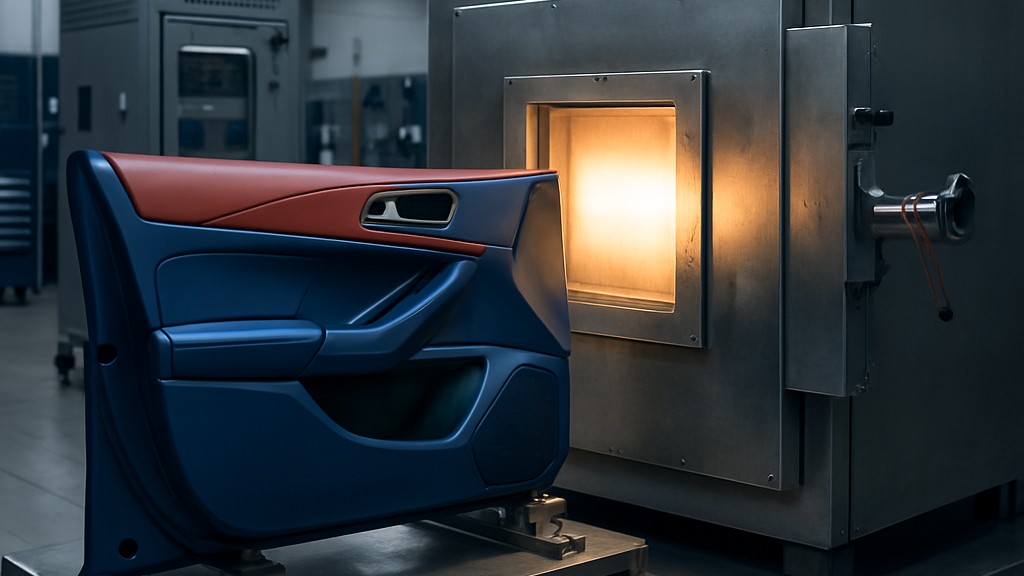
This standard was originally published for colored, non-visible interior trim parts molded in plastic. Specifically, moldings, solid instrument panels, instrument panel components, and door panels, center and overhead consoles, quarter panels, and pillars A, B, C, and D. This standard does not apply to fully decorated (e.g., painted, veneered, appliquéd, filmed) or wrapped parts.
Non-resin components within the performance specifications are graded according to the relevant system-level requirements and are excluded from the scope of this specification. Some examples include, but are not limited to:
Colored molded components with additional coatings added to a portion of the surface must be tested according to this standard in addition to the properties of the additional coating. The tests may be combined at the discretion of the materials engineer.
This standard is performance based and does not have certified sources.
All test values are based on the material or part being conditioned in a controlled environment of 23 degrees Celsius plus or minus 2 degrees Celsius and 50 percent relative humidity plus or minus 5 percent for at least 24 hours prior to testing. Testing of the material or part shall be conducted in the conditioned environment or immediately after removal.
Design verification/production verification tests must be performed in accordance with program milestones unless otherwise specified by Ford. The tables provided in the standard for these tests must be followed.
Unless otherwise specified by Ford, the testing of molded colored components and the testing of non-visible components are detailed in these tables. Tests should be performed on parts unless the part geometry allows it. In this case, suitable plates with the production texture and color, as agreed upon with Ford, may be used.
For valid material color and durability conformity certificate test plans and procedures, the “Color property and test table” given in the standard must be followed.
Developed by Ford Motor Company, the FORD WSS-M15P4-I standard is a critical engineering materials specification focused on the assembly performance of rigid, molded color interior components used in automotive applications. This standard includes minimum durability and performance requirements for various interior trim components, ensuring they meet Ford's stringent quality, safety, and aesthetic standards.
This standard applies to rigid, molded colored interior trim panels, moldings, ceiling and floor consoles, and rigid instrument panels. These components combine a variety of materials to provide decorative and functional features within the vehicle interior. The standard is performance-based and does not specify approved material sources. This allows flexibility in material selection as long as the performance criteria are met. Components covered by other specifications, such as soft instrument panels, interior soft upholstery, and wrapped parts, are not covered by this standard.
The WSS-M15P4-I standard defines rigorous testing and performance criteria to ensure the durability and functionality of internal components. Key requirements include:
WSS-M15P4 compatibility testing is typically performed on production parts or wafers that have the same resin, grain, and color as the final components. Key considerations include:
As a result, the WSS-M15P4 standard plays a vital role in ensuring the quality and longevity of interior components in Ford vehicles. By establishing stringent durability, performance, and safety requirements, it helps maintain consistency, safety, and customer satisfaction in automotive interiors. The standard's focus on molded color components supports cost-effective production by eliminating the need for additional painting or coating processes while meeting aesthetic and functional expectations.
This standard is a comprehensive guide to ensuring the quality and performance of rigid, molded color interior components in Ford vehicles. Suppliers and manufacturers must comply with these requirements using referenced standards and compliance processes to meet Ford's high standards.
Our organization, which has been operating for many years and meticulously follows global developments in science and technology, conducts testing, measurement, and analysis in a wide range of areas for businesses across all sectors with a skilled team and extensive infrastructure. In this context, we also provide testing services in accordance with the "FORD WSS-M15P4-I Part Performance, Hard Molded Colored Internal Parts" standard.
To get an appointment, to get more detailed information or to request an evaluation, you can ask us to fill in our form and reach you.

