

The “SAE J948 Automotive Upholstery Fabrics – Test Method for Determining the Abrasion and Tear Resistance of Vinyl and Leather Materials” standard, developed by the American Society of Automotive Engineers (SAE), describes the test methods applied to determine the tear and abrasion resistance of automotive body fabrics, vinyl, and leather.
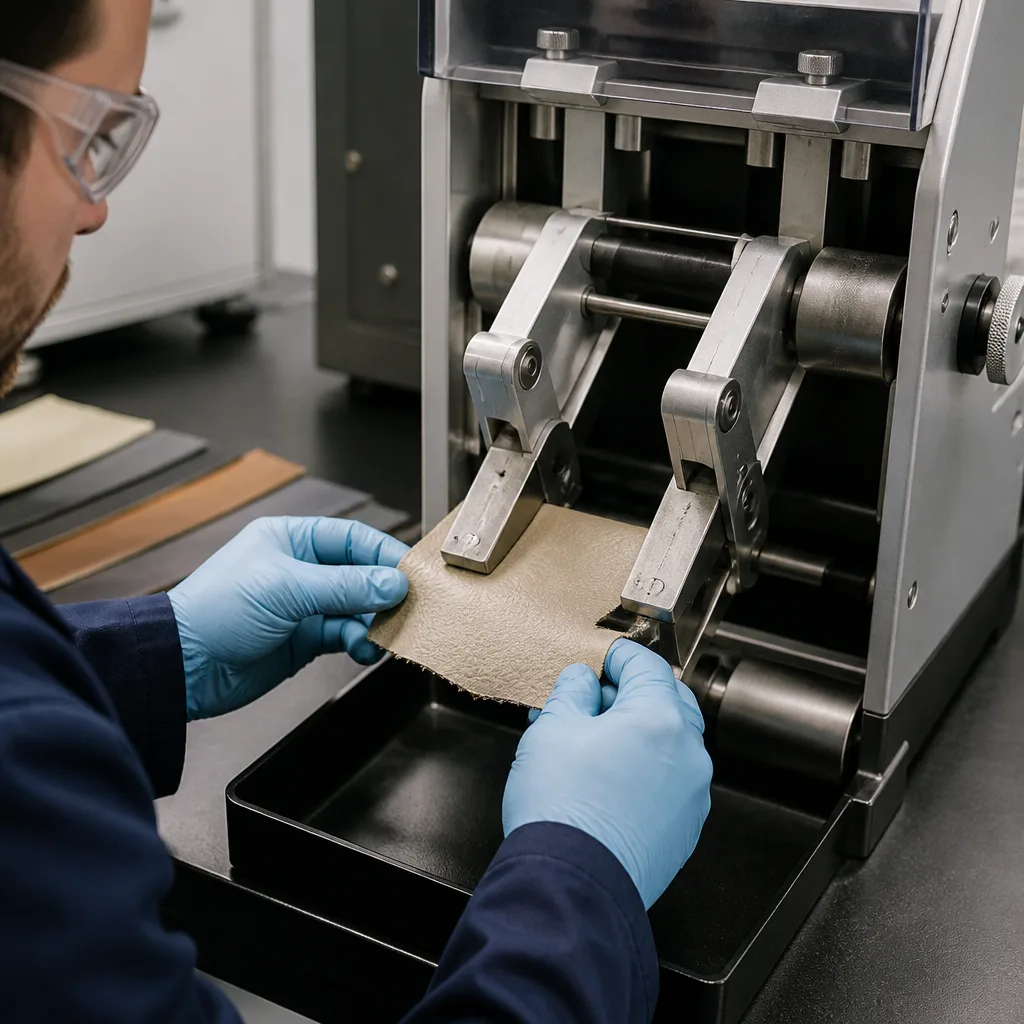
The SAE J948 standard is a widely recognized automotive material testing standard. This standard specifies standardized procedures for evaluating the abrasion and tear resistance of automotive upholstery materials, including woven fabrics, vinyl, and leather used in vehicle interiors. This standard helps manufacturers ensure that seat materials maintain their appearance and durability throughout a vehicle's lifespan.
Automotive seat upholstery is subject to constant wear and tear due to the following reasons:
The SAE J948 standard provides a consistent method for determining how well these materials resist the following:
This standard allows manufacturers to compare different materials under the same laboratory conditions.
The SAE J948 standard applies to automotive interior trim materials, including the following:
The primary purpose of this standard is to assess the durability of materials before they are approved for vehicle production.
A key feature of the SAE J948 standard is that it includes two different wear testing methods designed for different applications:
This test evaluates the following:
This method is commonly used for vinyl, leather, coated fabrics, and durable textiles.
This method evaluates the following:
This test is particularly suitable for woven automotive seat fabrics.
The Taber and Wyzenbeek test methods are not equivalent and their results cannot be directly compared. Each method produces different wear mechanisms and should only be compared with results obtained using the same method.
Typical equipment used in tests includes:
To obtain repeatable results, the equipment must be properly calibrated.
After testing, the materials are examined for the following:
Depending on customer requirements, assessments may be based on visual or measurable changes such as mass loss or wear cycles.
The SAE J948 standard is commonly used by:
Many automotive manufacturers incorporate the SAE J948 standard into their internal material approval specifications.
Implementing the SAE J948 standard offers the following advantages:
The SAE J948 standard is often used in conjunction with complementary standards such as:
Together, these standards provide a comprehensive assessment of automotive upholstery durability.
This latest revision of the standard has introduced primarily editorial and procedural clarifications, including updated terminology for wheel surface resurfacing equipment, additional guidance on surface resurfacing of abrasive wheels during testing, and other minor wording improvements. There have been no major changes to the core testing principles.
In conclusion, the SAE J948 standard is a fundamental standard for evaluating the abrasion and tear resistance of automotive upholstery materials. By providing two established testing methods—the Taber abrasion method and the Wyzenbeek abrasion method—it enables manufacturers to assess the long-term durability of fabrics, vinyl, and leather under controlled laboratory conditions. Compliance with the SAE J948 standard helps automotive manufacturers select materials that maintain the appearance, comfort, and structural integrity of a vehicle throughout its service life, contributing to increased customer satisfaction and reduced maintenance and warranty costs.
For many years, our organization, with its competent and experienced team, has been understanding the needs of its clients, providing the advanced testing services they require, and assisting them in the establishment, implementation, and improvement of management systems. Within this framework, we also provide testing services compliant with the SAE J948 standard.
To get an appointment, to get more detailed information or to request an evaluation, you can ask us to fill in our form and reach you.

