

The “GMW 15635 Determination of aldehyde and ketone emissions from interior materials” standard, developed by General Motors Worldwide (GMW), is a test procedure used to determine aldehyde and ketone emissions from vehicle interior materials. This standard primarily addresses chemical emissions that may be released from non-metallic materials used in vehicles and helps manufacturers control interior air quality and meet material performance requirements.
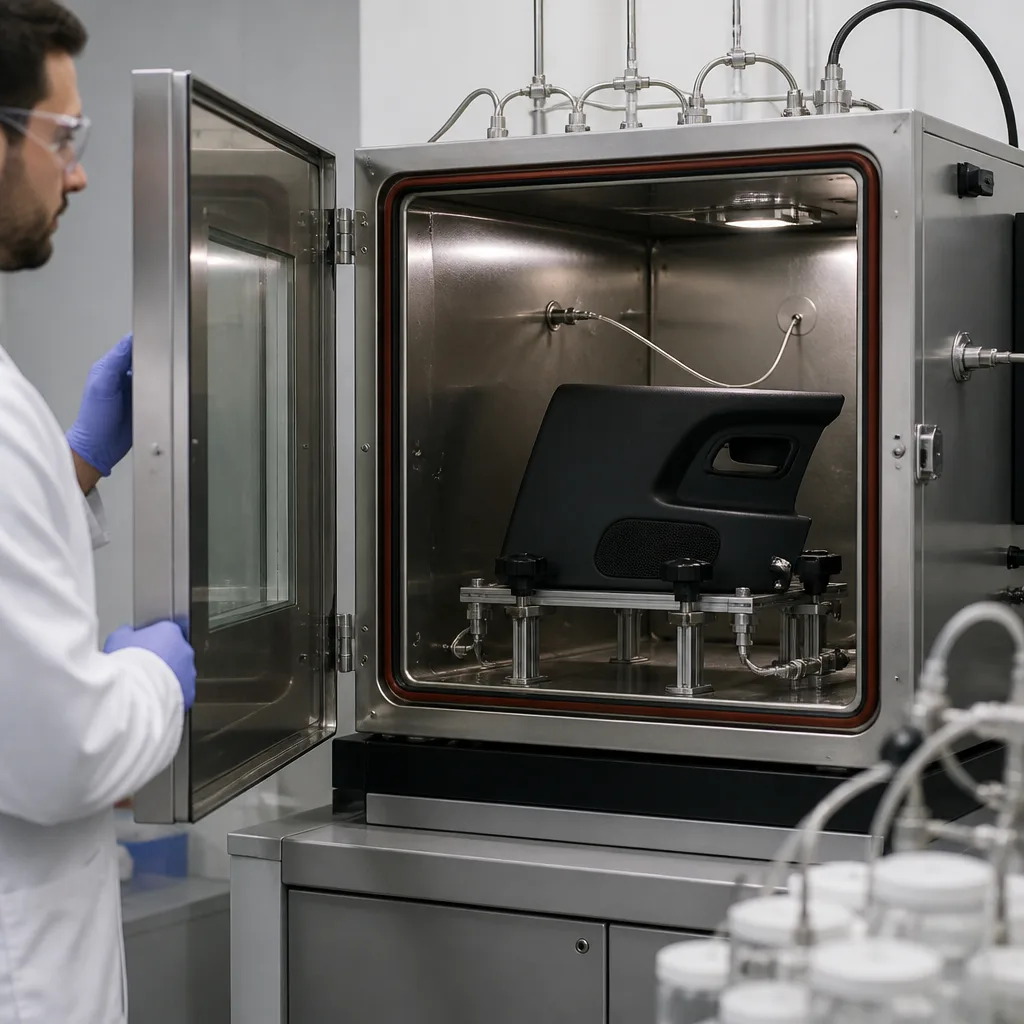
GMW 15635 standard is also described as a replacement for GME 60271 standard and is particularly important to General Motors for interior material qualification.
This standard measures aldehyde and ketone emissions, including carbonyl compounds, released from interior vehicle materials. Examples of materials that can be evaluated include:
Test laboratories list this method for applications involving compounds such as formaldehyde and acetaldehyde.
The GMW 15635 standard uses a controlled sealed flask emission method. Generally, a prepared test sample is placed on top of deionized water inside a sealed flask. The flask containing the sample is then exposed to a controlled temperature for a specific period of time. During this conditioning period, aldehydes and ketones released from the material are absorbed by the water. After exposure, the flask is cooled, and the absorbed compounds are chemically analyzed.
The analytical procedure uses the following:
The amount obtained is typically reported in micrograms/gram (µg/g), based on the dry mass of the test sample.
Essentially, this method follows these steps:
GMW 15635 standard is considered important for the following reasons:
The GMW 15635 standard is part of a broader family of automotive interior emissions and air quality tests. Other manufacturers and organizations use related procedures for formaldehyde, volatile organic compounds, carbonyl compounds, odor, and fuzz. For example, laboratories list the GMW 15635 standard alongside the Ford FLTM BZ 156-01 standard, which addresses formaldehyde, aldehyde, and ketone emissions from non-metallic interior floor mats. However, these procedures are not automatically interchangeable. Even if the two methods measure similar chemicals, sample preparation, exposure conditions, collection method, analytical technique, and reporting requirements may differ.
The primary result is the amount of aldehydes and ketones released by the material, normalized to the dry weight of the test sample. Therefore, the method provides quantitative information rather than just a visual or sensory assessment. Typical reporting may include:
Actual acceptance limits are determined by the relevant General Motors material specification, drawing, or engineering requirement, rather than assuming a universal limit from the test procedure itself.
The GMW 15635 standard test method is particularly applicable to components such as the following:
Because different materials can have different chemical emission properties, this method provides a way to control emissions throughout the vehicle interior supply chain.
In conclusion, the GMW 15635 standard includes a crucial test procedure for evaluating carbonyl emissions from automotive interior materials. The described method utilizes a sealed-bottle exposure system where the released compounds are absorbed into deionized water, followed by DNPH derivatization and HPLC-UV analysis. Results are expressed as a percentage of the dry mass of the test material.
This standard supports indoor air quality control, material selection, supplier qualification, product development, and emission reduction. It is also the successor to the GME 60271 standard and remains part of the broader automotive indoor emissions testing environment. However, for laboratory work, the latest version of this standard should always be consulted for complete sample sizes, quantities, temperatures, exposure times, analytical conditions, calculations, and acceptance requirements.
For many years, our organization, with its competent and experienced staff, has been understanding the needs of its clients, providing the advanced testing services they require, and assisting them in the establishment, implementation, and improvement of management systems. Within this framework, we also provide testing services in accordance with the GMW 15635 standard.
To get an appointment, to get more detailed information or to request an evaluation, you can ask us to fill in our form and reach you.

