

The “Daimler PAPP PWT 7301 Steel Heel Abrasion Test” standard, developed by the Daimler-Benz automotive company, was developed as part of the automotive material validation standards for vehicle interiors. This standard is a laboratory abrasion resistance test used to evaluate how automotive interior materials withstand repeated abrasion from hard objects such as shoe heels. The test is primarily applied to:
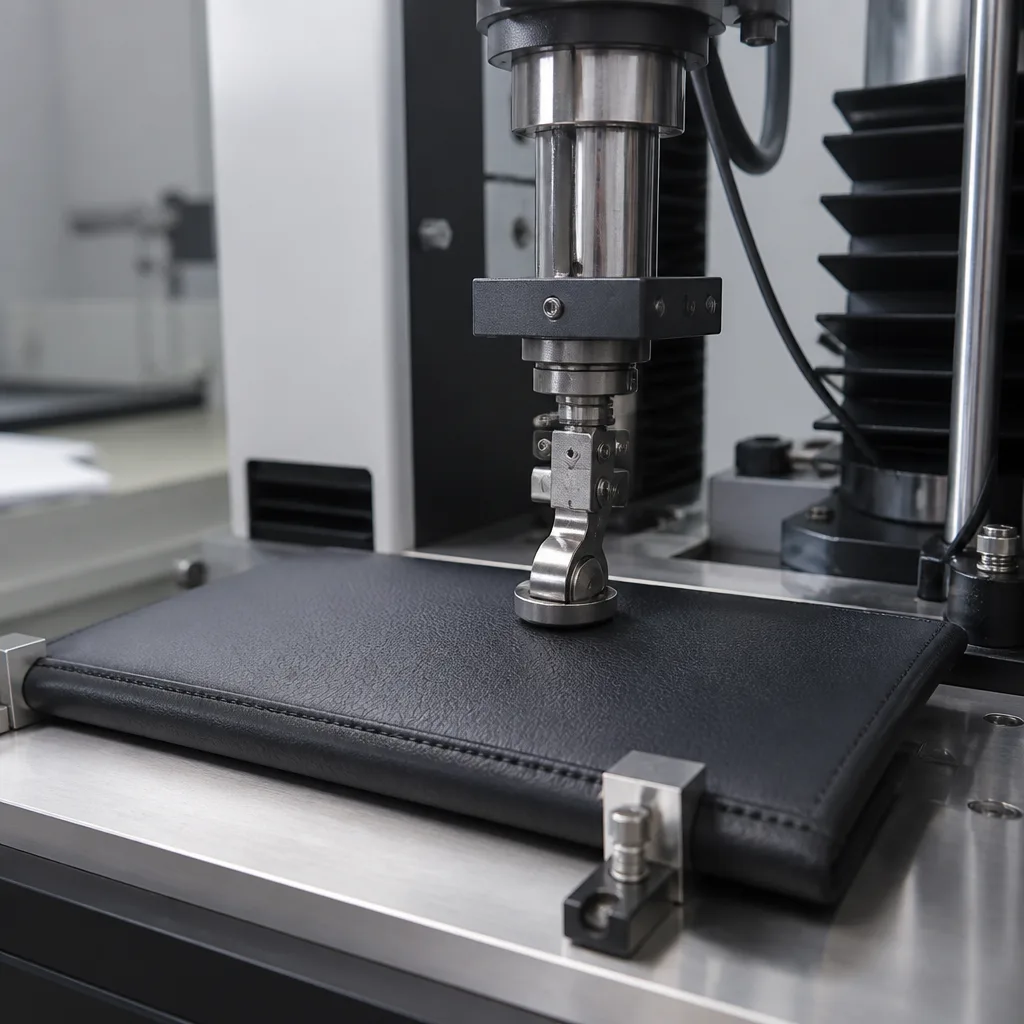
The aim is to simulate real-life mechanical wear and tear that occurs when passengers repeatedly get in and out of a vehicle.
Modern automotive interiors must maintain their appearance and durability over many years of use. Daimler uses this specification to ensure that materials possess the following characteristics:
This standard is particularly important for luxury vehicles, where interior durability significantly impacts perceived quality. In this procedure, a steel or metal heel element is repeatedly rubbed against a test specimen under controlled conditions. The material is then examined in terms of:
The precise parameters used by advanced laboratories include:
Many automotive laboratories list the method among their accredited wear procedures.
Daimler PAPP PWT 7301 standard was primarily created for vehicle programs, but this specification is used throughout the entire automotive supply chain by:
Tests according to the PAPP PWT 7301 standard are generally required in the following situations:
This standard belongs to a broader family of Daimler material performance standards, which includes the following:
These standards collectively assess durability, chemical resistance, adhesion, and long-term indoor quality.
PAPP PWT 7301 and similar wear resistance standards are critical due to the constant mechanical stress on vehicle interiors. Poor wear performance can lead to:
Daimler ensures that interior materials remain visually appealing and structurally sound throughout the vehicle's lifespan by applying rigorous testing.
The Daimler PAPP PWT 7301 standard is necessary because automotive interiors are subjected to intense and repetitive mechanical wear during daily vehicle use. Without a controlled wear standard, manufacturers have no way of reliably predicting how materials will perform after years of passenger traffic.
Luxury vehicles, in particular, face high customer expectations regarding the visual appeal of their interiors for many years to come. A carpet or upholstery surface that wears, shines, tears, or fades quickly damages the perceived quality of the vehicle. This standard simulates this stress under repeatable laboratory conditions.
The steel heel method allows engineers to identify weak materials before production begins by accelerating wear in a controlled manner. This reduces the following problems:
A formal testing standard ensures that every supplier is evaluated using the same criteria. This means comparable results, objective approval decisions, and consistent production quality worldwide. Without a common standard, durability assessments become subjective and inconsistent.
Interior wear and tear is highly visible to customers. Even minor wear damage can make a vehicle look old or poorly made. This standard protects brand reputation by ensuring materials retain their texture, color, surface integrity, and premium appearance.
For example, suppliers can compare different textile blends, coating thicknesses, support structures, and surface treatments. This helps manufacturers scientifically improve durability rather than relying on trial and error.
In short, the PAPP PWT 7301 standard is necessary because it provides a repeatable, engineering-based method for evaluating how automotive interior materials withstand long-term mechanical wear.
In summary, the Daimler PAPP PWT 7301 standard is an automotive interior durability standard focusing on wear resistance using a steel heel simulation method. It helps manufacturers verify the long-term wear performance of carpets, textiles, trim, and upholstery materials used in premium vehicles. This specification remains part of the broader quality assurance framework used in the automotive materials industry.
For many years, our organization, with its competent and experienced team, has been understanding the needs of its clients, providing the advanced testing services they require, and assisting them in the establishment, implementation, and improvement of management systems. Within this framework, we also provide testing services compliant with the Daimler PAPP PWT 7301 standard.
To get an appointment, to get more detailed information or to request an evaluation, you can ask us to fill in our form and reach you.

