

The “Ford WSS-M11P57-A5 Performance Requirements for Single-Component Polyurethane Structural Adhesive” standard, developed by Ford Motor Company (Ford), is a material specification that defines the performance requirements for single-component polyurethane structural adhesives primarily used in bonding automotive glass such as windshields, rear windows, and fixed side windows. This specification guarantees that the adhesive provides the structural integrity, durability, and environmental resistance required for modern vehicle glass systems.
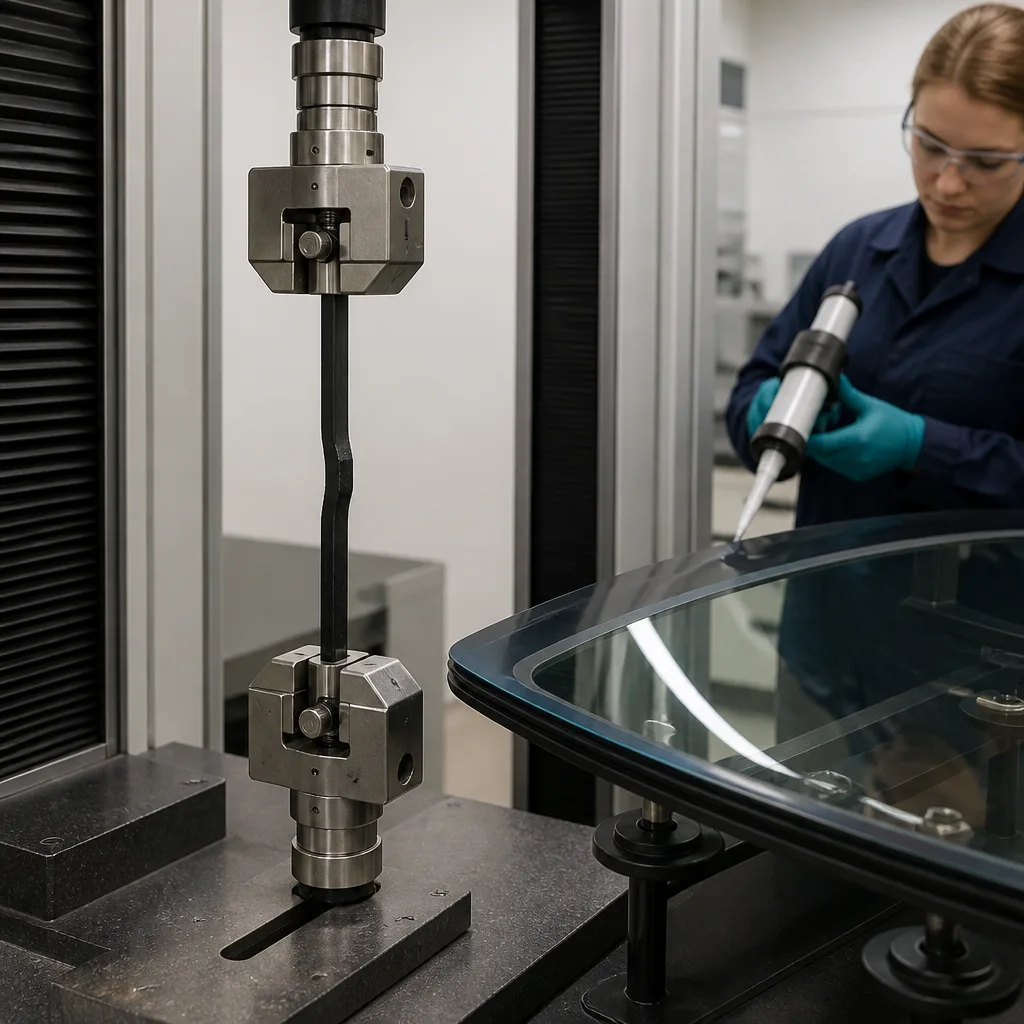
Unlike general adhesive standards, the Ford WSS-M11P57-A5 standard is specifically designed for adhesives used in structural glass assembly and is intended to work in conjunction with the Ford WSS-M99P1111-A standard, which specifies additional engineering and material approval requirements.
This specification covers a primerless, single-component polyurethane adhesive formulated for automotive glass applications using approved glass primer systems. The adhesive is designed for:
According to Ford's specifications, the adhesive is designed for use with approved glass primer systems, eliminating the need for paint primers on compatible clear coating surfaces.
A material conforming to the Ford WSS-M11P57-A5 standard typically has the following characteristics:
These properties ensure that the adhesive remains effective for the entire lifespan of the vehicle.
Typical performance requirements are as follows:
Tests are typically performed before and after environmental aging.
These properties help the bonded windshield contribute to the structural rigidity of the vehicle.
The goal is to ensure that vehicle operation remains reliable for many years to come.
One section of the specification includes a cataplasm test that evaluates the durability of the adhesive after prolonged exposure to hot and humid conditions that accelerate moisture penetration. This test helps verify long-term adhesion performance in harsh climates.
Adhesives conforming to the Ford WSS-M11P57-A5 standard are commonly used in the following areas:
Ford service manuals specify Ford WSS-M11P57-A5 approved windshield adhesive kits for windshield replacement procedures on various vehicle models.
Modern windshields are structural components rather than simple airtight gaskets. A properly bonded windshield contributes to:
Failure of the adhesive bond can significantly reduce vehicle safety performance.
Compared to older bonding technologies, single-component polyurethane systems offer the following:
These advantages have made polyurethane the industry standard in automotive glazing.
Manufacturers supplying materials to Ford must demonstrate consistent performance through the following tests:
Only products that meet all specification requirements are approved for use in production.
Ford-approved service products conforming to the WSS-M11P57-A5 standard are used for windshield replacement at authorized service centers and professional repair shops. Approved adhesive kits are designed to provide the necessary structural bond and specified safe driving performance when installed according to Ford procedures.
The Ford WSS-M11P57-A5 standard provides several important benefits, including:
The Ford WSS-M11P57-A5 standard is necessary because it sets uniform performance requirements for single-component polyurethane structural adhesives used to bond automotive glass. Since modern windshields and fixed windows are structural components of a vehicle, the adhesive must perform reliably under a wide range of operating conditions throughout the vehicle's lifespan. The main reasons this standard is important are:
In conclusion, the Ford WSS-M11P57-A5 standard is a critical material specification regulating single-component polyurethane structural adhesives used in automotive glass. This standard sets stringent requirements for adhesion, mechanical performance, environmental resistance, and manufacturing consistency, helping to ensure that bonded glass remains a structural element throughout the vehicle's lifespan. The use of this standard in both original equipment manufacturing and authorized repair processes directly contributes to passenger safety, vehicle durability, and long-term reliability.
For many years, our organization, with its competent and experienced staff, has been understanding the needs of its customers, providing the advanced testing services they require, and assisting them in the establishment, implementation, and improvement of management systems. Within this framework, we also provide testing services compliant with the Ford WSS-M11P57-A5 standard.
To get an appointment, to get more detailed information or to request an evaluation, you can ask us to fill in our form and reach you.

