

The “Q/SQR E1-6-2014 Technical Requirements for Emission Performance of Automotive Trim Parts” standard, developed by Chery Automobile, one of China’s leading global automotive brands, describes the technical requirements for the emission performance of interior trim components in passenger cars, buses, and other commercial vehicle models. This standard applies to all automobiles, passenger cars, and other commercial vehicle models manufactured by Chery Automobile, as well as to occasional determinations regarding their interior parts.
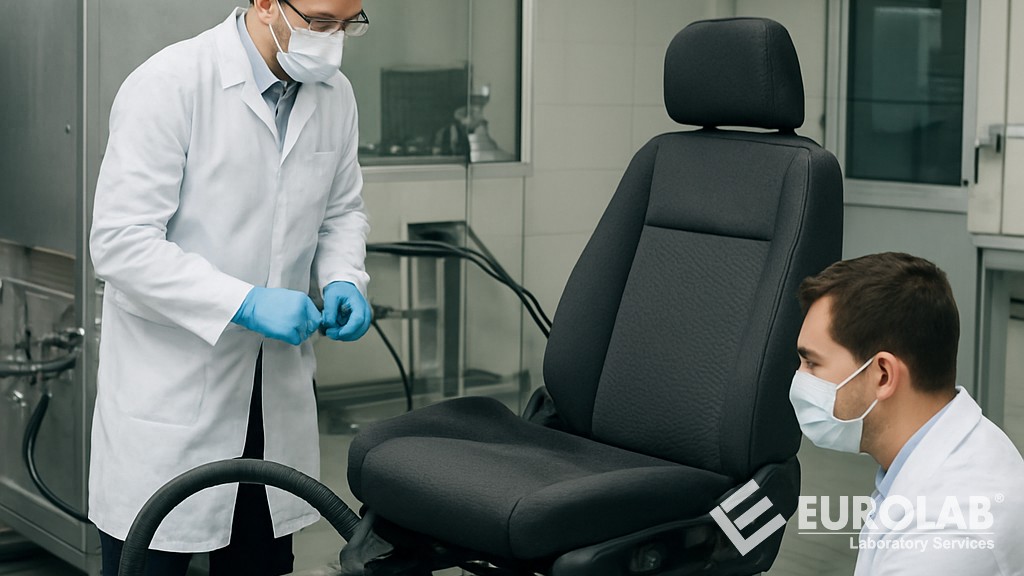
This standard refers to interior trim components, non-metallic components in the passenger compartment and luggage compartment, and also includes materials or components used as auxiliary materials in production, such as glass sealant, door panel protection adhesive, carpet protection film, and seat cover protectors.
The spreading performance of this standard refers to the spreading characteristics of interior flooring components under specific temperature and humidity conditions and includes four indices: odor (qualitative), formaldehyde content, condensable components, and spreading of organic matter.
Risk components refer to those components that are heavily used or of high volume and therefore contribute significantly to the overall vehicle's spread, and can be divided into high-risk components and risk components based on their material properties.
During testing, assemblies (e.g., instrument panel assembly, door panel assembly) must be mechanically disassembled into their constituent parts; for example, the instrument panel assembly should be separated into its upper housing (bubble), lower housing, air conditioner air outlet, and defroster outlet. Physically connected components must be separated into a homogeneous material; for example, the air conditioner air outlet can be separated into its air outlet frame and grille.
For complex components bonded together by adhesive or other methods, they should be tested separately to ensure they can be easily disassembled into homogeneous materials. Components that cannot be easily disassembled into homogeneous materials do not need to be disassembled, for example, the upper housing of the instrument panel (with bubbles).
Components of different colors should be tested separately.
After disassembly, the components should be calculated based on their total usage in the entire vehicle; for example, the interior door handle of the door panel might be disassembled into four parts. To reduce repeated testing, it is recommended to take random samples and perform tests on components manufactured in the same factory with the same material. The test results can then be used as a reference for components manufactured with the same material.
During emission testing of interior trim components, the component material approval list must be submitted to verify the adequacy of the emission performance test. Components listed in the list as meeting the test conditions must pass the emission performance test. Components added as a result of a product design change must also pass the emission performance test. Modified components must undergo both qualitative and quantitative testing simultaneously when resubmitted for testing.
In the complex world of industrial standards, corporate standards play a crucial role in ensuring quality, safety, and efficiency. One such standard is the Q/SQR E1-6-2014 standard. Essentially, this standard provides a comprehensive framework for managing engineering processes in dynamic industrial environments.
The Q/SQR E1-6-2014 standard finds primary application in the automotive industry, where reliability is unquestionable. In the rapidly evolving automotive industry, ensuring the safety and comfort of vehicle occupants extends beyond mechanical performance to the materials used inside the cabin. Volatile organic compounds (VOCs), formaldehyde, and other emissions from interior trim components can affect air quality and lead to health problems such as respiratory irritation, headaches, or risks of long-term exposure. The Q/SQR E1-6-2014 standard promotes healthier and more environmentally friendly vehicles by setting strict rules for emissions from vehicle interior components.
This standard covers a wide range of interior trim components, including instrument panels, door panels, seats, headliners, carpets, and other non-metallic materials that come into direct contact with occupants. These components are often made from plastics, foam, adhesives, and textiles that can release harmful substances due to heat, moisture, or prolonged use. Importantly, the requirements are defined progressively according to risk levels:
This categorization allows for practical application while prioritizing passenger health. This standard focuses solely on cabin emissions, excluding exterior parts and engine components.
The Q/SQR E1-6-2014 standard sets quantitative limits for several key emission parameters, tested under simulated real-world conditions such as high temperatures (e.g., 65 degrees) to accelerate gas release. While precise numerical thresholds may vary depending on the material type, this standard emphasizes low emission profiles similar to the E1 class formaldehyde limits (maximum 0,124 mg/m3 in relevant contexts). Key requirements include:
Compliance is verified through standardized laboratory procedures. The basic methods are as follows:
Suppliers are required to provide analysis certificates, and Chery conducts periodic audits.
For many years, our organization, with its competent and experienced staff, has been understanding the needs of its customers, providing the advanced testing services they require, and assisting them in the establishment, implementation, and improvement of management systems. Within this framework, we also provide testing services to businesses in accordance with the "Q/SQR E1-6-2014 Technical requirements for emission performance of automotive trim parts" standard.
To get an appointment, to get more detailed information or to request an evaluation, you can ask us to fill in our form and reach you.

