

Developed by BMW, a multinational vehicle manufacturer headquartered in Germany, the standard "BMW GS 97038 Determination of the combustion behavior of automotive interior trim materials" describes a uniform assessment procedure for the combustion behavior of automotive interior trim materials. This standard applies to sound insulation for all automotive interior trim, convertible tops, interior wheelhouse covers, engine compartment covers, and bulkheads (firewalls).
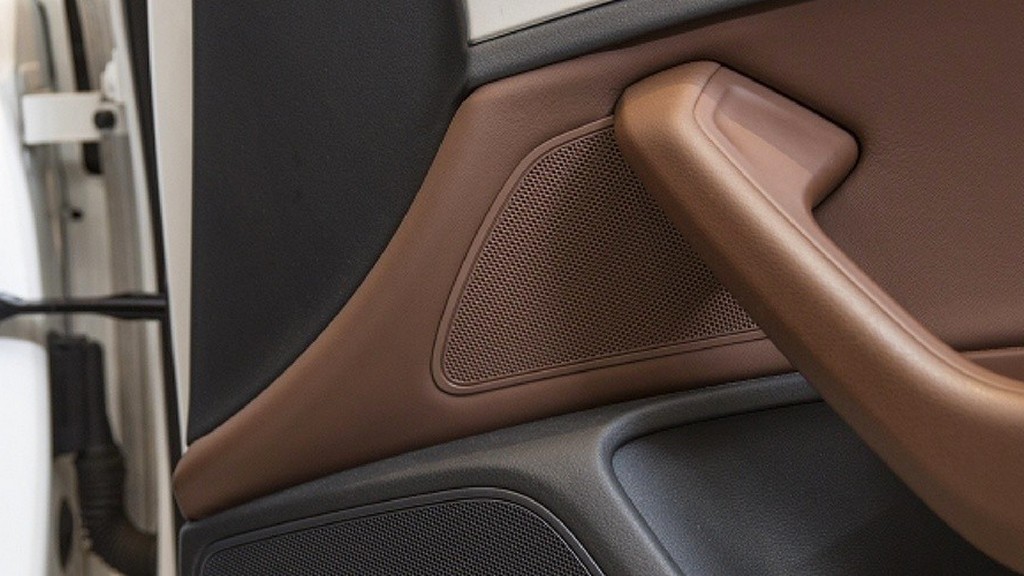
This standard does not apply to air vents, switches, instrumentation, on-board computers, temperature sensors, and other heater and air conditioning components located in the passenger compartment that are not designed to cushion the impact of the occupants in a collision.
In case of doubt, the company's vehicle regulations, product certification department should be contacted to find out whether the part meets the requirements of this standard.
For the purposes of this standard, the following terms and definitions apply:
Tests are conducted in accordance with the standard "DIN 75200: Determination of the burning behavior of interior materials in motor vehicles." Alternative tests using test panels are not permitted. At a burning rate of up to 75 mm/min, two tests must be conducted. At a burning rate of more than 75 mm/min, four tests must be conducted.
Samples are taken in accordance with DIN 75200. If the minimum dimensions according to DIN 75200 cannot be achieved when removed from finished parts, the following shall apply:
Additionally, for specific country-specific certifications, the required test samples should be contacted by the company's vehicle regulations, product certification department, as per their requirements.
Test results must be recorded in a test report or an IT system and made available upon request for the type approval process. The determined burn rate is proof of regulatory compliance.
Automotive interior trim parts must be marked by the manufacturer. Appropriate certification of affected parts and components must be provided where necessary.
In short, the BMW GS 97038 standard is a BMW interior flammability standard that specifies how automotive interior materials, including textiles, plastics, foam, leather, and similar materials, should behave when exposed to fire. Essentially, it's BMW's own version of tests commonly used for passenger safety in vehicle cabins.
This standard focuses on the combustion behavior of interior materials under controlled conditions. It uses a horizontal test setup (similar to ISO 3795 and DIN 75200). It measures the rate of combustion, or smouldering. BMW's threshold is typically around 75 mm/min before meeting the criteria.
The BMW GS 97038 standard belongs to the same family as the following standards:
The BMW GS 97038 standard applies only to automotive interior upholstery (e.g., seat fabrics, headliners, foam, and plastic surfaces). The aim is to ensure that materials do not ignite or spread flames too rapidly in the event of a small fire. Tests involve a small burner flame under standard laboratory conditions (23°C, 50% relative humidity, airflow, sample size approximately 356 mm x 100 mm x 13 mm).
This standard is considered important for the following reasons:
This testing must be performed in accredited laboratories by suppliers approved by BMW.
To pass the tests, this standard has established the following requirements:
BMW's internal projects typically require a burn rate of no more than 75 mm/min, although the general threshold for FMVSS 302 and ISO 3795 is no more than 100 mm/min. The limit for specific applications (e.g., seat upholstery vs. floor carpet) should be discussed with BMW.
Our organization, which has been supporting businesses across all sectors for years through a wide range of testing, measurement, analysis, and evaluation activities, has a strong team of employees who closely follow global developments in science and technology and are constantly improving themselves. In this context, we also provide testing services in accordance with the BMW GS 97038 standard for determining the combustion behavior of automotive interior trim materials.
To get an appointment, to get more detailed information or to request an evaluation, you can ask us to fill in our form and reach you.

