

The “SAE J2979 Test Method for Determining Compressive Stress Relaxation (CSR) Response to Vulcanized Rubber and Thermoplastic Elastomers” standard, developed by the American Society of Automotive Engineers (SAE) , describes a test method for performing Compressive Stress Relaxation (CSR) testing with the Automotive Standard (ASD) CSR Jig using appropriate test apparatus, configurations, and procedures. This standard defines the necessary equipment, guidelines for conducting the test, and the format for generating results and analyzing data.
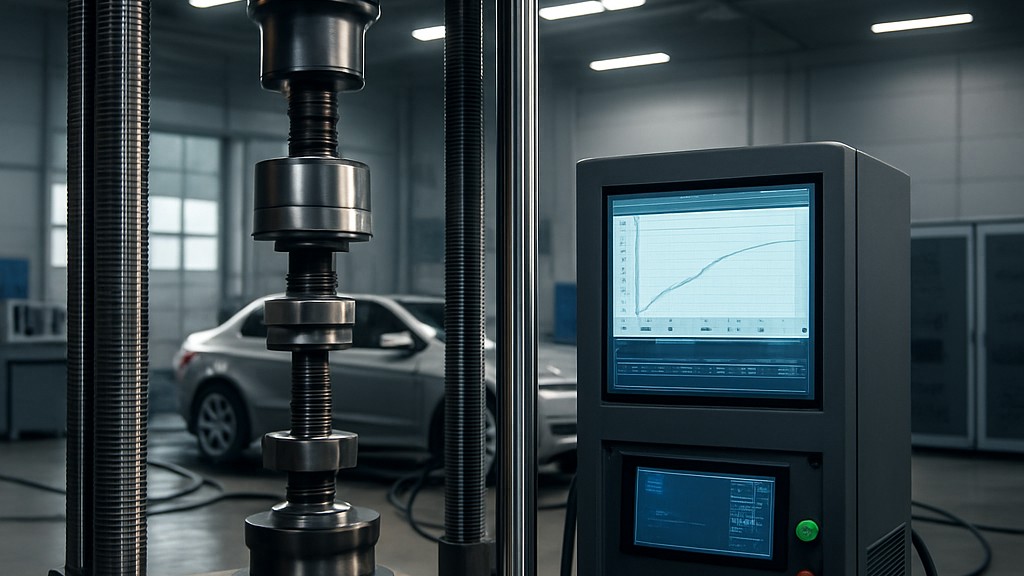
This standard specifies test procedures and conditions for determining the counterforce loss of a 12,7 mm diameter button clamped in an ASD CSR Jig with constant deformation, measured at periodic intervals at room temperature, after exposure to elevated temperatures or liquids.
This standard is designed for testing vulcanized rubber and thermoplastic elastomers having an instantaneous Type A hardness of 45 to 90 (ASTM D2240 standard). Specimens are molded and cured in accordance with ASTM D3182 standard.
This standard specifies a specific test method for the use of the ASD CSR Jig, including a list of required apparatus and quality control for the entire system. This standard was developed based on testing of new and existing samples. This method may involve hazardous materials, processes, and equipment. This method is not intended to address all safety issues associated with its use. It is the responsibility of the method user to establish appropriate safety and health practices and determine the applicability of regulatory limitations before using this method.
Determining the compressive stress relaxation (CSR) response of vulcanized rubber and thermoplastic elastomers is a technical investigation aimed at understanding the stress relaxation behaviors experienced by elastomeric materials over time. The definition of elastomer describes rubber and thermoplastic elastomer materials. They are widely used in automotive applications, seals (gaskets), hoses, vibration dampers, and similar applications. Elastomer materials lose their internal stress over time under prolonged loading, resulting in functional deterioration. Compressive stress relaxation (CSR) refers to the gradual release of applied stress by a material under constant deformation.
The main factors affecting the stress reduction with time under constant strain (CSR) are:
SAE J2979, a standard widely used by automotive original equipment manufacturers and material suppliers, provides a method for measuring the compressive stress relaxation behavior of elastomeric materials under constant deformation using the Automotive Standard (ASD) CSR Jig. This method measures how the sealing force (or restoring force) in materials such as vulcanized rubber and thermoplastic elastomers decreases over time under constant pressure at constant deformation.
Samples comply with ASTM D3182 standard molding and curing protocols, and testing may include exposure to elevated temperatures or liquid environments to evaluate long-term performance.
The ASD CSR Jig is at the heart of the procedure. Test samples typically consist of 12,7 mm diameter buttons compressed between rigid pressure plates with a constant deformation. Calibrated compression fixtures compatible with the CSR jig and a load cell or force measurement system capable of continuous or intermittent monitoring are used in the tests.
This method generally consists of the following steps:
The SAE J2979 standard is important because it provides a consistent and repeatable method for evaluating how vulcanized rubber and thermoplastic elastomers lose strength over time under pressure (a behavior known as compressive stress relaxation). This property is critical for seals, gaskets, and other elastomeric components used in automotive, aerospace, and industrial applications. This standard is considered important for the following reasons:
This is crucial in evaluating elastomers for high-demand environments such as engine compartments, where materials must withstand years of thermal and chemical stress.
As a result, the SAE J2979 standard provides a detailed and reproducible method for determining the compressive stress relaxation response of elastomers under specified deformation and environmental conditions. The use of the ASD CSR apparatus and specific procedural controls make it an indispensable standard for automotive seal component development and validation.
Our organization, which has been supporting businesses across all sectors for years through a wide range of testing, measurement, analysis, and evaluation activities, boasts a strong team of employees who closely follow global developments in science and technology and are constantly improving themselves. In this context, we also provide testing services in accordance with the standard "SAE J2979 Test Method for Determining Compressive Stress Relaxation (CSR) Response for Vulcanized Rubber and Thermoplastic Elastomer."
To get an appointment, to get more detailed information or to request an evaluation, you can ask us to fill in our form and reach you.

