

The GM9102P standard developed by the General Motors company describes a test method to be used for scratching pre-painted samples, removing streak corrosion products, and measuring the loss of adhesion from the drawn line due to abrasive recoil.
This standard is based on the ASTM D1654 standard published by the American Testing and Materials Organization (ASTM). This standard, whose full name is “ASTM D1654-08 Standard test method for the evaluation of painted or coated specimens exposed to corrosive environments”, also applies to the processing of pre-painted or coated specimens for accelerated and atmospheric exposure tests and their corrosion-related swelling, loss of adhesion at a line mark. or other film defects, a test method for their subsequent evaluation.
Briefly, these test methods are standard corrosion test methods that evaluate the resistance of painted or coated samples after exposure to different corrosive environments. Advanced laboratories use the ASTM B117 protocol to operate a salt spray fog apparatus during these tests. The test method described in this standard simulates multiple real-world corrosive environments in a controlled space. The ASTM D1654 standard is generally used for sample preparation and post-test evaluations. Additional tests are then performed on these samples to determine their resistance in various environments. For example, the ASTM D2247 standard tests the water resistance of the coating at 100 percent relative humidity. With the ASTM D1735 standard, the water resistance of the coating is tested using a water fog apparatus.
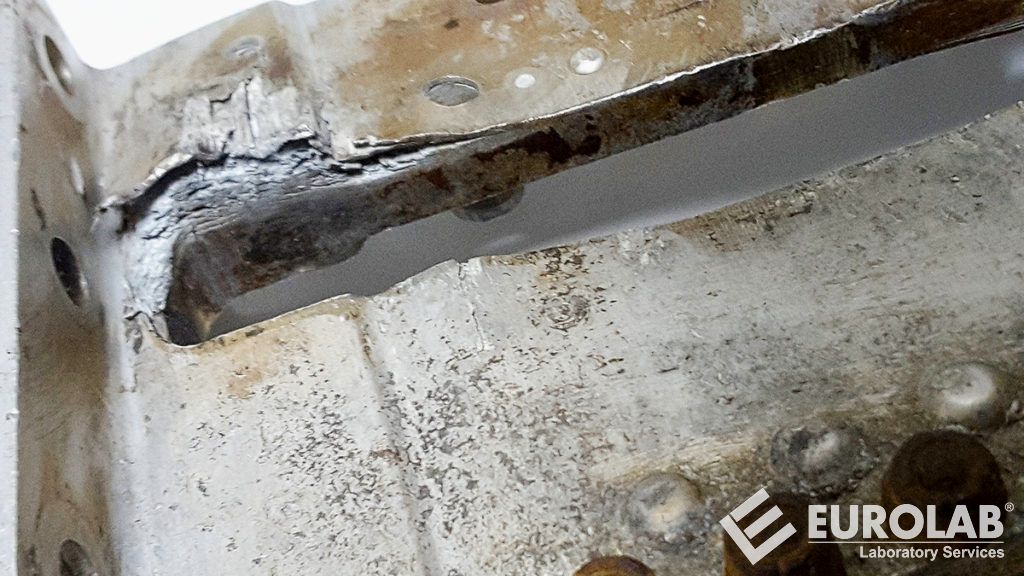
Corrosion creepback is paint damage that occurs as an irregularly shaped blister-like lifting of the paint surface. Mechanical damage to the paint surface, such as stone chips and scratches, causes moisture to enter the underlying coats or metal substrate. Poor preparation of the metal before painting, insufficient cleaning will cause bubbles in the paint. Poor rust removal or insufficient removal of metal particles left on the surface from sanding are also causes of creepback. Likewise, sudden rust formation on freshly blasted surfaces or inadequate sealing are the main reasons for this situation.
Among the numerous test, measurement, analysis and evaluation studies it provides for businesses in various sectors, our organization also provides corrosion creepback test services within the scope of the GM9102P standard, with its trained and expert staff and advanced technological equipment.
To get an appointment, to get more detailed information or to request an evaluation, you can ask us to fill in our form and reach you.

