VW 01139 Steering System Assembly and Individual Parts - Technical Cleaning
The “VW 01139 Steering system assembly and individual parts - Technical cleaning” standard, developed by the Volkswagen automotive company, applies to the following:
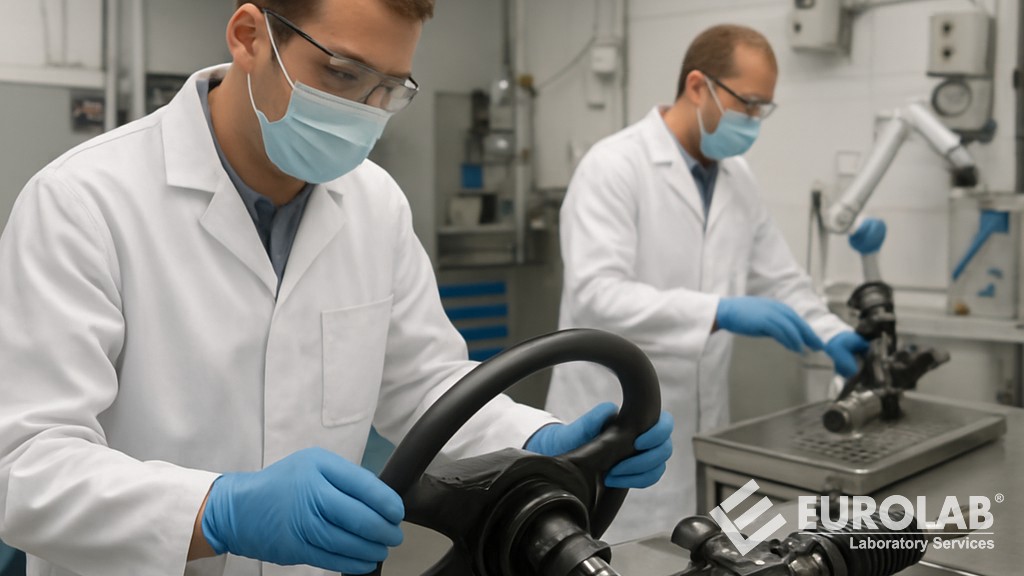
- The steering system components and individual parts are as they were received.
- Sample and production inspections at all manufacturing facilities that produce steering systems.
This standard is used for the following:
- To standardize and ensure the comparability of cleanliness analyses conducted by relevant laboratories.
- Reviewing the washing processes in the components and packaging units.
- Verifying measures according to Volkswagen procedures for assembly, packaging and the environment.
The minimum requirements for the test room have been defined as follows:
- According to Volkswagen procedures, cleanliness level 2 (SaS2: cleanroom).
- Technical cleaning is tested according to Volkswagen procedures and ISO 16232-1, ISO 16232-3, ISO 16232-6, ISO 16232-7, ISO 16232-8 and ISO 16232-10 standards.
- The auditor must verify the suitability of the selected test condition through qualification analyses (deterioration measurements, null value determination) according to Volkswagen procedures.
- For cleanliness analysis, a fabric membrane filter with a maximum pore size of 7 μm should be used.
- Depending on the degree of contamination, one or two pre-filters may be used.
The acceptance of the test method/test conditions is carried out in the following ways before proceeding to the production phase:
- as part of the initial sample presentation at the assembly site or
- Purchased parts are discussed with part owners within the scope of project meetings or
- For parts to be manufactured, during the project process, any adaptations are subject to mandatory notification through repeated sample inspections.
The component-specific requirements have been defined as follows:
- The maximum permissible particulate contaminants, including metallic/glossy, non-metallic/glossy, and abrasive particles and fibers, as well as the maximum permissible particle sizes and sample counts, should be taken from the component engineering drawing.
- Particle length is defined as the maximum Feret diameter, while particle width is defined as the minimum Feret diameter.
- The specifications for the maximum permissible particle length and width must be met independently.
- Pressure washing should be used as the extraction method.
- Deviations such as the use of ultrasonic extraction for small parts must be confirmed in the component drawing.
- Unless otherwise specified in the component engineering drawing, the extraction is applied to the entire component surface.
The cleaning agent used for the dirt analysis is filtered through a pre-filter with a pore size of no more than 5 μm. All auxiliary equipment necessary for the subsequent pressure rinsing process, such as beakers, collection vessels, and lids, must be rinsed or cleaned with a cold cleaning agent before testing.
VW 01139 is a factory standard specifically related to technical cleanliness for steering systems and components. This standard is part of Volkswagen's broader cleanliness specifications and sets strict limits on particulate contamination in manufactured parts. These standards ensure that components are free from manufacturing residues, chips, fibers, or other debris that could lead to premature wear, failures, or problems in critical systems.
Key points regarding the VW 01139 standard are as follows:
- This applies to steering system components and individual steering components.
- It focuses on technical cleaning. It measures and limits particulate contamination in terms of size, quantity, and type (metallic, non-metallic, fibers).
- It is part of VW's similar range of standards and includes:
- VW 01134 Engine Components
- VW 01135 Intake / charge / low pressure areas
- VW 01136 Fuel transport areas
- VW 01137 Coolant transport components
- VW 01149 General technical cleaning requirements
These standards are primarily used by VW suppliers and production facilities in their quality control and inspection processes (for example, using methods such as residue extraction, filtration, and microscopic analysis).
In modern vehicle manufacturing, even microscopic particles can cause problems over time, especially in safety-critical systems like the steering wheel. For example, valve sticking, pump wear, or electronic sensor failures in electric power steering systems. VW implements these features to maintain high reliability, reduce warranty claims, and meet internal quality targets.
This isn't a standard fault code; it's an engineering and quality certification used behind the scenes in the supply chain.
The VW 01139 cleaning standard is a key part of VW's quality ecosystem. This standard covers the complete steering assembly and its individual components used in various Volkswagen vehicles.
In automotive terminology, steering assembly (or simply Assembly) refers to the steering mechanism as a complete unit or main subsystem. In a Volkswagen application, this typically includes:
- Steering rack/gearbox: The central mechanical component that converts steering wheel movement into changes in steering direction.
- Steering column: The shaft that transmits rotation from the steering wheel to the steering gear.
- Steering arms and ends: Rods that connect the steering rack to the wheel hubs and enable left/right steering movement.
- Power steering components: If equipped (hydraulic or electric), include the pump, hoses, reservoir, or electric power steering unit.
- Seals and bellows: Protective bellows in moving steering knuckles that keep dirt out and oil in.
When referenced in the parts catalog, the ASSY (system assembly) can be ordered as a whole or as separate components.
In short, the VW 01139 standard refers to the steering rack assembly and related components in a Volkswagen vehicle. This system includes:
- It converts the driver's steering input into wheel movement.
- It includes mechanical and, in most cases, electronic power supply components.
- It can be serviced as a complete assembly or via individual parts (tie rods, bellows, steering column components).
- In online and original equipment manufacturer (OEM) part systems, parts are cataloged under codes that help identify exactly compatible parts.
For many years, our organization, with its competent and experienced staff, has been understanding the needs of its customers, providing the advanced testing services they require, and assisting in the establishment, implementation, and improvement of management systems. Within this framework, we also provide testing services to businesses in accordance with the "VW 01139 Steering system assembly and individual parts - Technical cleaning" standard.



