PSA B65 4360 Adhesive or Non-Adhesive Cellular Materials for Sealing, Packaging and Acoustic Insulation.
Developed by the French car manufacturer PSA Group, now part of Stellantis, the “PSA B65 4360 Self-adhesive or non-adhesive cellular materials for sealing, packing and acoustic insulation” standard converts the technical specifications of self-adhesive or non-adhesive cellular materials used for sealing, backing and acoustic insulation into a code. As defined, this code must provide the following:
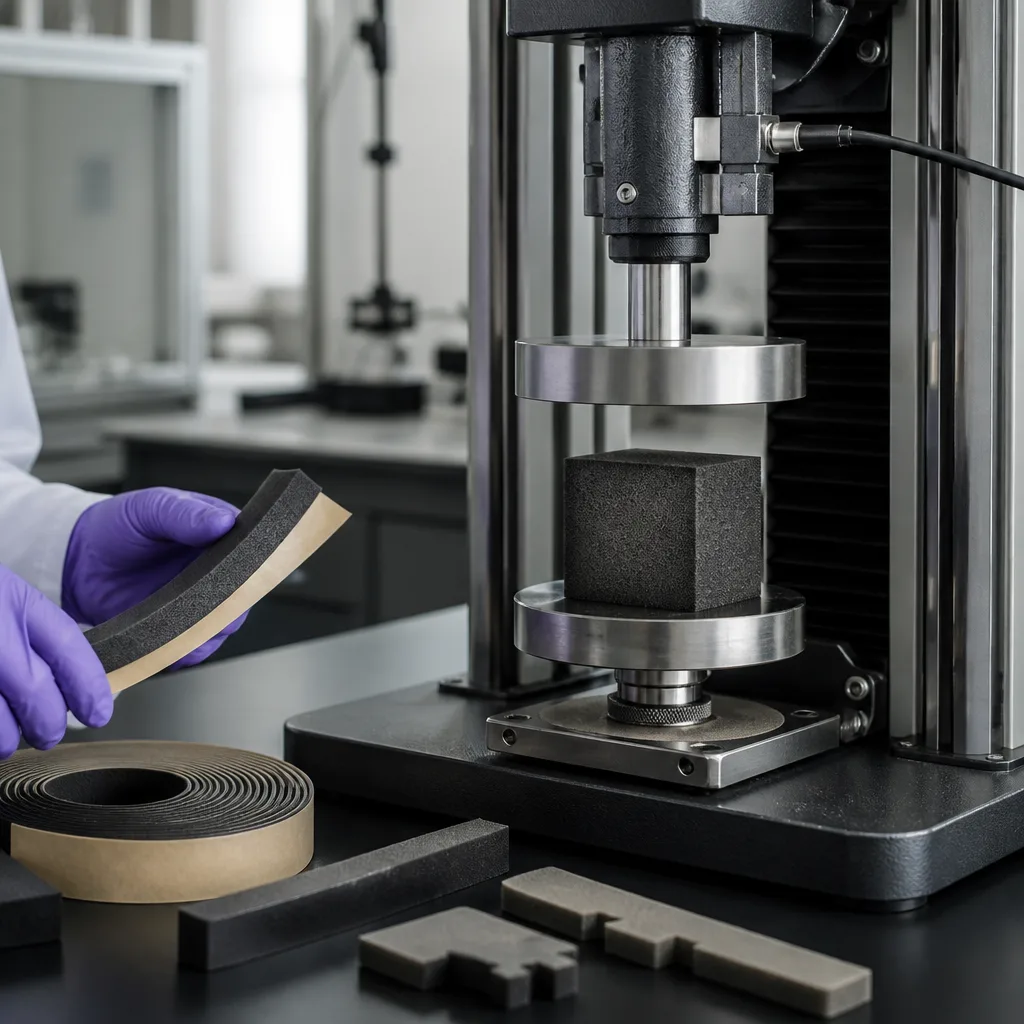
- Description of the tests to be performed for material classification.
- Specifying the criteria that a material must meet during the development of a particular part.
This standard applies to self-adhesive or non-adhesive spongy or cellular materials made from elastomers (thermoplastics, thermoplastic elastomers, and rubbers). It also applies to sheets, strips, molded or cut parts, and the like, used for sealing (waterproof, airtight, dustproof), support, or acoustic insulation (anti-vibration, anti-squeak devices).
For most parts made from self-adhesive cellular material, it defines the properties to be included in the drawing in order to achieve the required performance characteristics. This does not apply to seat foams, foams used for sealing sheets, and the like, which are subject to specific standards. It also does not apply to foams with absorbent properties, such as PU foam blocks that may be found under the instrument panel, or packaging foams that also have absorbent properties (e.g., lower pillars).
The primary objectives of the PSA B65 4360 standard are as follows:
- To standardize the properties of cellular materials used in vehicle manufacturing.
- To define material properties and performance classifications.
- To establish standardized testing requirements.
- To ensure compatibility with automotive assembly processes.
- To improve sealing, vibration damping, and passenger comfort.
- To simplify communication between vehicle manufacturers and suppliers.
This standard applies to cellular materials used for the following purposes:
- Water isolation
- Air insulation
- Dust insulation
- Packaging and cushioning
- Anti-squeaking applications
- Anti-vibration components
- Acoustic insulation
- Noise reduction
Typical material forms include:
- Foam sheets
- Foam tapes
- Molded foam parts
- Die-cut gaskets
- Sealing strips
- Acoustic insulation pads
The PSA B65 4360 standard includes adhesive and non-adhesive cellular materials such as:
- Polyurethane (PUR)
- Polyethylene (PE)
- Polyvinyl chloride (PVC)
- Rubber foams
- Closed-cell foams
- Open-cell foams
- Honeycomb cellular structures
- Sponge materials
Material selection depends on the application, temperature exposure, and required mechanical properties.
One of the most important features of the PSA B65 4360 standard is its structured identification system. Each material receives a coded identification specifying its properties, including:
- Material type
- Density
- Vehicle assembly area
- material structure
- Compressibility
- Compression permanent deformation
- Flammable property
- Color fastness
- Water absorption
- Adhesion performance
- Acoustic properties
This coding allows engineers to define the required performance characteristics directly from engineering drawings.
The technical requirements have been defined as follows:
- Material type: This standard defines different categories of cellular materials according to polymer composition and intended use.
- Density: Foam density is controlled because it directly affects:
- mechanical strength
- Weight
- Compression behavior
- Acoustic performance
- Durability
Higher density foams generally provide greater structural stability, while lower density foams offer better flexibility and weight savings.
- Vehicle area: Materials are classified according to the environmental conditions of the installation site, including the expected operating temperature and exposure conditions. Typical locations include:
- Passenger compartment
- Engine compartment
- Body cavity
- Luggage
- Door systems
Different regions require different levels of thermal and environmental resistance.
- Material structure: This standard distinguishes between the following:
- Open-cell foams
- Closed-cell foams
- Sponge structures
- Honeycomb structures
The choice depends on sealing efficiency, moisture resistance, compressibility, and sound absorption.
- Compressibility: Compressibility defines the force required to compress a material to a specific thickness. Proper compressibility ensures:
- Reliable sealing.
- Easy setup
- Long-term dimensional stability
- Controlled compression forces
- Compression ratio: This standard specifies the allowable compression characteristics required to maintain the sealing effectiveness of the product throughout its service life.
- Flammability requirements: Since many foam materials are installed inside vehicle cabins, PSA B65 4360 specifies flammability requirements to enhance passenger safety. Tests evaluate the following:
- Burning rate
- Flame propagation
- Spontaneous extinguishing behavior
This material can only be used in designated vehicle zones if it meets the required limits.
- Color fastness: Materials exposed to sunlight or visible vehicle interiors must be resistant to the following:
Color stability helps maintain the appearance of the vehicle throughout its lifespan.
- Water absorption: Foam materials are evaluated for moisture absorption because excessive water absorption can cause the following:
- Increases weight
- It promotes corrosion.
- It encourages mold growth.
- It reduces insulation performance.
- It breaks the adhesive bond.
Low water absorption is particularly important for outdoor sealing applications.
- Adhesion properties: For self-adhesive foams, this standard specifies the following requirements:
- Initial adhesion strength
- Peel resistance
- Bonding resistance
- heat resistance
- Aging resistance
- Adhesion after exposure to environmental factors.
These requirements ensure reliable adhesion during vehicle assembly and prolonged operation.
- Acoustic performance: Evaluation of acoustic absorption includes the following measurements:
- Sound absorption coefficient
- Frequency-dependent acoustic behavior
- Impedance tube test
These requirements help engineers reduce the following:
- Road noise
- Wind noise
- Structural vibration
- Cabin resonance
Acoustic testing ensures that passenger comfort is optimized while minimizing vehicle weight.
The PSA B65 4360 standard refers to laboratory methods for the evaluation of the following:
- Density
- Compression properties
- water absorption
- Flammability
- Adhesion performance
- Acoustic absorption
- Environmental durability
Standardized testing ensures consistent evaluation among suppliers.
Materials approved under PSA B65 4360 are generally used in the following areas:
- Door seals
- Instrument panel insulation
- Dashboard anti-squeak pads
- HVAC sealing
- Luggage insulation
- Ceiling covering
- Pole covering
- Engine compartment sealing
- Cable harness protection
- Floor insulation
- Acoustic barriers
- Body cavity fillings
Although primarily developed for PSA vehicles, the principles of the PSA B65 4360 standard are applicable throughout the entire automotive supply chain. It is commonly used by the following sectors:
- Automotive original equipment manufacturers
- First-tier suppliers
- Foam producers
- Adhesive tape manufacturers
- Acoustic insulation suppliers
- Sealing system manufacturers
For many years, our organization, with its competent and experienced staff, has been understanding the needs of its clients, providing the advanced testing services they require, and assisting them in the establishment, implementation, and improvement of management systems. Within this framework, we also provide testing services compliant with the PSA B65 4360 standard.



