

Developed by General Motors Europe (GME), the “GME 60276 Determination of Resistance of Decorative Materials to Odor Emission” standard is an engineering standard that defines a test method for evaluating the resistance of automotive upholstery materials to odor emission when exposed to high temperature and humidity conditions. This standard helps ensure that interior materials do not produce or emit unpleasant odors during normal vehicle use, especially in hot weather conditions.
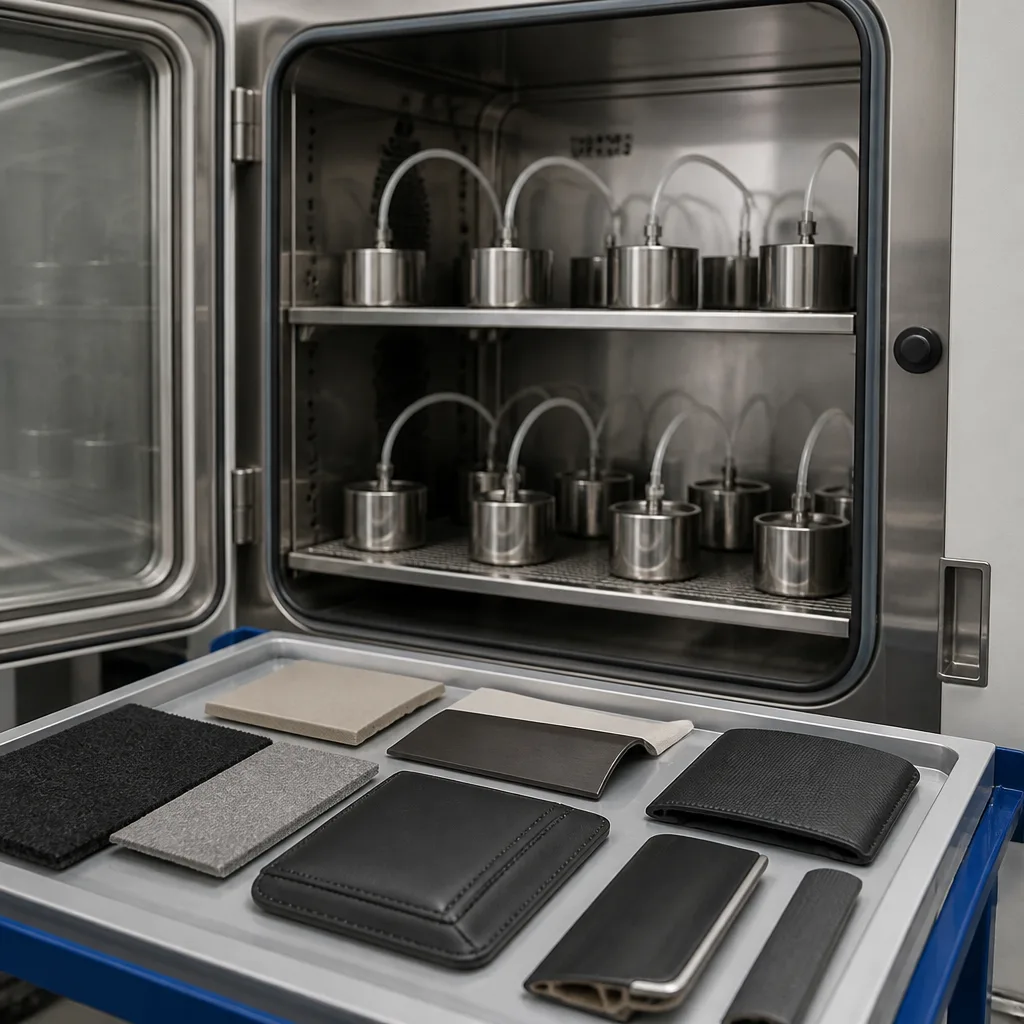
As customer expectations for vehicle interior quality continue to rise, odor performance has become a significant quality attribute alongside appearance, durability, and emissions. The GME 60276 standard provides manufacturers with a standardized method for evaluating this important attribute.
The primary purpose of the GME 60276 standard is to determine whether automotive interior materials remain odor-neutral after exposure to environmental conditions that simulate the vehicle cabin in hot and humid weather. This standard helps manufacturers in the following areas:
The GME 60276 standard applies to numerous automotive interior materials, including:
This method evaluates both individual materials and, where applicable, complete flooring components.
The test is based on a simple principle:
Unlike measurements of volatile organic compounds (VOCs), the GME 60276 standard assesses human perception, making it highly relevant to the actual customer experience.
Maintaining the same conditions for each test ensures reproducible results.
After environmental exposure, trained evaluators examine the odor emitted by the sample. The evaluation typically takes the following into account:
Human evaluators receive training to minimize subjective variation and increase repeatability.
Typical products that are commonly tested include:
These materials can release volatile compounds when heated, making odor testing necessary.
Scent quality has become a significant aspect of perceived vehicle quality. Without standardized scent testing, manufacturers may face the following:
Testing during material qualification significantly reduces these risks.
Although related, volatile organic compound (VOC) testing and odor testing measure different characteristics.
Many automotive manufacturers require both odor and VOC testing because even low-VOC emission materials can produce unpleasant odors.
The GME 60276 standard is commonly used in the following situations:
The main benefits of this standard are as follows:
The GME 60276 standard is often used in conjunction with other automotive interior quality standards, including:
Although the GME 60276 standard was developed for automotive applications, the methodology is also valuable in the following areas:
In conclusion, the GME 60276 standard is a key materials testing standard for evaluating the odor emission properties of automotive interior trim materials under high temperature and humidity conditions. By combining controlled environmental exposure with trained sensory assessment, it helps manufacturers ensure that vehicle interiors remain free of unwanted odors throughout their lifespan. Since odor quality is a crucial aspect of customer satisfaction, this standard continues to play a vital role in material qualification and quality assurance for automotive interior components.
For many years, our organization, with its competent and experienced staff, has been understanding the needs of its clients, providing the advanced testing services they require, and assisting them in the establishment, implementation, and improvement of management systems. Within this framework, we also provide testing services compliant with the GME 60276 standard.
To get an appointment, to get more detailed information or to request an evaluation, you can ask us to fill in our form and reach you.

