

The “Mercedes-Benz DBL 5558 Elastomer Parts Subjected to High and Extremely High Mechanical-Dynamic Stress in an Application Range Up to 100 Degrees” standard, developed by Daimler, the owner of the Mercedes-Benz brand, describes the requirements for elastomer parts subjected to extremely high mechanical-dynamic stress and thermal stress up to 100 degrees.
To guarantee product safety and quality and to meet homologation requirements, all relevant legal regulations and laws must be complied with. Furthermore, the relevant requirements of the Daimler Group must also be implemented.
In terms of content and recyclability, materials, procedures and process engineering, components and systems must comply with all applicable legal requirements.
Legal requirements and regional standards regarding emission behavior inside the vehicle must be complied with. Daimler's specific specifications regarding emissions from materials and component parts inside the vehicle must also be met.
The Mercedes-Benz DBL 5558 standard is a material specification from Mercedes-Benz (formerly Daimler) that defines requirements for elastomer (rubber) parts subjected to high and extremely high mechanical-dynamic loads and remaining thermally stable at temperatures up to 100 degrees Celsius. This standard is primarily designed for molded rubber components used in automotive applications where long-term durability, fatigue resistance, and reliable sealing performance are critical.
The DBL 5558 standard specifies the technical requirements for elastomer components that must withstand repeated mechanical stress, vibration, compression, and dynamic loading during vehicle operation.
Unlike general-purpose rubber specifications, this standard focuses on materials used in harsh environments where failure could affect vehicle safety, comfort, or reliability. This specification defines the minimum material properties, environmental resistance, manufacturing quality, and qualification testing required for components to be approved for Mercedes-Benz production vehicles.
The Mercedes-Benz DBL 5558 standard applies to elastomer components such as those listed below:
These components undergo continuous deformation during normal vehicle operation and therefore require superior fatigue resistance.
The DBL 5558 standard specifies elastomer compounds that can maintain their mechanical properties under repeated loading. Depending on the application, suitable materials may include:
Material selection depends on the following:
Typical performance characteristics evaluated under the DBL 5558 standard include:
The Mercedes-Benz DBL 5558 standard emphasizes that these properties must be maintained throughout the component's service life.
One of the defining characteristics of this standard is the intended operating temperature:
Components operating above this temperature typically require different Mercedes-Benz specifications, such as DBL 5565 or DBL 5568.
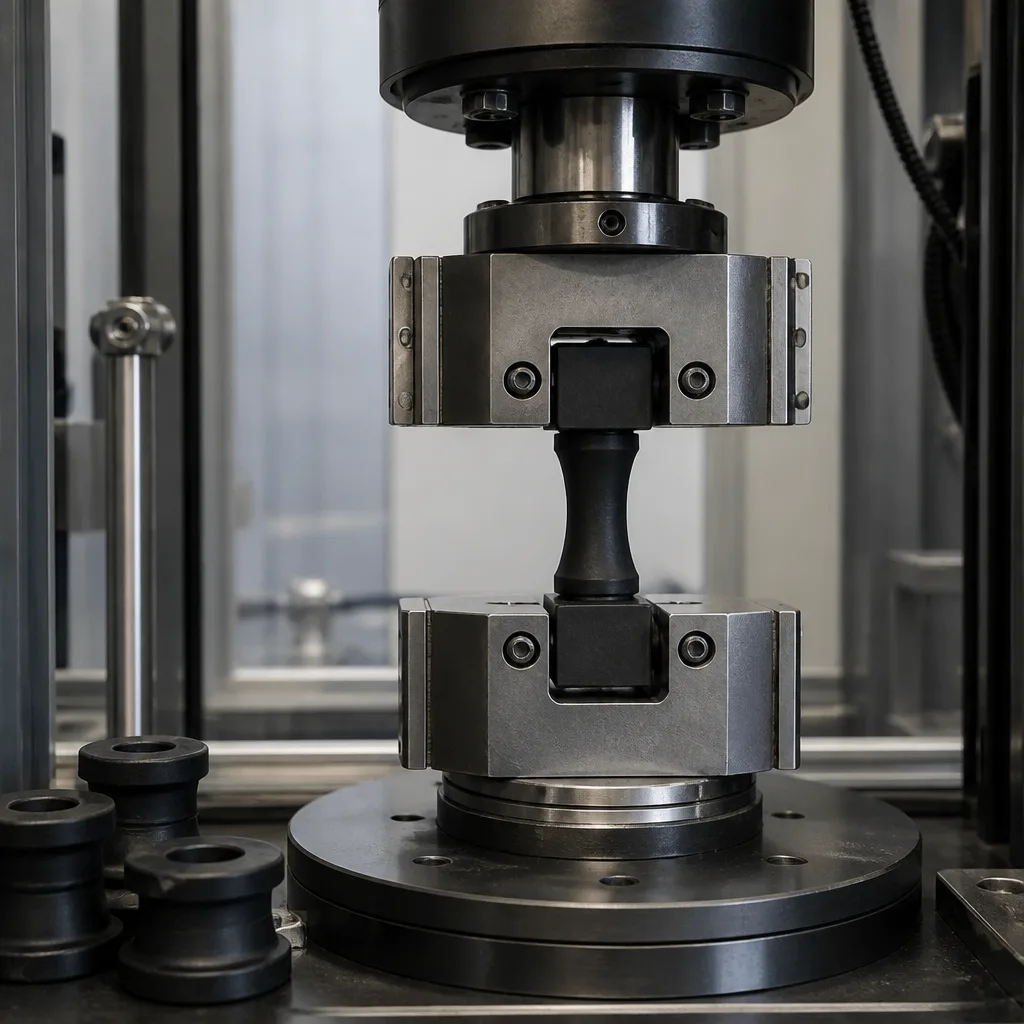
Manufacturers who qualify materials according to the DBL 5558 standard are generally required to perform the following tests:
These tests help verify that the components will function reliably for the expected lifespan of the vehicle.
The DBL 5558 standard also addresses manufacturing quality by considering the following requirements:
The main automotive applications of the Mercedes-Benz DBL 5558 standard are as follows:
These parts are subjected to repeated mechanical movements throughout the vehicle's lifespan.
Compliance with the DBL 5558 standard offers several advantages:
The Mercedes-Benz DBL 5558 standard is part of a broader family of Mercedes-Benz elastomer specifications. The main standards it is associated with include:
In conclusion, the Mercedes-Benz DBL 5558 standard is a crucial material specification for elastomer components operating under demanding mechanical and dynamic conditions. By defining stringent requirements for mechanical strength, fatigue resistance, thermal stability, aging performance, and manufacturing quality, this standard helps ensure that critical rubber components continue to operate reliably throughout a vehicle's lifespan. Compliance with this standard supports enhanced safety, durability, ride comfort, and long-term reliability in demanding automotive applications.
For many years, our organization, with its competent and experienced staff, has been understanding the needs of its customers, providing the advanced testing services they require, and assisting them in the establishment, implementation, and improvement of management systems. Within this framework, we also provide testing services in accordance with the Mercedes-Benz DBL 5558 standard.
To get an appointment, to get more detailed information or to request an evaluation, you can ask us to fill in our form and reach you.

