

The “GME 60325 Test Method for Determining the Tensile Properties of Body Cladding, Sealants and Sound Insulation Materials” standard, developed by General Motors Europe (GME), is a materials testing standard that specifies the test method used to determine the tensile properties of automotive body cladding materials, sealants, sound insulation materials, and similar non-metallic components. This standard provides a consistent procedure for measuring how materials behave when subjected to tensile force. Historically, it has been used in General Motors and Opel supplier qualification programs to ensure that interior and exterior materials possess sufficient mechanical strength for automotive applications.
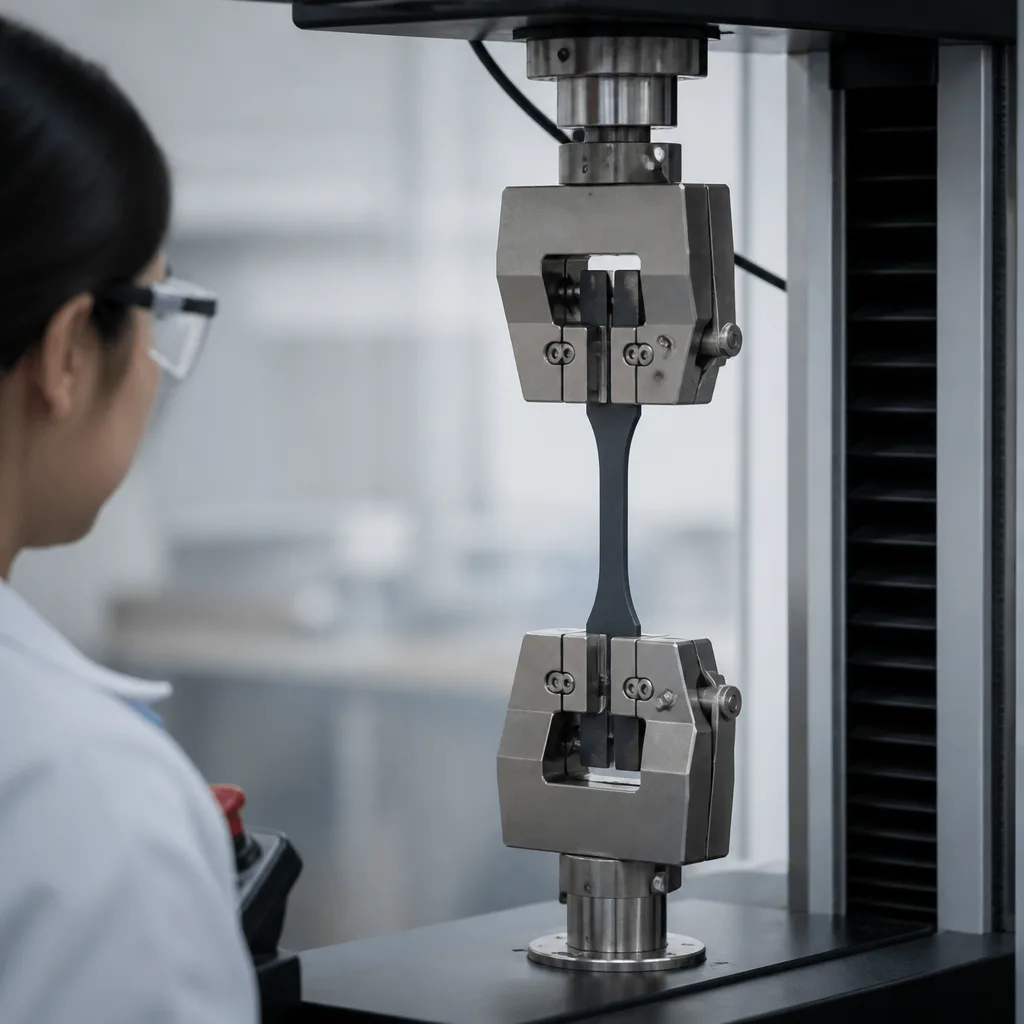
The primary goal of the GME 60325 standard is to establish a uniform tensile testing procedure that allows engineers to evaluate the mechanical performance of flexible automotive materials. This standard helps determine whether a material can withstand manufacturing stresses, assembly forces, and long-term service loads without tearing or excessive deformation.
Materials typically covered by this standard include:
The GME 60325 standard applies to many non-metallic automotive materials used in vehicle interiors and body systems. This standard is particularly valuable in the following cases:
Although this standard was designed for General Motors applications, its methodology is similar to internationally accepted tensile testing procedures for textiles, coated fabrics, elastomers, and polymers.
In principle, this test evaluates the tensile properties of a prepared specimen by pulling it at a controlled speed on a tensile testing machine until it breaks. During the test, the machine continuously records the applied force and the elongation of the specimen. The resulting force-displacement curve is used to determine important mechanical properties.
Depending on the material type, the GME 60325 standard can be used to specify the following characteristics:
These measurements provide engineers with a detailed understanding of material strength and mechanical performance.
Typical laboratory equipment used in these tests includes:
To ensure reproducible results, samples are prepared in standard sizes. Key preparation requirements include:
Many automotive materials are conditioned under controlled laboratory temperature and humidity before testing to minimize environmental impact.
The described test method generally follows these steps:
The GME 60325 standard is commonly used in the evaluation of the following materials:
This test ensures that these components maintain their structural integrity throughout vehicle manufacturing and service.
Material suppliers use the GME 60325 standard for the following purposes:
Consistent pull characteristics help reduce warranty issues and increase product reliability.
The GME 60325 standard offers several advantages:
The tensile testing concepts in the GME 60325 standard are largely comparable to the following internationally accepted standards:
However, the GME 60325 standard includes General Motors-specific sample preparation, acceptance criteria, and application guidelines designed specifically for automotive body coatings, sealants, and sound insulation products.
Automotive interior and seal materials are subjected to repeated mechanical loads during manufacturing, assembly, and vehicle operation. Insufficient tensile strength can lead to tearing, cracking, permanent elongation, or premature failure, affecting both appearance and functionality. The GME 60325 standard provides a consistent method for verifying that these materials meet General Motors' durability and quality expectations before being used in manufacturing vehicles.
In conclusion, the GME 60325 standard is a crucial engineering testing standard for evaluating the tensile performance of automotive coating materials, sealants, and sound insulation components. By defining a standardized tensile testing methodology, it enables engineers, suppliers, and quality professionals to consistently assess mechanical strength, elongation, and failure behavior. This helps ensure that automotive materials perform reliably throughout their manufacturing and vehicle service life.
For many years, our organization, with its competent and experienced staff, has been understanding the needs of its clients, providing the advanced testing services they require, and assisting them in the establishment, implementation, and improvement of management systems. Within this framework, we also provide testing services compliant with the GME 60325 standard.
To get an appointment, to get more detailed information or to request an evaluation, you can ask us to fill in our form and reach you.

