

The “Ford FLTM BN 121-01 Bond Strength Test (Interior Trim Decorations)” standard, developed by Ford Motor Company (Ford), describes a test method used to evaluate the bond strength of decorative or functional components in interior trim.
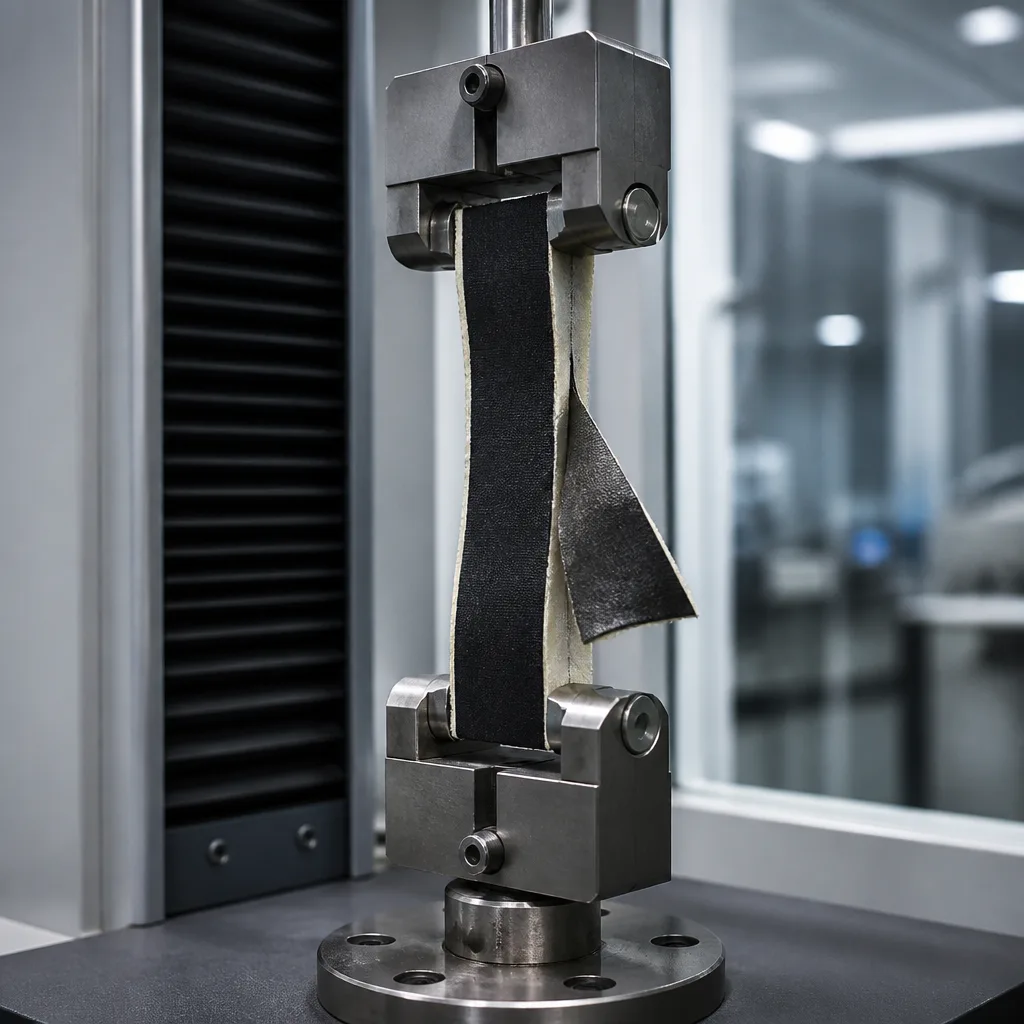
In interior trim applications, bond strength refers to the ability of an bonded system (such as fabric, vinyl, leather, foam, or decorative films) to resist separation from its substrate (typically plastic, foam, or composite panels) under mechanical, thermal, and environmental stresses. In automotive applications, this property is crucial because interior components are not merely cosmetic; they must remain stable for the life of the vehicle.
Adhesion strength testing evaluates the adhesion or mechanical bonding force between layers, such as:
When testing the bond strength of interior coatings, failures are generally classified as follows:
In conclusion, adhesive strength in interior floor decorations is a critical durability and quality parameter that ensures layered materials adhere permanently to each other under heat, stress, and time. It directly affects durability, perceived safety, visual quality, manufacturing reliability, and warranty performance.
The primary purpose of the Ford FLTM BN 121-01 standard is to measure how strongly decorative trim elements are bonded to a substrate or component. These decorative elements may include:
This testing method ensures that these parts do not peel, separate, or break during vehicle use. This method typically evaluates the following:
This method is typically applied to interior decorative trim systems rather than structural components.
In general, this test follows these steps:
The Ford FLTM BN 121-01 standard is part of a broader system of internal material testing, including the following:
Together, these ensure the overall lifecycle performance of the internal systems.
The Ford FLTM BN 121-01 standard is necessary because it checks for a seemingly minor but crucial failure mode in terms of vehicle quality: separation of interior trim and poor adhesion between decorative layers and substrates.
The main reasons why this standard is considered important are as follows:
This standard ensures that the adhesion strength is sufficiently high for real-world vehicle operating conditions.
This standard simulates the mechanical reliability required to prevent premature failure of glued-in flooring.
In this respect, this standard directly supports the brand's perception of quality.
This standard provides a quantitative measure to ensure that suppliers and factories consistently meet Ford requirements.
Pre-production testing helps catch defects in the early stages of development.
In short, the Ford FLTM BN 121-01 standard ensures that decorative interior materials adhere permanently under real-world vehicle conditions, preserving durability, appearance quality, manufacturing consistency, and customer satisfaction.
In conclusion, the Ford FLTM BN 121-01 standard is an adhesion strength evaluation method for interior trim designed to ensure that decorative and functional interior components remain securely attached under real-world vehicle conditions. It plays a vital role in maintaining durability, quality consistency, and supplier compliance in automotive interior manufacturing.
For many years, our organization, with its competent and experienced staff, has been understanding the needs of its customers, providing the advanced testing services they require, and assisting them in the establishment, implementation, and improvement of management systems. Within this framework, we also provide testing services to businesses in accordance with the Ford FLTM BN 121-01 standard.
To get an appointment, to get more detailed information or to request an evaluation, you can ask us to fill in our form and reach you.

