

The standard “VW PV 1200 Vehicle parts - Testing of environmental cycle resistance (80 degrees / minus 40 degrees)” developed by the Volkswagen automobile company describes an environmental cycle test (high temperature/low temperature cycle) for testing vehicle part assemblies and samples prepared from units (e.g. vehicle parts in the engine compartment).
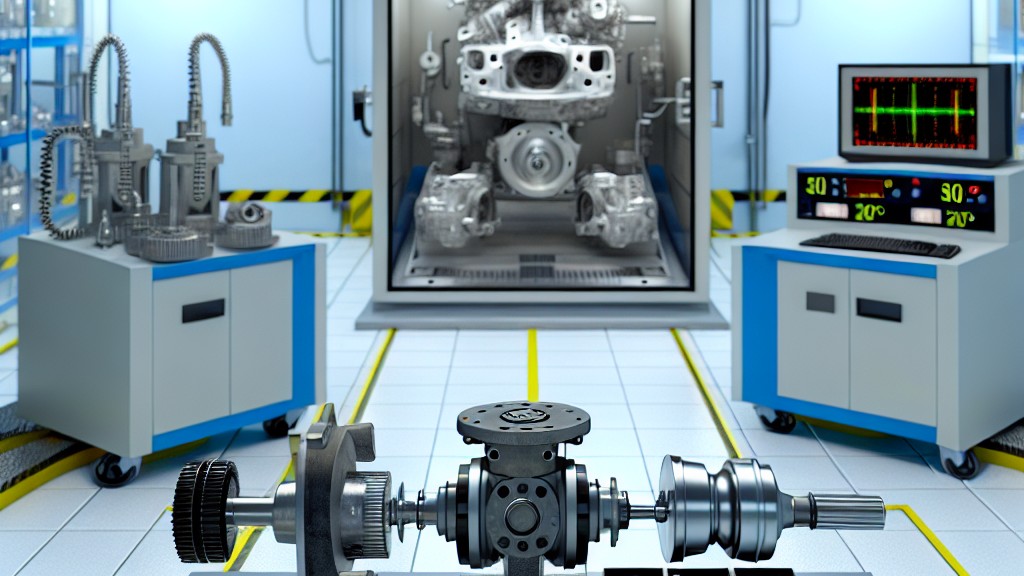
The behaviour of units or components during environmental cycling load should be assessed via cycling temperature and humidity values (e.g. sensitivity to cracks, deformation, separation of any connections).
The purpose of the test requirements is to reveal component weaknesses in a short-term test with an accelerated time effect, for example, at minus 40 degrees. These are not necessarily essential requirements for long-term operation.
Different test parameters apply for the temperature/humidity phase for genuine leather and genuine leather-covered parts.
When performing the test, it should be checked that the temperature is plus/minus 2 degrees and the relative humidity is plus/minus 5 percent. Before placing the sample, the climate chamber is brought to room temperature of 23 degrees and relative humidity of 30 percent. Waiting times must always be observed. The cooling and heating stages may vary depending on the performance of the climate chamber. Any deviations should be noted in the test record.
For genuine leather and genuine leather-covered parts, the following parameters apply in terms of temperature/humidity phase:
One cycle lasts 720 minutes (12 hours) and includes the following temperature and humidity profiles:
The test method described provides a measure of assurance that vehicle components can withstand environmental extremes. Environmental testing typically involves thermal cycling between extreme heat and extreme cold, or mechanical shock and vibration testing. These tests often require specialized equipment such as thermal chambers and vibration tables. It is often necessary to use independent, third-party services to perform environmental testing.
Environmental testing is performed to determine the ability of vehicle parts to withstand certain levels of vibration, shock, temperature, humidity, and similar conditions. The requirements may be determined by the user or supplier by referring to certain national, international, or original equipment manufacturer standards. These standards describe the test procedures. During durability conditioning, the sample is subjected to vibration at a level (frequency range, level, and time) that will allow it to survive in the real environment. Depending on these, conditioning is performed by sine sweep, sine test at resonant frequencies or other predetermined frequencies, or random vibration. Environmental tests must represent or replicate the real environment in a controlled manner. The first thing to do is to relate the test needs to the real world.
Our organization, which has been trying to support businesses from every sector with its testing, measurement, analysis and evaluation studies carried out in a wide range for years, has a strong staff that closely follows the developments in the world in the field of science and technology and constantly improves itself. In this context, testing services in accordance with the "VW PV 1200 Vehicle parts - Testing of environmental cycle resistance (80 degrees / minus 40 degrees)" standard are also provided to businesses.
To get an appointment, to get more detailed information or to request an evaluation, you can ask us to fill in our form and reach you.

