DBL 7399 Paints, Enamels, Varnishes and Related Coatings
Developed by Daimler, the parent company of the Mercedes-Benz brand, the “DBL 7399 Paints, enamels, varnishes and related coating materials” standard describes the general requirements, test methods, and quality conditions for enamels, paints, varnishes, similar coating materials, and related coatings used in automotive applications.
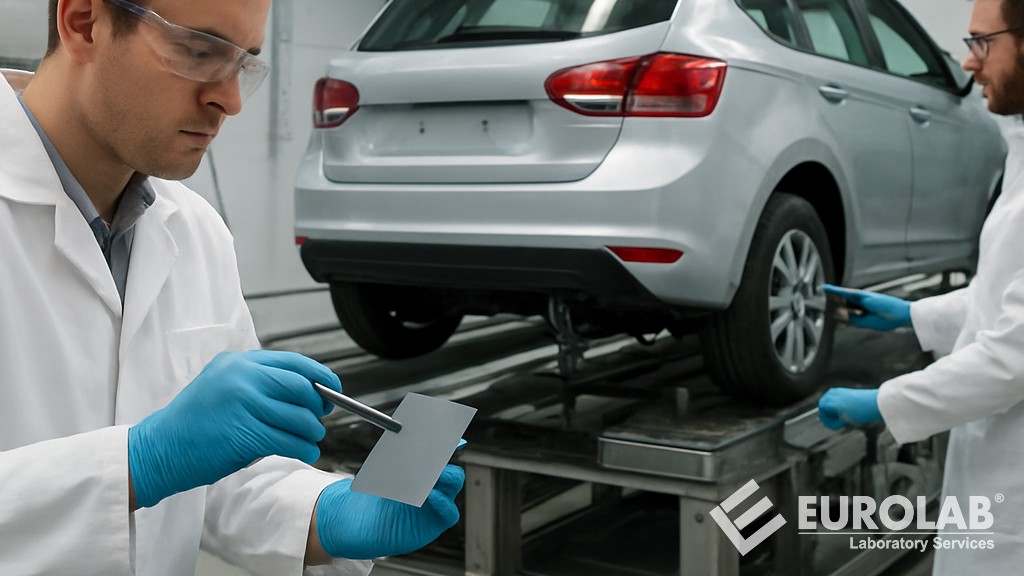
This standard serves as a fundamental standard and includes the following:
- General quality and performance criteria for cladding materials supplied to Mercedes-Benz.
- Standardized test procedures for verifying the properties of paints and coatings (both raw materials and applied films).
- Methods referenced in many other DBL specifications for specific components (e.g., body panels, interior parts, exterior trim, or high-corrosion areas).
This standard does not specify a single paint formulation, but provides a framework for the approval, testing, and quality assurance of coating systems used in Mercedes-Benz vehicles.
DBL 7399 encompasses a wide range of physical, mechanical, chemical, and environmental tests. Laboratories accredited by Daimler typically perform the following tests:
- Visual assessment and brightness comparison: For example, visual brightness assessment against standard samples (§ 6.1).
- Impact/stone impact resistance: Multiple impact test using moraine gravel (§ 5.3.2).
- Cross-cut/adhesion test.
- Corrosion assessments: Reference is usually made to DIN EN ISO 9227 (salt spray), cyclic corrosion, and similar standards.
- Weather resistance / lightfastness: Xenon arc test for light stability (often referenced in weather resistance chamber qualifications).
- Scratch/abrasion resistance.
- Other deterioration assessments: Blistering, rusting, cracking (referencing DIN EN ISO 4628 standard series).
Many of these tests are consistent with or refer to international standards, but the DBL 7399 standard includes the specific conditions, evaluation criteria, and acceptance levels required for Mercedes-Benz approval.
Suppliers of paints, coatings, or painted components (first and second tier) must demonstrate compliance with the DBL 7399 standard for material approval.
Test laboratories require Daimler Class A certification, particularly for methods described in the DBL 7399 standard (along with DBL 7381, DBL 7382, DBL 7391 and related specifications).
This standard is often listed alongside other DBL coating standards:
- DBL 7381 Parts subjected to high corrosion stress (e.g., body panels).
- DBL 7391 Similar high corrosion applications.
- DBL 7392 Moderate corrosion exposure.
- DBL 7384 Covers for interior plastic parts.
In short, the DBL 7399 standard defines the general conditions, performance requirements, and test procedures for paints, coatings, and similar materials used in vehicle components supplied to or manufactured for Mercedes-Benz. This standard is not an international standard, but rather an automotive material specification specific to original equipment manufacturers.
The DBL 7399 standard specifies the properties of coating materials (such as enamels, paints, varnishes, and related products) and coated parts used on vehicles:
It is designed to meet stringent quality and performance criteria.
- To ensure consistent appearance and durability.
- To ensure resistance to environmental stressors (UV, heat, humidity, chemicals, abrasion).
- To ensure that Mercedes-Benz vehicles are suitable for use in both interior and exterior environments.
In practice, it is a supply specification used by both Mercedes-Benz and its suppliers as a contractual technical standard for coatings and painted parts.
The general content of this standard is as follows:
- General conditions:
- Definitions of the materials and product types covered (enamels, paints, varnishes, coatings)
- Delivery and documentation requirements for suppliers.
- Material safety and conformity requirements
- Performance requirements:
- Specific mechanical and environmental performance criteria
- Visual and functional criteria such as brightness, color consistency, and surface quality.
- Test procedures: This standard includes standardized test methods used to evaluate coatings:
- Adhesion tests (e.g., cross-cut tests) are used to measure how well a coating adheres to its substrate.
- Scratch resistance and abrasion resistance tests
- Weather resistance and aging tests to simulate long-term exposure.
- Chemical resistance tests
- Brightness measurement and visual comparison with reference samples.
The DBL 7399 standard plays an important role in automotive quality assurance for several reasons:
- Consistency among suppliers: Suppliers know exactly what performance levels and tests are required for coatings and painted parts, which reduces variability.
- Quality and vehicle durability: By ensuring coatings meet defined performance criteria, vehicle components become more resistant to environmental wear, corrosion, and fading.
- Regulatory and safety compliance: This specification helps vehicles comply with environmental and safety regulations (e.g., limiting volatile organic compounds or ensuring chemical resistance).
- Supplier alignment: Suppliers can reduce defect rates and production delays by aligning their internal quality control and testing programs around a recognized original equipment manufacturer (OEM) standard.
In an automotive quality laboratory or manufacturing environment, the DBL 7399 standard is used for:
- Verifying supplier compliance certificates
- Guiding internal testing programs
- Supporting material approvals for vehicle parts.
- Comparing the final product quality before vehicle assembly.
For many years, our organization, with its competent and experienced team, has been understanding the needs of its clients, providing the advanced testing services they require, and assisting them in the establishment, implementation, and improvement of management systems. Within this framework, we also provide testing services compliant with the DBL 7399 standard.



