

Developed by Fiat Chrysler Automobiles (FCA) (now Stellantis), an Italian-American automotive company, the “Fiat LP-7M028 Automotive Interior Fabric Dye Transfer Resistance (Water Fastness) / Color Fastness to Water” standard is a laboratory test standard used to evaluate the resistance of automotive interior materials to dye transfer and water-induced staining. This standard primarily applies to materials such as seat fabrics, synthetic leather, natural leather, door panel trims, armrests, instrument panel trims, and other decorative interior surfaces.
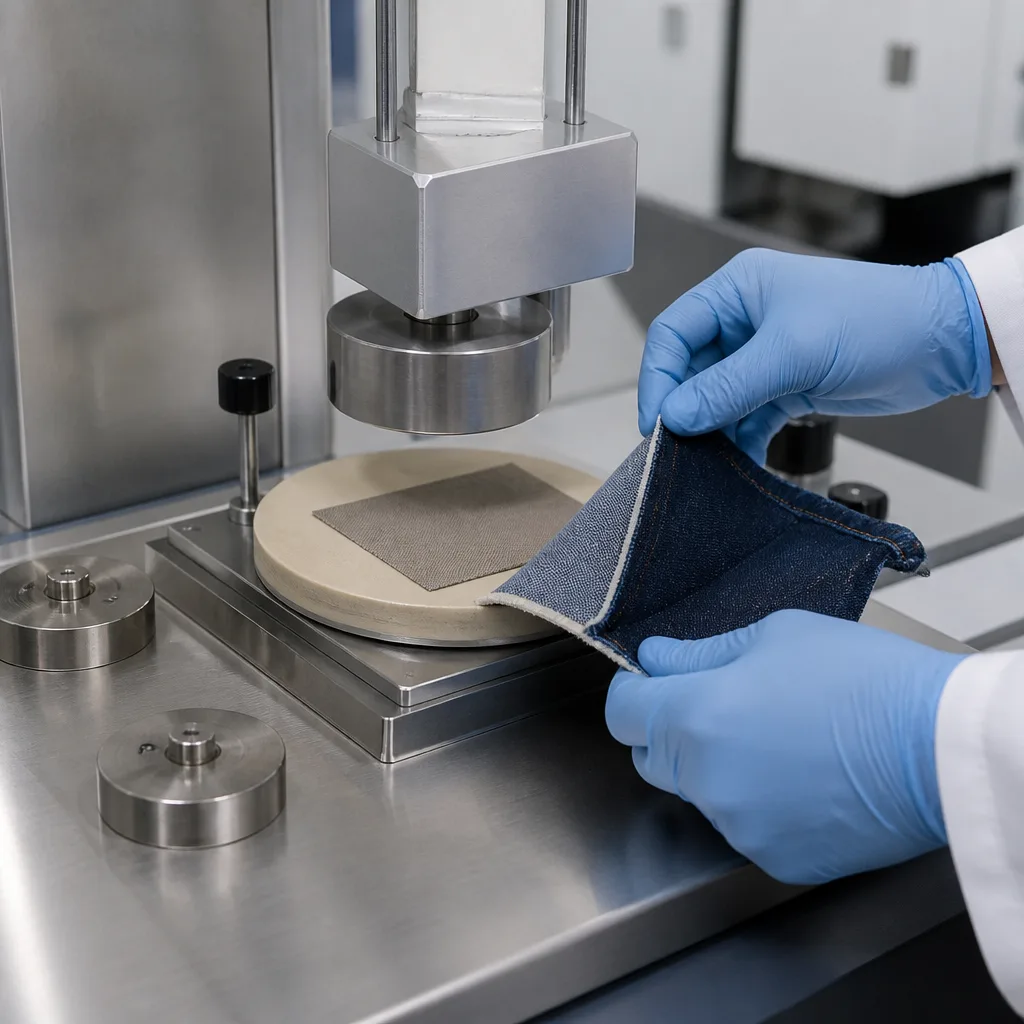
The primary purpose of the Fiat LP-7M028 standard is to determine whether interior materials can withstand contact with the following:
These results are unacceptable:
Modern vehicle interiors are frequently in contact with colored fabrics, particularly jeans, jackets, handbags, and other textiles. Moisture can accelerate dye transfer from these materials to automotive upholstery surfaces. The Fiat LP-7M028 standard provides a controlled method to assess this risk. Materials typically tested under this standard include:
These materials are often subjected to repeated contact with passengers and therefore require high resistance to staining and discoloration.
Paint transfer resistance tests typically follow these steps:
The assessment includes the following:
This standard requires materials to demonstrate the following (performance requirements):
Acceptance criteria are generally defined in the relevant Fiat material specification or component drawing.
The Fiat LP-7M028 standard is part of Fiat’s broader family of appearance and trim evaluation standards. This standard complements others that address the following topics:
Together, these standards ensure that interior materials maintain their appearance throughout the vehicle's lifespan.
The Fiat LP-7M028 standard is necessary because automotive interior materials are constantly exposed to moisture, sweat, and dyed textiles, which can lead to permanent staining or color transfer. This standard ensures that materials inside the vehicle maintain their appearance throughout the vehicle's lifespan. This standard is considered important for the following reasons:
When these textiles become wet due to rain, humidity, or sweat, dyes can leach into seats, armrests, and door panels. This standard ensures that interior materials resist this transfer and remain visually acceptable.
Only materials that meet the required performance level are approved for vehicle production.
This standard provides a controlled laboratory method to evaluate how materials perform under these conditions before being installed in vehicles.
Tests conducted according to this standard detect potential problems early, reducing costs in later stages of the vehicle lifecycle.
In conclusion, the Fiat LP-7M028 standard is necessary because it verifies that automotive interior materials are resistant to staining and paint transfer resulting from contact with moisture and colored textiles. This standard protects the vehicle's appearance, increases customer satisfaction, reduces warranty issues, and ensures that interior trim components retain their original color and aesthetic quality throughout the vehicle's lifespan. Without such testing, visible stains and discoloration can quickly develop in automotive interiors during normal use. In modern vehicles that increasingly use light-colored and soft-touch materials, resistance to paint transfer has become a critical quality requirement.
For many years, our organization, with its competent and experienced staff, has been understanding the needs of its customers, providing the advanced testing services they require, and assisting them in the establishment, implementation, and improvement of management systems. Within this framework, we also provide testing services in accordance with the Fiat LP-7M028 standard.
To get an appointment, to get more detailed information or to request an evaluation, you can ask us to fill in our form and reach you.

