Daimler-Benz DBL 5556 Molded Elastomer Parts Subjected to Normal Mechanical Stress
The standard "Daimler-Benz DBL 5556 Moulded elastomer parts subject to normal mechanical stress" developed by the automobile company Daimler-Benz describes the requirements for elastomer parts in vehicles, such as nozzles, connectors, moulded hoses, bumpers and other similar parts. This standard covers moulded elastomer parts (such as seals, plugs and moulded hoses with low to moderate chemical and thermal stress) with general requirements for components in vehicles under 3,5 t and over 3,5 t.
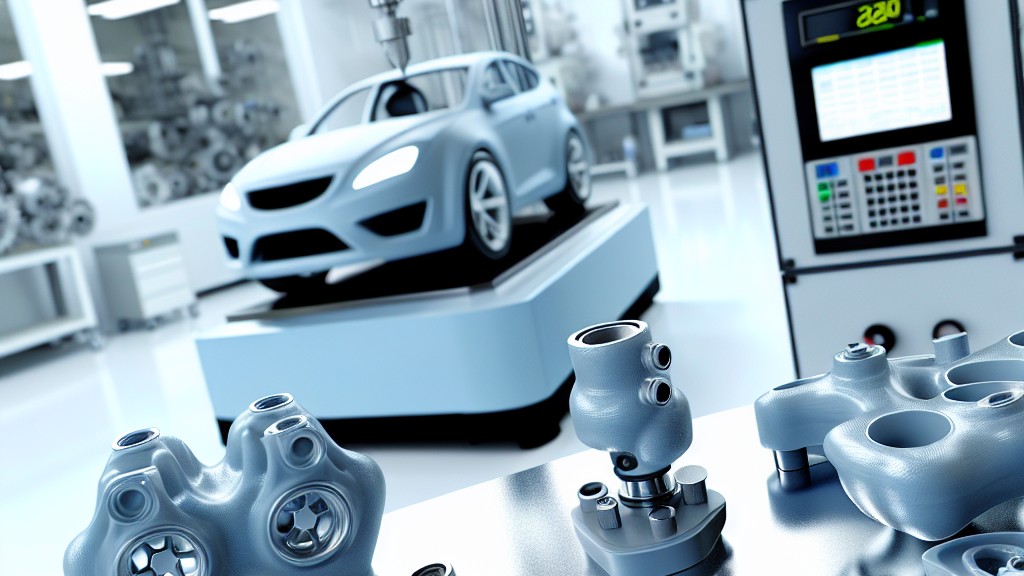
The requirements in this standard are described as follows:
- The current legal requirements and laws for safety requirements, homologation (especially exhaust emissions) and quality must be complied with. In addition, the relevant requirements of the Daimler Group apply.
- All materials, procedures, processes, components and systems must comply with applicable regulatory (legal) requirements regarding regulated substances and recyclability.
- “DBL 8585 General requirements - Environmental protection, hazardous substances, hazardous goods negative substance list for material selection” must be taken into account.
- Indicators regarding the requirements for internal parts are specified in the drawing included in the standard.
Technical data of the polymers are as follows:
- General instructions: The target values listed in the tables provided in the standard refer to tests performed on sheet material. Test values determined on components may differ from test values determined on sheet material.
- Permanent set tests: If the component geometry allows test pieces to be produced for compression set, tests should be performed on both the component and the sheet material.
- For technical data of polymers as supplied, the tables in the annex of the standard apply (Annex A.1 and Annex A.2).
- For the resistance properties of polymers, the table in the annex of the standard is valid (Annex B).
In the table titled “Technical data of polymers as supplied” in the annex of the standard, the required limits and test methods are given on the basis of product versions as follows (Annex A.1):
- Density (DIN ISO 1183-1 standard immersion method A)
- Shore hardness A (DIN ISO 7619-1 standard)
- Microhardness (DIN ISO 48M standard)
- Tensile strength in the hardness range up to 35 SHE (ISO 37 dumbbell type 2, deflection, test speed 200 mm/min)
- Tensile strength in the hardness range of at least 35-50 SHE (ISO 37 dumbbell type 2, deflection, test speed 200 mm/min)
- Tensile strength in the hardness range of at least 50-80 SHE (ISO 37 dumbbell type 2, deflection, test speed 200 mm/min)
- Tensile strength in the hardness range at least 80 SHE (ISO 37 dumbbell type 2, deflection, test speed 200 mm/min)
- Elongation at break in the hardness range not more than 35 SHE (ISO 37 dumbbell type 2, deflection, test speed 200 mm/min)
- Elongation at break in the hardness range at least between 35-50 SHE (ISO 37 dumbbell type 2, deflection, test speed 200 mm/min)
- Elongation at break in the hardness range at least between 50-80 SHE (ISO 37 dumbbell type 2, deflection, test speed 200 mm/min)
- Elongation at break in the hardness range at least 80 SHE (ISO 37 dumbbell type 2, deflection, test speed 200 mm/min)
In the table titled “Technical data of polymers as supplied” in the annex of the standard, the required limits and test methods are given on the basis of product versions as follows (Annex A.2):
- Minimum tear strength (DIN ISO 34-1 standard method A, trouser test piece)
- Compression set, test temperature, maximum value (ISO 815-1 standard method B, type B test piece from 6 mm sheet material or 2 mm sheet material (3 disc laminates)
- Cold reference (hardness) highest value (DBL 5555 standard)
- Contact painting, migration painting (ISO 3865 standard method A, irradiation time 24 hours, visual evaluation, test temperature 70 degrees, roof applications deflection test at 90 degrees)
- Burning test (DBL 5307 standard, only for internal parts)
- Fogging test, maximum condensable substance content (DIN 75 201-B standard, only for internal parts)
- Odour test maximum (VDA 270 standard method B 3, only for internal parts)
The required limits and test methods are given on the basis of product versions in the table titled “Weather resistance” in the annex of the standard (Annex B):
- Weather resistance (DBL 5555 standard)
- Ozone resistance (DIN ISO 1431-1 standard, method A2)
- Heat and aging resistance
- Change in shore hardness
- Tensile strength (hardness range up to 50 SHE)
- Tensile strength (hardness range at least 50 SHE
- Elongation at break (hardness range up to 50 SHE)
- Elongation at break (hardness range between 50-80 SHE)
- Elongation at break (hardness range at least 80 SHE)
These tests are carried out in an oven in accordance with the ISO 188 standard, with forced air circulation and an air speed of 0,25 to 3 m/s, at the times and temperatures given in the standard, depending on the product version.
Our organization has a strong staff that closely follows the developments in the world in the field of science and technology and constantly improves itself. Among the numerous test, measurement, analysis and evaluation studies provided for businesses in various sectors, there are also test services in accordance with the "Daimler-Benz DBL 5556 Molded elastomer parts subject to normal mechanical stress" standard.



