

The “Ford MA-0036 Resistance to Cleaning Agents” standard, developed by Ford Motor Company (Ford), is a material testing specification used to evaluate the chemical resistance of automotive interior and exterior materials to cleaning agents. This standard is typically associated with assessing how plastics, coatings, painted surfaces, upholstery components, and decorative finishes can withstand exposure to cleaning products encountered during vehicle use and maintenance.
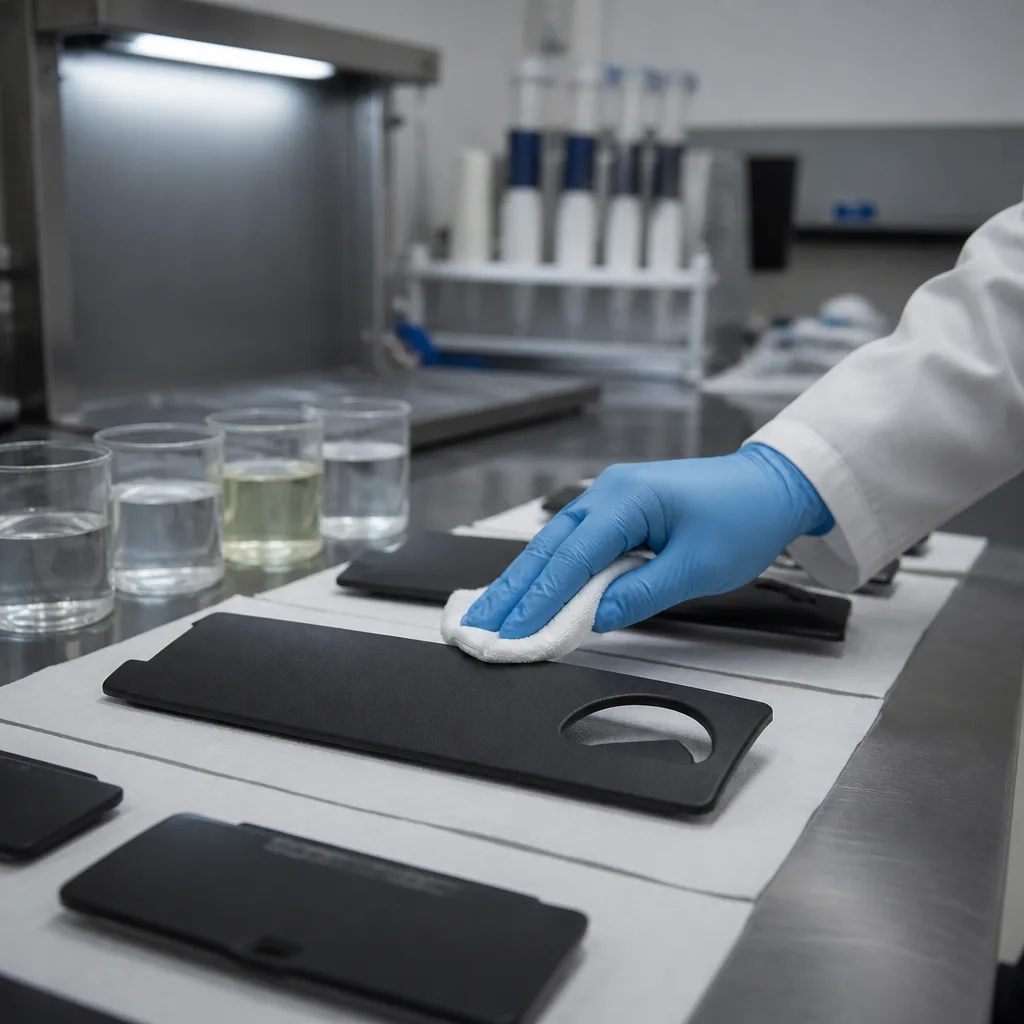
Vehicle passengers routinely use various cleaning products. These include:
These products may contain solvents, surfactants, alcohols, or other active ingredients that can damage automotive materials. The Ford MA-0036 standard provides a controlled method to determine whether a material can withstand such exposure without unacceptable damage.
This standard generally applies to the following:
The described test method can be performed during material qualification assessment, supplier approval, product development, or verification of design changes. This method generally follows these steps:
The assessment may include the following:
Materials must remain within Ford's acceptance criteria after exposure. Depending on the component and material type, acceptable performance typically includes:
Any significant deterioration may result in the rejection of the material.
The Ford MA-0036 standard belongs to the Ford family of material durability specifications, which includes the following:
These standards, together, help ensure long-term durability and customer satisfaction.
This standard is required because it verifies that vehicle materials can withstand routine cleaning throughout the vehicle's lifespan without losing their appearance or functionality. The main benefits of this standard are:
Without these types of tests, materials that appear acceptable during production can quickly degrade when exposed to common cleaning chemicals used by vehicle owners. This standard helps prevent these failures before vehicles hit the market.
The Ford MA-0036 standard is important because it ensures that automotive materials can withstand exposure to cleaning agents throughout the vehicle's lifespan without cosmetic or functional damage.
Modern vehicles feature numerous plastic, painted, coated, and decorative surfaces that are regularly cleaned by owners, dealers, detailing services, and maintenance personnel. Cleaning products often contain chemicals such as alcohols, detergents, surfactants, and solvents that can damage materials if not properly designed and tested.
This standard is important for the following reasons:
As a result, the vehicle retains its aesthetic quality over time.
This standard reduces the risk of field failures by identifying sensitive materials before they are approved for production.
If cleaning results in visible damage, customers may perceive the vehicle as low-quality. Adherence to this standard helps ensure materials remain attractive and durable under normal use.
This standard provides an objective method for comparing materials and selecting those with superior chemical resistance.
These components are particularly sensitive to chemicals. This standard helps verify that routine cleaning will not damage these premium properties.
In summary, the Ford MA-0036 standard is a chemical resistance testing standard focusing on resistance to cleaning agents. It evaluates whether automotive materials and surface coatings can withstand repeated exposure to cleaning products without unacceptable cosmetic or functional damage. Consequently, it plays a vital role in ensuring the long-term durability and quality of Ford vehicle interior and exterior trim components.
For many years, our organization, with its competent and experienced team, has been understanding the needs of its customers, providing the advanced testing services they require, and assisting them in the establishment, implementation, and improvement of management systems. Within this framework, we also provide testing services compliant with the Ford MA-0036 standard.
To get an appointment, to get more detailed information or to request an evaluation, you can ask us to fill in our form and reach you.

