

Developed by BMW, a multinational vehicle manufacturer, the “BMW PA-P 208 Condensate Water Constant Atmosphere Test” standard is a test standard used in the automotive industry to evaluate the environmental durability and resistance of vehicle components, materials, and surface coatings. This standard is often referred to together with the BMW AA-P 224 standard.
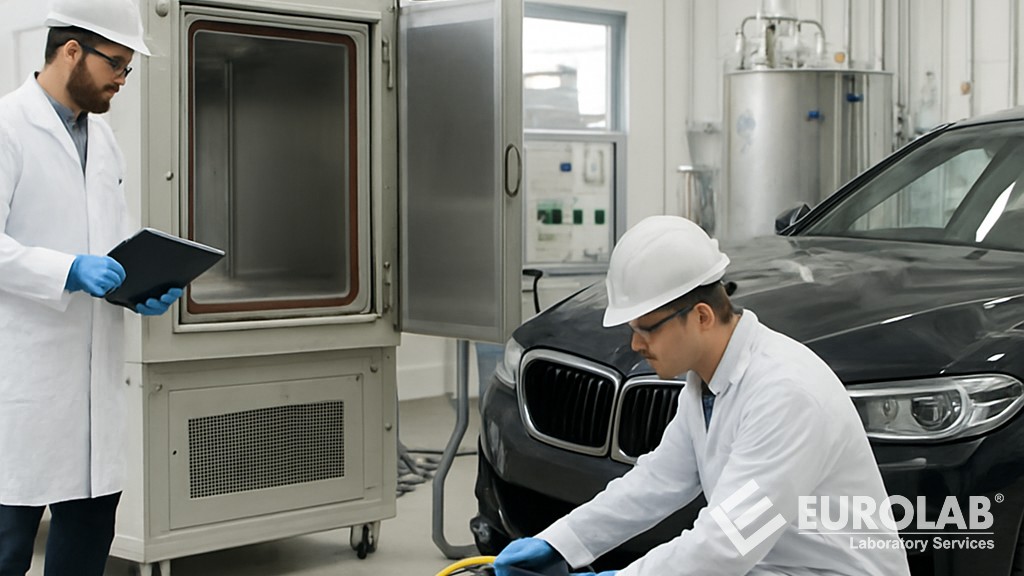
The BMW PA-P 208 standard defines the condensation constant climate test (condensation water constant atmosphere test or constant climate condensation test). It simulates prolonged exposure to high humidity conditions where condensation occurs in test samples and mimics real-world scenarios such as humid climates, temperature fluctuations leading to dew formation, or enclosed vehicle environments (e.g., interior upholstery, exterior coatings, plastics, paints, or adhesives).
The main purpose of this test is to evaluate how well materials and coatings withstand the following:
This method is part of BMW’s broader qualification process for supplier and component approval, ensuring components meet durability requirements for long-term vehicle performance and appearance.
The main aspects of the test are as follows:
This test is commonly performed by accredited laboratories supporting BMW supplier qualifications. It is included in BMW Group’s comprehensive list of test methods for automotive parts, alongside other environmental simulations such as temperature cycling (BMW PA-P 231 standard), aging resistance (BMW PA-P 230 standard), or corrosion tests (e.g., CASS).
BMW applies rigorous material testing to maintain superior quality, particularly for visible/interior surfaces and under-hood components exposed to moisture. Compliance with the BMW PA-P 208 standard helps prevent issues such as paint peeling, fogging, or corroded connectors in various global climates.
A condensate water constant atmosphere refers to a specific type of controlled test environment used in materials science, corrosion testing, and paint/coating evaluation standards. Condensate water refers to the moisture that condenses on test samples, while a constant atmosphere refers to a constant climate or constant conditions (maintaining constant temperature and humidity). In practice, this describes a constant humidity condensate test atmosphere. In these tests, coated or uncoated samples (e.g., painted metal panels, varnishes, surface treatments) are exposed to the following conditions within a climate chamber:
During testing, the hot water below the chamber evaporates, creating a highly humid atmosphere. This causes continuous water condensation on slightly cooler samples. This simulates continuously humid conditions to test corrosion resistance, blistering, loss of adhesion, and other moisture-related degradation properties of coatings.
BMW requires the following tests to ensure the long-term durability and corrosion resistance of surface coatings used, particularly in the following areas:
High and persistent humidity is one of the most aggressive and common real-world stresses faced by automotive coatings, especially in the following areas:
Unlike salt spray tests that primarily simulate road salt and winter conditions (e.g., BMW AA-0324 or BMW AA-0224 cyclic corrosion tests), the BMW AA-P-224 standard continuous condensation test focuses entirely on moisture-induced degradation mechanisms:
Many modern paint defects (especially in premium vehicles) result not just from salt attack, but from years of exposure to hot and consistently humid conditions. Therefore, BMW mandates this testing (salt spray, cyclic corrosion, stone chip, and chemical resistance) to qualify coatings and suppliers. This ensures the paint system retains its appearance, gloss, color stability, and corrosion protection in the field for 10-15 years.
Consequently, the BMW PA-P 208 standard is necessary because consistently high humidity is a realistic and common aging factor that salt spray alone cannot adequately cover, and BMW wants to guarantee best-in-class paint durability even in the most humid environments.
For many years, our organization, with its competent and experienced staff, has been understanding the needs of its clients, providing the advanced testing services they require, and assisting them in the establishment, implementation, and improvement of management systems. Within this framework, we also provide testing services in accordance with the BMW PA-P 208 standard.
To get an appointment, to get more detailed information or to request an evaluation, you can ask us to fill in our form and reach you.

