

Developed by Fiat Chrysler Automobiles (FCA) (now Stellantis), an Italian-American automotive company, the “Fiat 7-G2000 Standard for Determining the Fire Resistance of Nonmetallic Materials for Parts in the Passenger Compartment” is an internal automotive material flammability standard designed to evaluate the fire resistance of nonmetallic materials used in vehicle passenger compartments. This standard is closely aligned with internationally recognized fire safety procedures such as ISO 3795 and FMVSS 302 standards.
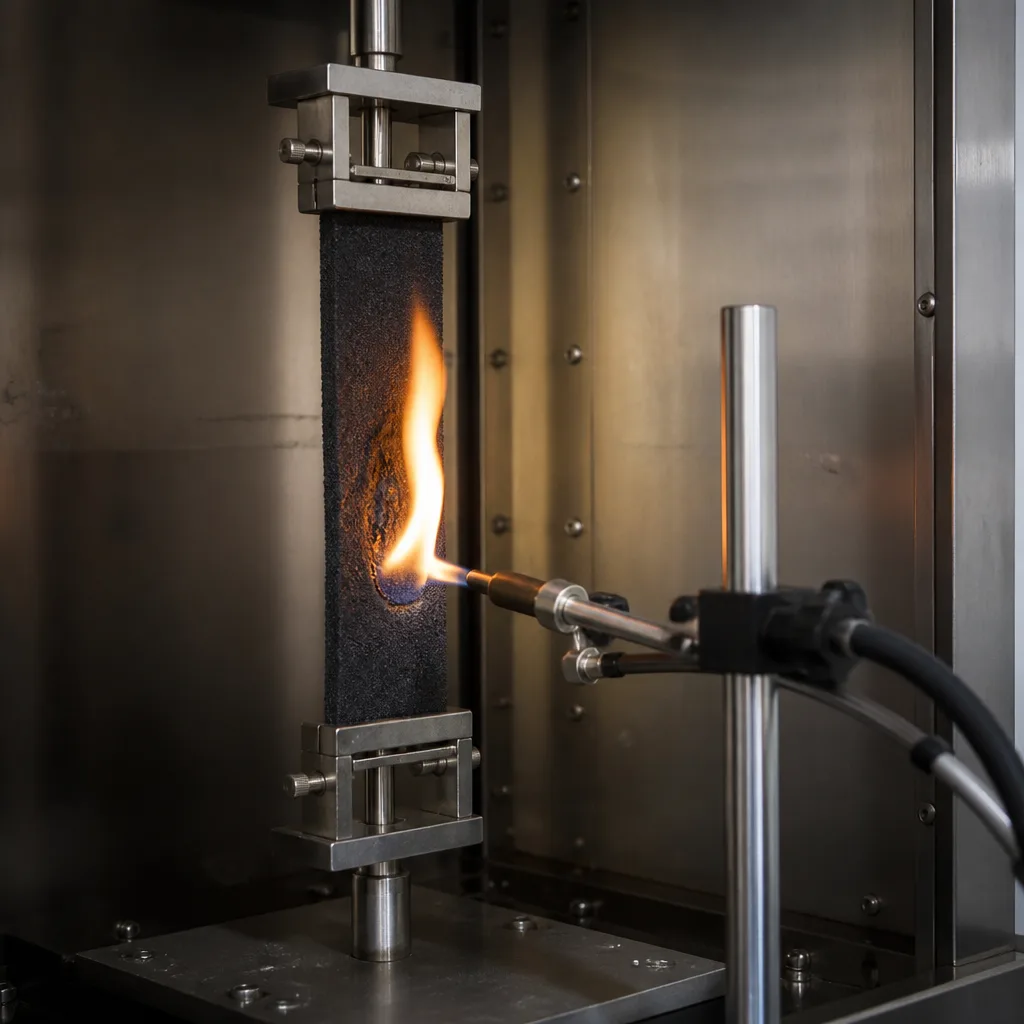
The primary objective of the Fiat 7-G2000 standard is to minimize the risk of fire spread within the vehicle by controlling the combustion properties of interior components such as the following:
This standard has replaced the Fiat 50433 standard.
The Fiat 7-G2000 standard describes a repeatable laboratory method for determining how quickly a material burns when exposed to a small ignition source. According to this standard, materials used in the passenger compartment must exhibit limited flame spread behavior. This requirement is crucial because vehicle interiors contain many polymeric and textile materials that can contribute to:
This standard improves overall vehicle safety performance by enforcing combustion resistance limits.
The Fiat 7-G2000 standard is based on the horizontal combustion method used in ISO 3795 and FMVSS 302 standards. The procedure measures the combustion rate of a horizontally mounted sample after exposure to a controlled flame.
In general, this testing method follows these steps:
The material passes or fails depending on the measured flame propagation rate and whether or not it exhibits self-extinguishing behavior.
Typical test equipment includes:
The test equipment configuration is fundamentally similar to the ISO 3795 standard systems commonly used in the automotive industry.
According to the specifications, the standard generally applies to interior materials and components up to 13 mm thick.
Commonly tested materials include:
Many Fiat material specifications directly refer to the Fiat 7-G2000 standard as the required combustion test method.
The test evaluates the following elements:
Burn rate is usually expressed in millimeters per minute. Burn rate is obtained by dividing the burn time by the burn distance. Lower burn rates indicate better fire resistance performance.
The Fiat 7-G2000 is commonly used in the following areas:
Suppliers of interior materials are generally required to demonstrate compliance with this standard before production approval.
The products tested under this specification are:
Fire safety remains a critical aspect of vehicle interior engineering. Even small ignition sources, such as the following, can initiate combustion in flammable interior materials:
The Fiat 7-G2000 standard helps ensure that interior materials meet the following specifications:
This contributes to improved passenger safety and compliance with global automotive fire regulations.
In short, the Fiat 7-G2000 standard is necessary because of the large amount of flammable polymeric and textile materials found in modern vehicle interiors. Without strict flammability requirements, a small ignition source can quickly spread a fire in the passenger compartment, posing serious safety risks to occupants. This standard establishes a controlled method for evaluating how interior materials behave when exposed to flame, helping manufacturers ensure that materials burn slowly, self-extinguish whenever possible, and do not accelerate fire growth. This standard is considered important for the following reasons:
In summary, the Fiat 7-G2000 standard is a specific automotive flammability standard used to determine the combustion resistance of non-metallic interior vehicle materials. Largely based on the ISO 3795 and FMVSS 302 methodologies, this standard evaluates horizontal flame propagation behavior under controlled laboratory conditions.
For many years, our organization, with its competent and experienced staff, has been understanding the needs of its customers, providing the advanced testing services they require, and assisting them in the establishment, implementation, and improvement of management systems. Within this framework, we also provide testing services in accordance with the Fiat 7-G2000 standard.
To get an appointment, to get more detailed information or to request an evaluation, you can ask us to fill in our form and reach you.

