

The “GMW 14141 Dye Migration” standard, developed by General Motors Worldwide (GMW), includes a test procedure designed to evaluate the resistance of dyed, printed, or colored textile materials to dye migration. This procedure also assesses color change caused by water exposure.
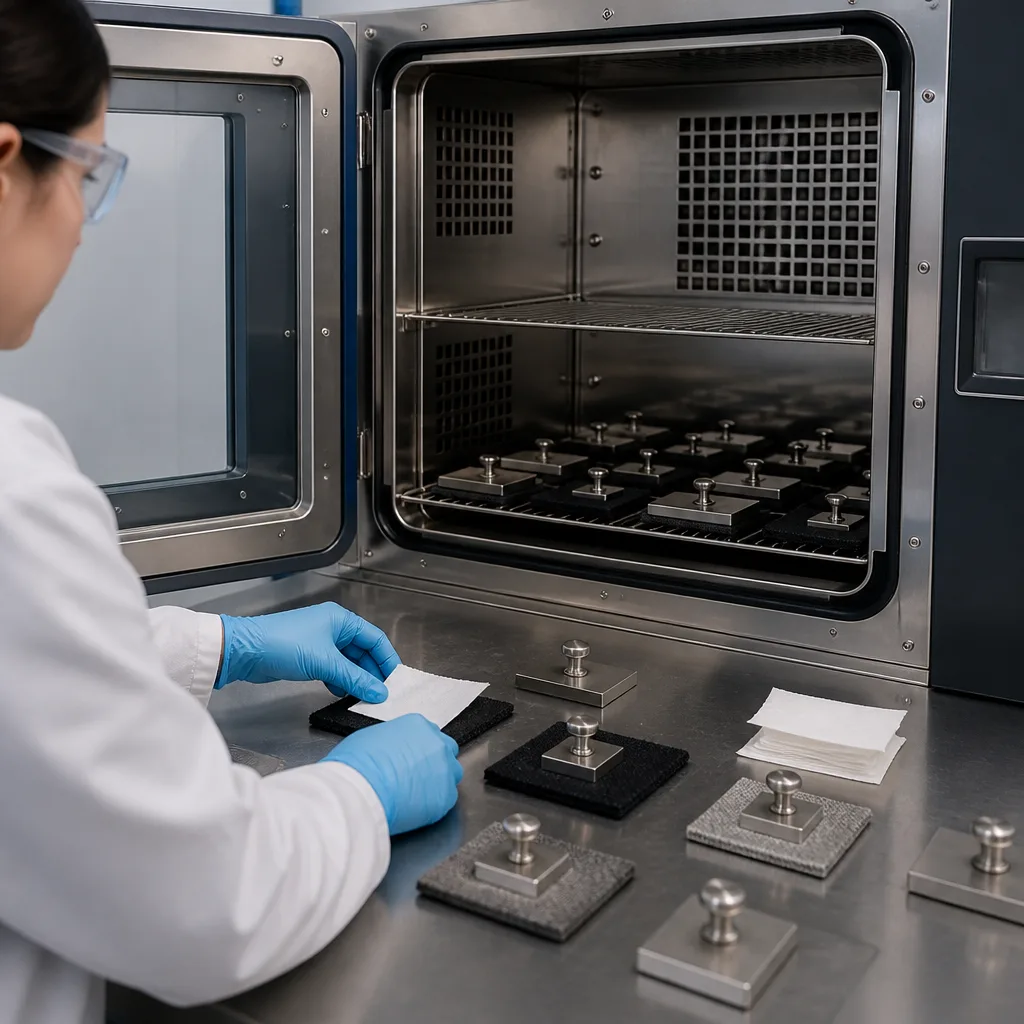
Automotive interior materials are exposed to moisture, heat, pressure, cleaning agents, and contact with other materials throughout their lifespan. Textiles used for seats, carpets, upholstery, door panels, headliners, and other interior components must therefore maintain their intended appearance and not transfer unwanted color to adjacent surfaces.
Dye migration is a significant issue, especially when different colored materials are in direct contact. Under conditions of moisture, temperature, and pressure, dyes can migrate from one material to another, causing staining or discoloration.
The primary purpose of the GMW 14141 standard is to determine whether a colored textile material can transfer its dye or color to another material under specified test conditions. This procedure has two important objectives:
This standard requires the use of distilled or ionized water instead of ordinary tap water, as the composition of tap water can vary and affect test results.
The testing method is particularly useful in situations where one textile will be mounted next to another textile or a light-colored substrate, and color transfer may become visually noticeable. The defect resulting from dye migration may appear as follows:
The problem may not be apparent immediately after production. It can develop during vehicle use due to moisture, water exposure, condensation, cleaning, or prolonged contact with the material.
Paint migration in automotive interiors is primarily an appearance and material compatibility issue, but it can also have significant consequences for perceived vehicle quality. Automotive interiors often combine materials with very different colors and compositions. Examples include:
If the color bleeds from one material to another, the resulting stain can be quite visible to passengers in the vehicle. For automotive manufacturers, preventing this defect helps protect against the following:
During the test, a colored textile sample is brought into contact with another material under the specified conditions. Moisture is added using distilled or ionized water, and the setup is subjected to the intended test environment. After conditioning, the materials are examined for color transfer and changes in appearance. Therefore, the test simulates a situation where moisture can cause a textile dye to mobilize and transfer to the material in contact.
The GMW 14141 standard evaluates not only the transfer of paint to another material, but also color change resulting from exposure to water. This is important because a textile can undergo a change in its appearance even without significant transfer to another material. A material that changes color after contact with water can create an unacceptable appearance in an automotive interior, especially if the material is exposed to the following conditions:
The GMW 14141 standard may be applicable to a wide variety of textile components, including:
Dye migration can be due to a variety of factors, including:
In conclusion, achieving an acceptable dry color appearance does not guarantee good resistance to dye migration.
GMW 14141 standard can be used in the following situations:
For suppliers, testing can help identify issues with paint selection, paint fixation, textile finishing, or material combinations before components enter vehicle production.
The GMW 14141 standard is important because automotive interiors are highly sensitive products in terms of appearance. Even small amounts of color transfer can be noticeable, especially when occurring on a light-colored surface. This test provides a controlled method to assess the tendency of colored textiles to cause such defects. In short, this standard is considered important for the following reasons:
Dye migration testing should normally be assessed as part of a broader automotive textile qualification program. Depending on the material and vehicle application, other characteristics may also need to be evaluated:
These tests, taken together, provide a more comprehensive assessment of whether an automotive textile can maintain its appearance and functionality throughout the vehicle's lifespan.
For many years, our organization, with its competent and experienced staff, has been understanding the needs of its clients, providing the advanced testing services they require, and assisting them in the establishment, implementation, and improvement of management systems. Within this framework, we also provide testing services in accordance with the GMW 14141 standard.
To get an appointment, to get more detailed information or to request an evaluation, you can ask us to fill in our form and reach you.

