

Developed by Ford Motor Company (Ford), the “Ford MA-0015 Chemical Compatibility (Stress Crack Test for Plastics)” standard is a materials and component testing specification used to evaluate the chemical compatibility of plastic materials and components commonly found in vehicles. This standard focuses on determining whether plastics can withstand exposure to automotive fluids and chemicals without cracking, deformation, discoloration, or loss of mechanical performance. It is often referred to as the “Chemical Compatibility or Stress Crack Test” specification.
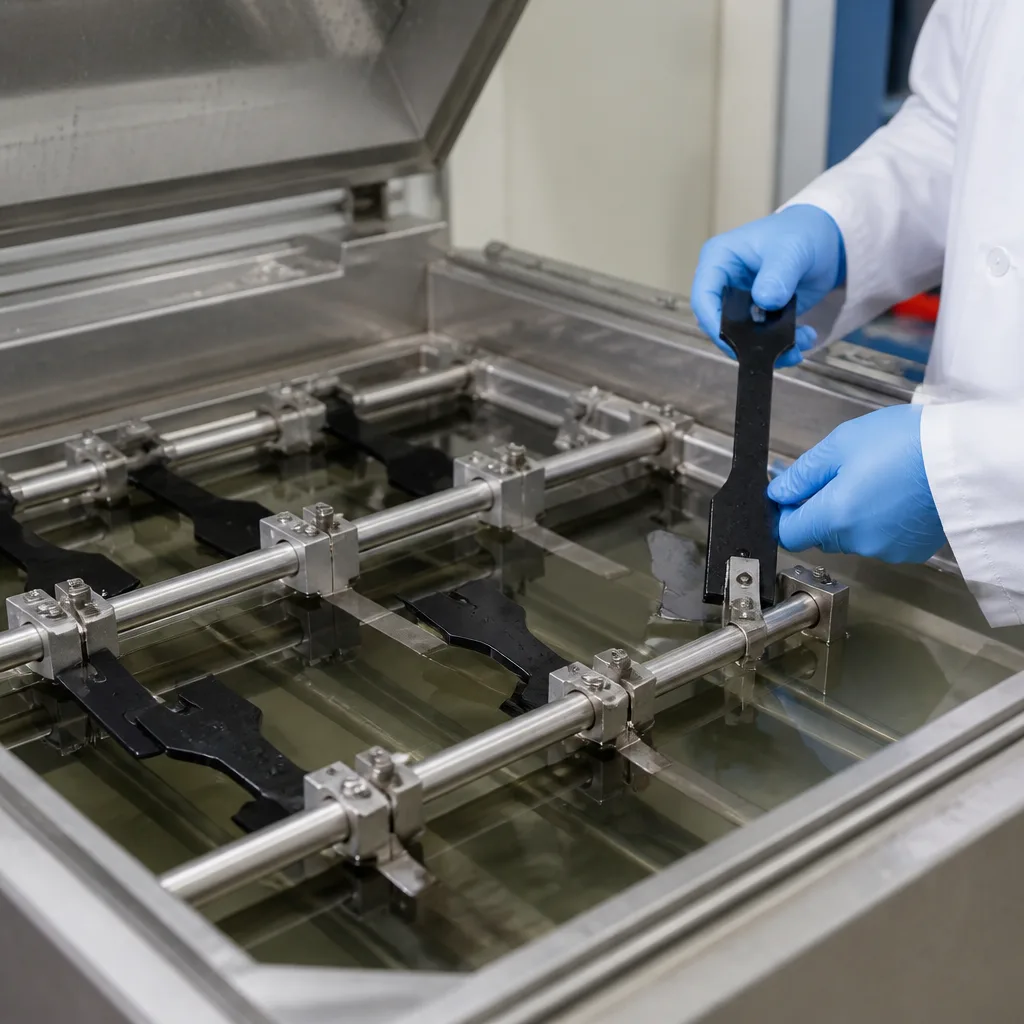
Modern vehicles contain numerous plastic parts in their interior, exterior, and under-the-hood applications. These components may come into contact with the following types of substances:
The Ford MA-0015 standard helps ensure that such exposures do not cause premature failure of plastic components.
The primary purpose of this standard is to evaluate a material's resistance to environmental stress cracking when subjected to simultaneous mechanical stress and chemical exposure. Environmental stress cracking is one of the most common causes of failure in automotive plastic parts. This standard assesses whether a material possesses the following properties:
Materials that pass the test demonstrate suitable chemical resistance for automotive service conditions.
The described test method typically includes the following:
The combination of stress and chemical exposure accelerates the failure mechanisms that can occur over years of vehicle use.
Materials typically evaluated under the Ford MA-0015 standard include the following:
These materials are particularly susceptible to stress cracking when exposed to incompatible chemicals.
During the evaluation process, engineers look for the following:
The Ford MA-0015 standard is used in the following situations:
This standard helps engineers identify materials that can withstand real-world automotive environments before a vehicle is released to the market.
This standard is closely related to the “Ford FLTM BO 127-03 Stress cracking assessments” standard. Many testing laboratories identify the Ford MA-0015 standard as the Ford chemical compatibility and stress cracking assessment method.
The Ford MA-0015 standard is important because it evaluates the resistance of plastic materials to environmental stress cracking, one of the leading causes of premature failure in automotive plastic components. Many plastics appear durable under normal conditions, but can unexpectedly crack when exposed to certain chemicals under mechanical stress. This standard is important for the following reasons:
In conclusion, the Ford MA-0015 standard helps ensure that automotive plastic components remain durable, safe, and visually acceptable when exposed to chemicals encountered during vehicle use. This standard is a critical chemical compatibility standard used to evaluate the resistance of automotive plastics to environmental stress cracking. This testing method simulates real-world service conditions by exposing materials under stress to automotive chemicals, helping to ensure that vehicle components maintain their appearance, strength, and functionality throughout the vehicle's lifespan. As plastics continue to replace metal components in modern vehicles, this standard remains an important tool for verifying material durability and preventing field failures.
For many years, our organization, with its competent and experienced team, has been understanding the needs of its customers, providing the advanced testing services they require, and assisting them in the establishment, implementation, and improvement of management systems. Within this framework, we also provide testing services compliant with the Ford MA-0015 standard.
To get an appointment, to get more detailed information or to request an evaluation, you can ask us to fill in our form and reach you.

