BMW PR 292 Underbody Connections
Developed by BMW, a leading German multinational company in the automotive industry, the “BMW PR 292 Underbody Connections” standard is a key test standard for underbody connection elements in automotive applications. This standard describes requirements and test methods for various components, focusing particularly on underbody connection elements. These include protective shields, underbody panels, skid plates, aerodynamic elements, exhaust heat shields, and other parts mounted under the vehicle that are exposed to harsh environmental conditions such as road salt, humidity, stone chips, heat, and chemicals.
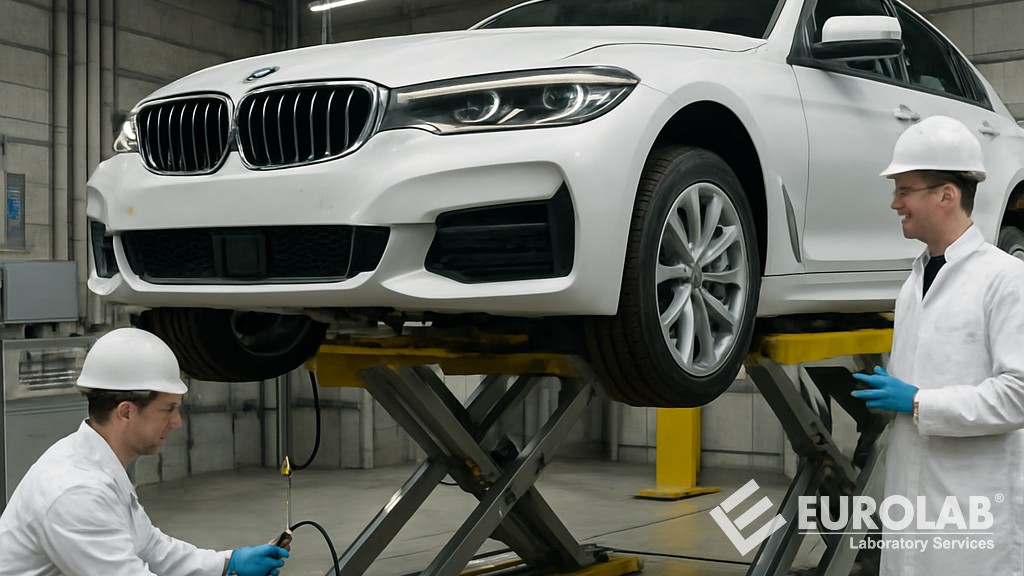
A key section of this standard is § 2.1.20, which specifies a particular analytical test using pyrolysis-gas chromatography/mass spectrometry. The full title of this subsection is: “Vehicle sub-components - Gas chromatography/mass spectrometry (Pyrolysis-GC-MS)”. Pyrolysis-GC/MS is a powerful analytical technique for the characterization of complex, non-volatile, or polymeric materials.
- Pyrolysis: The sample (e.g., a small plastic, coating, rubber, or composite part from a vehicle undercarriage) is rapidly heated in an inert atmosphere (typically 500-800 degrees) to break it down into smaller, volatile particles without burning.
- Gas chromatography (GC): These particles (pyrrolysates) are separated in a capillary column according to their boiling points and chemical interactions.
- Mass spectrometry (MS): Each separated compound is ionized and identified according to its mass-to-charge ratio. This allows comparison with spectral libraries to determine the composition of the material (e.g., polymer types, additives, fillers, or degradation products).
The method described in BMW PR 292 § 2.1.20 standard is applied for the following purposes:
- Material identification and verification: Verifying that the lower body connection is made from the specified polymer blend (e.g., polypropylene, polyethylene, reinforced composites, or elastomers).
- Quality control of additives: Identifying plasticizers, stabilizers, flame retardants, or other substances that may affect long-term performance.
- Detection of contaminants or substandard materials: Identifying undesirable substances that may migrate, deteriorate, or cause problems such as brittleness or odor.
- Compliance with environmental and recycling requirements: Ensuring materials are free from restricted substances or suitable for end-of-life processing to support BMW's sustainability goals.
Because vehicle undercarriage components are exposed to extreme conditions, BMW uses this technique to ensure durability, chemical resistance, and consistency in the supplied parts.
In short, underbody components are subjected to some of the toughest conditions on a vehicle:
- Mechanical stresses: Constant bombardment from road debris, stones, gravel, and impacts at highway speeds.
- Environmental factors: Road salt (especially in winter regions), humidity, dirt, mud, chemicals (e.g., brake dust, oil spills), extreme temperatures (between -40 degrees and +150 degrees near exhaust fumes), and UV exposure in some areas.
- Functional requirements: Aerodynamics (reducing friction and improving fuel efficiency/emissions), noise and vibration reduction, thermal protection (preventing heat damage to nearby components), preventing corrosion of the body/chassis, and in some designs, contributing to pedestrian/foot impact safety.
- Durability and longevity: These parts must withstand the vehicle's lifespan (typically 10-15 years or 200.000 km) without separating, cracking, deteriorating, or losing their function, as failure can lead to increased friction, noise, accelerated corrosion, safety issues, or costly warranty claims.
The BMW PR 292 standard ensures that suppliers reliably provide parts that meet these requirements in the following ways:
- Material composition verification (including advanced methods such as Pyrolysis-GC/MS to identify polymers, additives, fillers and potential contaminants as in § 2.1.20, which is crucial as incorrect materials can lead to brittleness, swelling or odor/gas release).
- Mechanical tests (e.g., stone impact resistance, abrasion, bending strength).
- Environmental simulation (e.g., salt spray, climate cycle, heat aging).
- Surface and coating performance checks.
The main reasons why this standard is considered important are:
- Quality and brand reputation: BMW vehicles are positioned as premium, with high expectations for long-term reliability and refined performance. Consistent underbody protection prevents premature corrosion or functional deterioration that could compromise customer satisfaction.
- Regulatory and sustainability compliance: Supports emission targets (improved aerodynamics), recyclability (material identification aids end-of-life processing), and restrictions on hazardous substances.
- Supply chain control: As a mandatory approval standard, it checks supplier qualification. Parts must pass BMW PR 292 standard tests before going into series production. Non-conformity can halt deliveries or trigger a requalification process.
- Reducing cost and warranty risk: Repairing failures in lower body components is expensive and, if left undetected, can lead to widespread problems.
Consequently, the BMW PR 292 standard is crucial because underbody connections directly impact safety, efficiency, durability, environmental performance, and the overall owner experience in terms of vehicle integrity. This standard, particularly section § 2.1.20, ensures that underbody connections meet rigorous material standards through advanced chemical analysis using Pyrolysis-GC/MS. This helps guarantee that these critical components can withstand the harsh underbody environment while maintaining safety, performance, and environmental compliance throughout the vehicle's lifespan.
For many years, our organization, with its competent and experienced staff, has been understanding the needs of its customers, providing the advanced testing services they require, and assisting them in the establishment, implementation, and improvement of management systems. Within this framework, we also provide testing services to businesses in accordance with the "BMW PR 292 Underbody Connections" standard.



