Renault 32-09-890K Plastic Bumpers and Grilles - General Requirements
The standard “Renault 32-09-890K Plastic bumpers and grilles - General requirements”, developed by the French automobile company Renault, describes the requirements for the following parts of all vehicles:
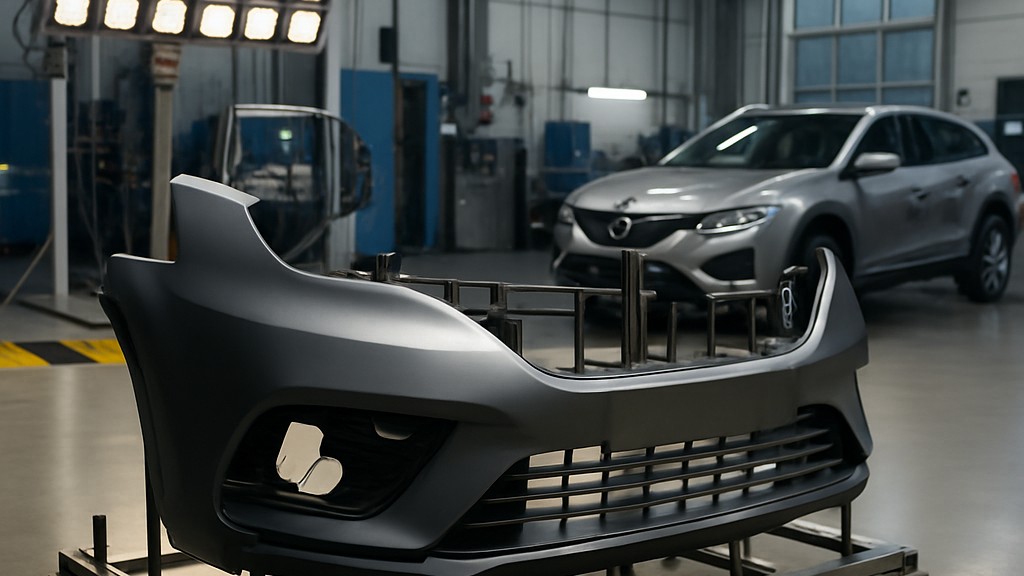
- Painted or unpainted plastic bumpers
- Plastic radiator grilles
- Aerodynamic elements
To be valid, this standard must be accompanied by the standard "Renault 32-09-038 Exterior accessory parts - General requirements." This standard references, supplements, replaces or repeals the relevant paragraphs of the standard Renault 32-09-038.
If value criteria are included in more than one standard, the values to be considered are those specified in the higher priority standard. The order of priority of the standards is as follows:
- Standards for specific services included in the request for proposal file to be reported to the part plan
- Standard on general conditions (this standard)
- Renault 32-09-038 standard
- “Renault 00-10-415 Production and supply of products - General conditions” standard
Plastic bumpers and grilles are critical components in Renault vehicles, offering durability, lightweight construction, and aesthetic appeal. These components are typically made from impact-resistant materials such as ABS plastic or polyurethane, which enhance the vehicle's design.
Plastic bumpers and grilles serve both functional and aesthetic purposes on Renault vehicles:
- Bumpers: They protect the front and rear of the vehicle and often include integrated sensor holes for parking assistance. Made from materials such as ABS or polyurethane, plastic bumpers absorb minor impacts, protect the vehicle's chassis, and reduce weight compared to metal alternatives. They are widely used on various Renault models and offer a cost-effective and environmentally friendly solution for repairs.
- Grilles: Typically made of durable plastics, grilles protect the radiator and engine compartment while also contributing to the vehicle's front-end design. As seen on Renault commercial vehicles and premium models, they are essential for airflow and cooling.
These components are secured using plastic clips and fasteners, such as push-in plastic rivets, which are commonly used to attach bumpers, grilles, fenders, and side skirts to Renault vehicles. These clips fit into an 8mm hole and are a common replacement part for many modern Renault models.
Various sources offer plastic bumpers and grilles for Renault vehicles, both passenger and commercial vehicles.
Renault's plastic bumpers and grilles are designed to meet OEM standards, ensuring fit, durability, and performance. These components typically use materials such as ABS plastic or polyurethane, which offer lightweight construction, corrosion resistance, and impact absorption. OEM parts meet manufacturer specifications for fit, finish, and longevity, ensuring warranty compatibility and optimal performance.
The use of plastic bumpers and grilles in accordance with original equipment manufacturers' standards ensures:
- Perfect fit: Designed for specific Renault models, it ensures perfect installation.
- Durability: High-quality plastics are resistant to abrasion, corrosion and minor impacts.
- Warranty compatibility: Genuine parts protect vehicle warranties.
- Environmentally friendly options: Used original equipment manufacturer parts reduce environmental impact.
Renault, like most modern automakers, uses special plastics in its bumpers and grilles to balance durability, weight, cost, and safety. The main materials and their properties are listed below:
- Polypropylene (PP): This is the most commonly used plastic in Renault bumpers due to its lightweight structure, impact resistance, and cost-effectiveness. It is often reinforced with additives like rubber. It has high impact resistance, chemical resistance, and moldability. Polypropylene was chosen to meet automotive safety and performance standards, such as shock absorption in low-speed collisions (e.g., 8 km/h standards in some markets). Furthermore, its recyclability allows it to comply with environmental regulations such as recycling directives.
- Acrylonitrile butadiene styrene (ABS): Used in grilles and some bumper components due to its rigidity and shape retention. ABS is often combined with polycarbonate (PC) to create PC/ABS blends for bumpers. Its strength, rigidity, and good adhesion make it suitable for painted surfaces. It is less flexible than polypropylene but provides a premium finish. ABS meets the aesthetic and structural requirements of grilles, providing durability and compatibility with surface treatments such as priming or painting.
- Thermoplastic olefin (TPO): Its combination of rubber-like flexibility and plastic durability makes it increasingly used in Renault bumpers. It is lightweight, UV-resistant, and weather-resistant, making it ideal for exterior components exposed to harsh conditions. Thermoplastic olefin supports Renault's focus on longevity and environmental durability and meets UV resistance and recyclability regulations.
- Reinforced plastics: Fiberglass-reinforced composites or other reinforced plastics are used in higher-end Renault models or in certain components for added durability. They offer high strength and impact resistance, but are more complex to repair. These materials meet more stringent safety standards for premium vehicles but may require specialized repair techniques.
The required features in the Renault 32-09-890K standard are listed under the following headings:
- Heat behavior
- Resistance to sunlight
- Behavior in extreme temperatures
- Hot deformation of aerodynamic components
- Connecting components together
- Bending behavior
- Buffer function: regulatory space and necessity
- Pedestrian impact behavior
- Buffer hardness
- Ability to be erased under high voltage
- Resistance to automatic washing machines
- Resistance to high-pressure cleaning
- Ageing against light and weather conditions
- Resistance to packaging and unpacking products
- Resistance to bleach (ordinary styrene material parts)
- Resistance to friction and cleaning agents
- Resistance to liquids
- Resistance to staining and wetting of paints
- Scratch resistance
- impermeability
- Endurance performance and maneuverability (payload, flexible fuel retention)
- The case of multi-material extrusion aerodynamic elements
- Shock mass drop
- Vibration resistance
- Aging with a solar simulator in a climate chamber
- Resistance to opening impacts
Our organization, which has been providing services for many years and meticulously follows global developments in science and technology, employs a skilled team and extensive infrastructure to conduct testing, measurement, and analysis in a wide range of areas for businesses across all sectors. In this context, we also provide testing services in accordance with the "Renault 32-09-890K Plastic bumpers and grilles - General requirements" standard.



