

In the automotive industry, ensuring clear visibility for driver safety is crucial, and windshield washer systems play a critical role in this. These systems, along with headlight washers and wipers, ensure that glass surfaces remain free of dirt, debris, and road residue, especially in adverse weather conditions. Manufacturers have developed standards such as DBL 6269 to standardize components. One such standard is “Mercedes-Benz DBL 6269 Hoses for Windshield Washer Systems and Headlight Washer/Wiper Systems” published by the Mercedes-Benz Group. This standard outlines the technical requirements for hoses used in windshield washer systems. It guarantees compatibility, durability, and performance, preventing problems such as leaks, fragility, or failure under extreme conditions.
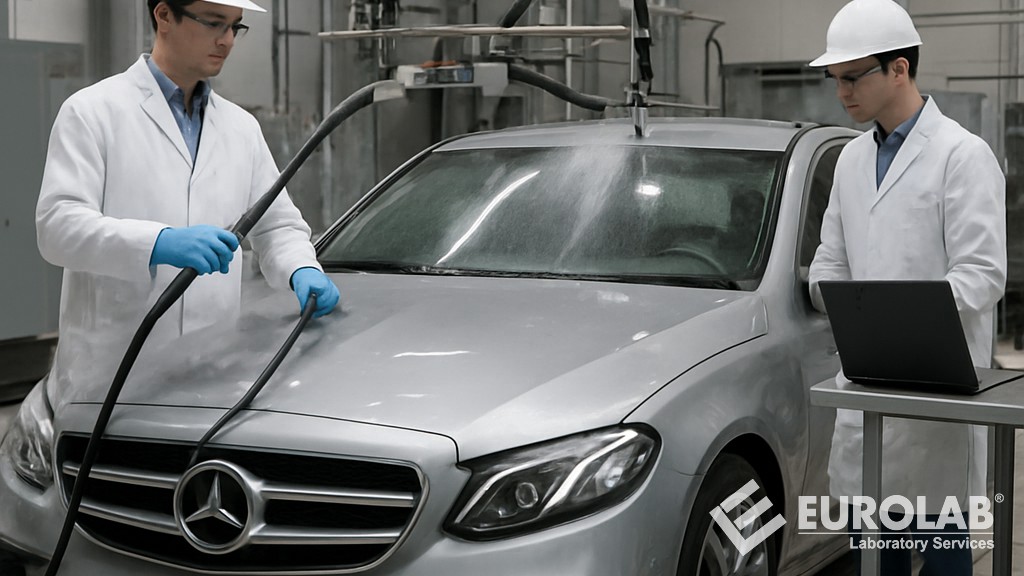
The DBL 6269 standard defines the parameters for flexible hoses that carry washer fluid from the reservoir to the nozzles on the windshield and headlights. These hoses must withstand the unique requirements of automotive environments, such as temperature fluctuations, exposure of washer fluids to chemicals, and mechanical stresses from vibrations and passage through tight spaces. This standard is primarily aimed at original equipment manufacturers and suppliers. It covers the following hoses:
By standardizing these components, DBL 6269 reduces variability in production, minimizes recalls due to hose failures, and supports global supply chain efficiency. This standard aligns with broader industry standards such as SAE J1037 for windshield washer hoses, which emphasizes flexibility and resistance to degradation at low temperatures.
The essence of the DBL 6269 standard lies in the strict material specifications that ensure hoses are both robust and lightweight. The key requirements are:
These materials allow hoses to remain flexible at temperatures as low as -40 degrees, preventing cracking during winter operation, and are resistant to temperatures up to 100 degrees near engine components.
The DBL 6269 standard includes rigorous testing utilizing ISO and DIN methodologies to verify hose performance. Suppliers must provide a certificate for each batch covering the following:
Conformity is verified through third-party laboratories and on-site inspections. Non-conforming batches are rejected, highlighting the specification's role in quality control.
In practice, hoses compliant with the DBL 6269 standard are an integral part of advanced cleaning systems. For example:
In short, the DBL 6269 standard, an example of the precision engineering behind everyday automotive features, transforms simple hoses into reliable lifelines for visibility. Thanks to high-quality materials and extensive testing, it ensures that windscreen and headlight washer systems perform flawlessly from everyday use to high-speed highways.
For many years, our organization, with its competent and experienced staff, has been understanding the needs of its customers, providing the advanced testing services they require, and assisting in the establishment, implementation, and improvement of management systems. Within this framework, we also provide testing services to businesses in accordance with the "Mercedes-Benz DBL 6269 Hoses for windscreen washer systems and headlight washer/wiper systems" standard.
To get an appointment, to get more detailed information or to request an evaluation, you can ask us to fill in our form and reach you.

