

The standard “Ford BN 108-02 Abrasion resistance - Taber abrasive,” developed by Ford Motor Company (Ford), describes a procedure for testing the abrasion resistance of textile fabrics, coated fabrics, genuine leather, cardboard, rubber mats, carpets, other floor covering materials, plastics and painted surfaces.
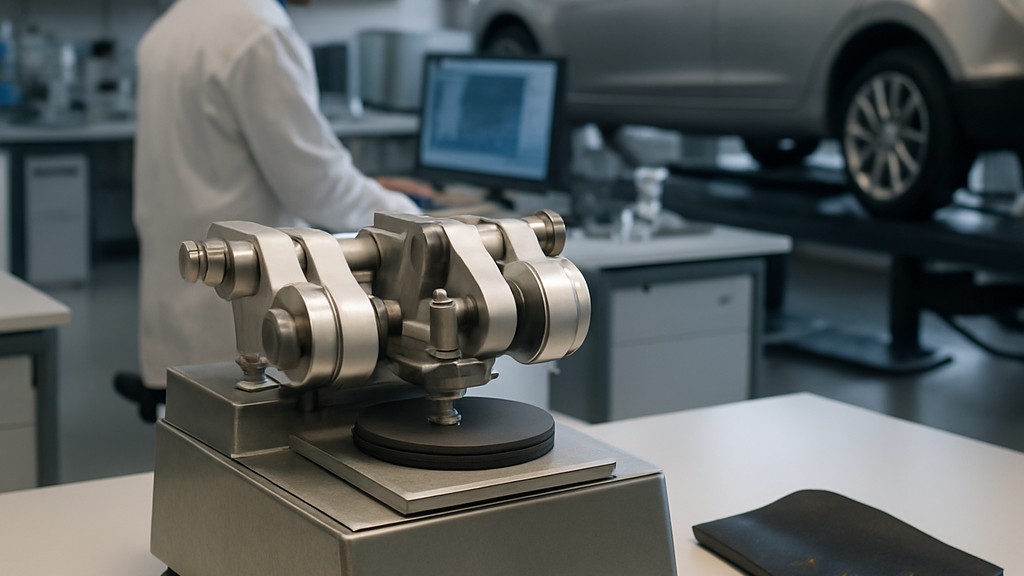
In the automotive industry, where interior components are subjected to daily wear and tear from passengers, cargo, and environmental factors, ensuring material durability is crucial for safety, aesthetics, and customer satisfaction. To standardize quality assurance for vehicle production, Ford Motor Company has developed a series of standards. Among these, Ford BN 108-02 stands out as a critical protocol for assessing the resistance of interior surfaces to abrasion. The methodology presented in this standard utilizes a rotating platform device, the Taber abrader, to simulate real-world wear scenarios.
The Ford BN 108-02 standard helps suppliers and internal teams verify that materials meet performance thresholds, reduce defects, and extend vehicle life. This standard focuses specifically on interior trim and soft goods. It addresses the limitations of older tests by providing quantifiable data on surface wear, making it essential for modern, lightweight composites and synthetics, which are increasingly being used in electric vehicles to reduce weight and improve efficiency.
The Ford BN 108-02 standard was designed specifically for automotive interior components, targeting materials that must withstand prolonged human interaction. It applies to both flexible and rigid surfaces and focuses on surface integrity rather than volumetric strength.
The key elements of the scope are:
This broad applicability supports a variety of applications, from luxury leather seating to durable vinyl in commercial vans. When feet drag on floor mats, seat belts rub against upholstery, or hands grip door panels, poor abrasion resistance leads to visible damage such as pilling, cracking, or loss of texture, impacting not only aesthetics but also safety.
This method can be applied to a wide variety of materials:
The Ford BN 108-02 standard uses a Taber rotary abrasive, a fundamental tool in tribology testing. This method simulates rotational friction under load, providing wear rate data that informs material formulations and surface treatments. Samples are prepared as 100 mm diameter discs or panels that are conditioned for 24 hours at 23 degrees Celsius and 50 percent relative humidity. A backing material, such as felt or cork, prevents the substrate from becoming entangled.
While the exact cycle counts vary by material, the general steps are consistent with industry norms:
As a result, the Ford FLTM BN 108-02 standard standard standardizes wear assessment across a variety of materials, supporting material development while maintaining Ford's reputation for reliability. This methodology is evolving as electric vehicles demand lighter, more durable cabins. In the high-stakes world of automotive design, the Ford BN 108-02 standard is not just a test method; it's a benchmark for durability.
Our organization, which has been operating for many years and meticulously follows global developments in science and technology, employs a team of experienced professionals and a broad infrastructure to conduct testing, measurement, and analysis in a wide range of areas for businesses across all sectors. In this context, we also provide testing services in accordance with the Ford BN 108-02 Abrasion Resistance - Taber Abrasive standard.
To get an appointment, to get more detailed information or to request an evaluation, you can ask us to fill in our form and reach you.

