

Ford FLTM BI 160-01 Florida and Arizona Outdoor Exposure Test

Ford FLTM BI 160-01 Florida and Arizona Outdoor Exposure Test

The “Ford FLTM BI 160-01 Florida and Arizona Outdoor Exposure Test” standard, developed by Ford Motor Company (Ford), describes a test method used to determine the weathering resistance (e.g., discoloration, gloss, chalking, and cracking) of painted panels (ferrous and non-ferrous) and molded colored panels (plastics) in Florida or Arizona, both in direct and exposed conditions.
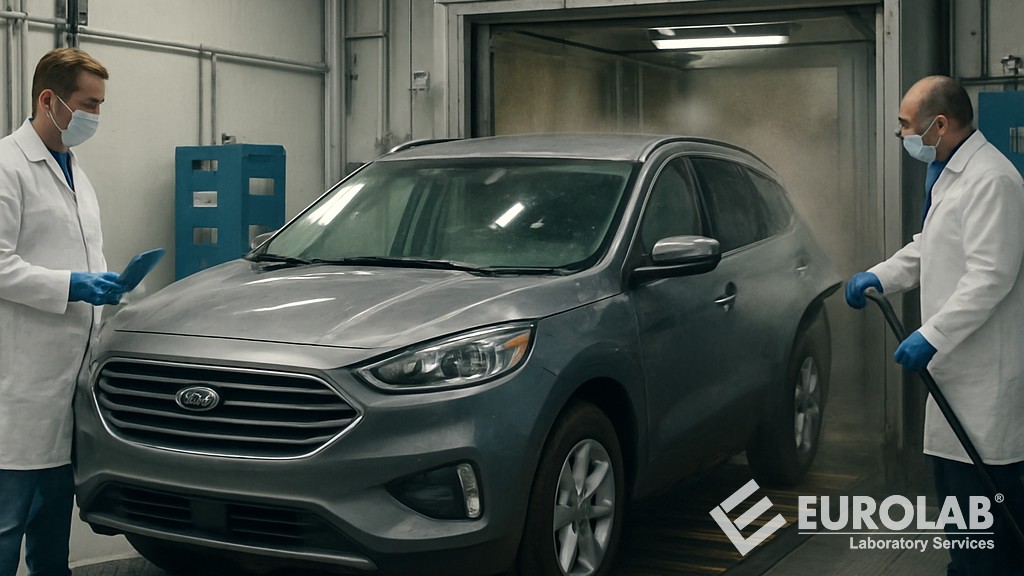
Ford FLTM BI 160-01 Florida and Arizona Outdoor Exposure Test

Test panels are ferrous or non-ferrous, painted or tinted impregnated panels, according to applicable material or performance specifications. The glass (for under-glass exposure) is 3 mm thick tempered safety glass.

The recommended sample size for painted metal panels is 100 mm x 300 mm. Unless otherwise specified in the relevant specification, it is prepared according to the Ford FLTM BI 103-02 standard. The recommended size for plastic/rubber samples is 100 mm x 150 mm; smaller samples are acceptable as finished parts or as defined in the relevant material specification (e.g., pull rods). 100 mm x 300 mm samples are commonly used for reaction injection molding of urethane. Samples to be exposed are mounted on a 150 mm x 300 mm metal panel painted with white production enamel using stainless steel fasteners or double-sided pressure-sensitive tape.

All test values ​​stated herein are based on material conditioned in a controlled atmosphere of 23 degrees plus/minus 2 degrees and 50 percent plus/minus 5 percent relative humidity for at least 24 hours prior to testing and tested under the same conditions, unless otherwise stated.

While the samples were being prepared,

  • All test panels must be permanently marked on their back or rear surfaces in a suitable manner. Front or exposed side marking may be used if the exposure does not infringe the test area. The back and edges of all iron panels must be sealed for corrosion prevention purposes (e.g., electroplating, clear air-drying coating).
  • A sample of each specimen should be stored in a dark place by the person preparing it for later comparison purposes.
  • Samples are exposed (with the exposure side facing upwards) to face south at one or more angles as described in the applicable specification for the system under investigation. Standard panel racks are used unless otherwise specified.
  • The test duration should be selected to evaluate the field performance and characteristics being examined.
  • During outdoor exposures, samples should be positioned and mounted so that they do not cast shadows on or touch one another. Additionally, samples should be mounted in a way that prevents weather conditions from flowing from one sample to another.
  • All panels directly exposed to weathering and glass covers above glass under-glass exposure areas should be rinsed monthly. Panel rinsing is defined as washing with tap water at the end of morning dew formation.
  • Unless otherwise specified, panels should be shipped to exposure areas approved by Ford Motor Company.
  • For all panels sent for exposure, a record must be kept including the code, manufacturer, color, design color code, Ford specification number, formulation number, number of panels per shipment, and exposure time.

Post-exposure evaluation of painted panels:

  • The sample surface is washed to remove loose and partially settled dirt. A proper procedure consists of gently scrubbing with a soft cellulose sponge thoroughly moistened with a solution of warm tap water and 0,05% nonionic liquid soap. Rinse immediately under warm tap water. To prevent water stains, water droplets should be removed using clean compressed air.
  • The sample is compared to a panel kept under artificial daylight according to the FLTM Bl 109-01 standard. Color change is noted using the AATCC Gray Scale. Under the same light, it is checked whether there is any cracking, scratching, chalking or other deterioration.
  • The brightness of both exposed and uncovered samples is measured using a 60-degree gloss meter according to the FLTM Bl 110-01 standard and compared. The brightness is recorded.
  • The exposed panel is compared to the panel held using a reflectivity meter, reflecting light from the roof rails, aurora borealis, or external window grilles, and exposed panels exhibiting a smoky appearance or giving a lower image separation (Dl) value than specified in the relevant specification are rejected.
  • In the specified cases, a 24-hour immersion test is performed in accordance with the FLTM Bl 104-01 standard. Any swelling or discoloration resulting from immersion is reported.

In the high-risk automotive manufacturing world, where vehicles must withstand harsh environmental conditions for years to come, rigorous testing is undeniable. Ford Motor Company has long prioritized durability, particularly in exterior surfaces such as paints and coatings. One of the critical tools in Ford's quality assurance arsenal is the Ford FLTM BI 160-01 standard. This standard simulates extreme real-world weather conditions that vehicles are exposed to in sun-scorched climates, ensuring vehicles can withstand UV rays, heat, humidity, and salt without fading, cracking, or peeling. It focuses on evaluating the performance of painted panels, parts, and assemblies. With global supply chains expanding and environmental regulations becoming stricter, such testing is vital for compliance and customer satisfaction.

The main objectives of the test are as follows:

  • Assessment of long-term durability: Evaluating how the coatings resist chalking, discoloration, loss of gloss, and adhesion degradation over simulated long-term exposure periods.
  • Ensuring compliance: Meeting Ford's internal specifications such as WSS-M33J3 (enamels for exterior primer/varnish systems) and referencing the BI 160-01 standard for verification.
  • Supporting materials innovation: Enabling engineers to experiment with new formulations, such as low-VOC, high-solids thermoset varnishes, before moving to full-scale production.

Unlike laboratory-based accelerated weather resistance tests (e.g., using xenon arc lamps), the Ford FLTM BI 160-01 standard utilizes real-world conditions for more realistic results. It is typically applied to painted steel or aluminum panels representing vehicle body parts, but can also be applied to plastics, composites, or complete assemblies.

For many years, our organization, with its competent and experienced staff, has been understanding the needs of its clients, providing the advanced testing services they require, and assisting in the establishment, implementation, and improvement of management systems. Within this framework, we also provide testing services to businesses in accordance with the "Ford FLTM BI 160-01 Florida and Arizona outdoor exposure test" standard.

WhatsApp

