

The “TPJLR 52.458 Determination and Assessment of Odor from Interior Upholstery Materials, Components and Assemblies” standard, published by Jaguar Land Rover Limited (JLR), describes a specific procedure used to assess and rate odors emitted by materials and components used in vehicle interiors. This falls under the broader category of vehicle interior air quality requirements aimed at ensuring that vehicle cabins do not have unpleasant or excessive odors that could affect customer satisfaction or perceived quality.
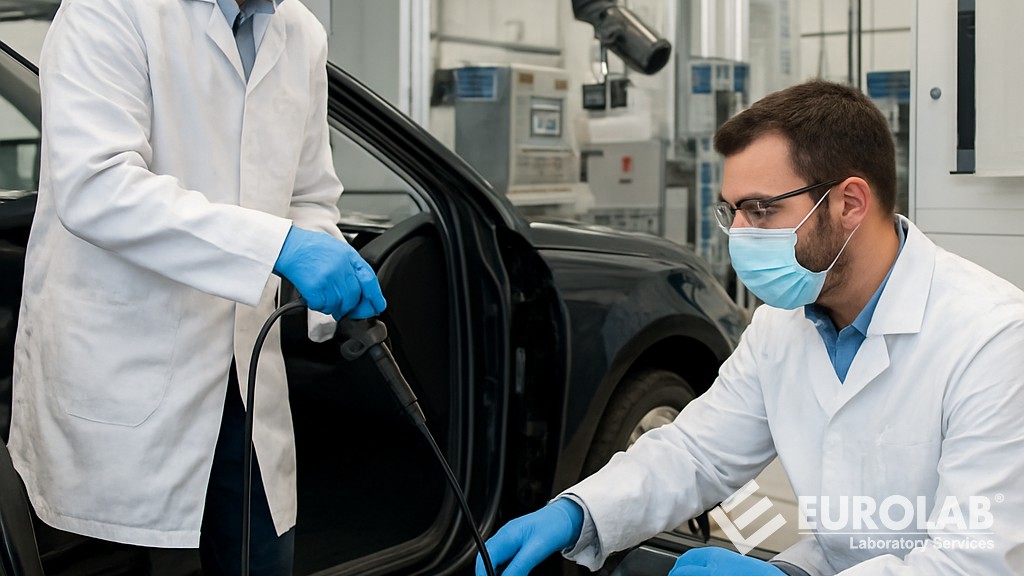
Modern vehicles use many synthetic materials (plastics, foams, textiles, adhesives, coatings, leathers) in dashboards, seats, door panels, headliners, carpets, and other upholstery. These can release volatile compounds, especially when new or exposed to heat and sunlight, leading to the well-known new car smell (while some people find it pleasant, others find it unpleasant).
The TPJLR.52.458 standard helps Jaguar Land Rover enforce strict limits on unwanted odors to maintain high interior quality standards.
This testing method generally follows these steps:
This standard is often listed alongside the following:
JLR suppliers (primary and material manufacturers) must demonstrate compliance with the TPJLR.52.458 standard before parts are approved for production purposes.
Advanced accredited laboratories offer TPJLR.52.458 standard testing for a variety of automotive suppliers.
In short, the TPJLR.52.458 standard is a technical standard and test method used in the automotive industry to evaluate the odor properties of interior upholstery materials, components, and parts. This standard is part of a series of Jaguar Land Rover (JLR) material and component specifications used by suppliers and testing laboratories to ensure vehicle interiors meet customer expectations regarding quality, comfort, and odor.
Simply put, the TPJLR.52.458 standard defines a uniform procedure for evaluating and scoring the odor emitted by materials used in vehicle cabins (e.g., plastics, textiles, leather, coatings, foams, and composites) after they have been manufactured or assembled.
The scent of interior materials is a critical quality attribute for both automotive manufacturers and consumers:
The purpose of the TPJLR.52.458 standard is to identify and evaluate the odor emanating from automotive interior trim materials, parts, and larger assemblies under controlled laboratory conditions. It is typically a sensory evaluation test performed by panels of trained human evaluators, rather than purely analytical chemical instruments. Evaluators score the intensity, character, or acceptability of the odor according to standardized procedures.
This procedure applies extensively to many materials used in vehicle interiors, including:
Typically, samples are prepared and conditioned according to defined parameters (e.g., sample size, temperature, and exposure time), then evaluated. Odor intensity and descriptors are recorded and compared to acceptance criteria specified by Jaguar Land Rover.
Manufacturers and laboratory service providers use the TPJLR.52.458 standard for the following purposes:
According to the TPJLR.52.458 standard, testing may be part of a broader quality and emissions assessment that could also include VOC testing, fogging measurements, and other sensory or analytical evaluations.
This standard is part of a broader ecosystem of automotive materials evaluation standards. Comparable odor and emissions standards include:
Each of these standards has slightly different scope or test conditions, but they all aim to measure and control fragrance performance according to acceptable industry standards.
In conclusion, the TPJLR.52.458 standard is Jaguar Land Rover's standardized odor evaluation method for interior materials and is a key part of ensuring a superior, low-odor cabin experience in vehicles. This standard ensures that products supplied for use in JLR vehicles meet stringent criteria in terms of odor intensity and quality. This is a crucial part of in-vehicle comfort, brand perception, and material quality control.
For many years, our organization, with its competent and experienced staff, has been understanding the needs of its clients, providing the advanced testing services they require, and assisting in the establishment, implementation, and improvement of management systems. Within this framework, we also provide testing services to businesses in accordance with the "TPJLR 52.458 Determination and evaluation of odors originating from interior upholstery materials, components, and assemblies" standard.
To get an appointment, to get more detailed information or to request an evaluation, you can ask us to fill in our form and reach you.

