

Developed by BMW, a multinational vehicle manufacturer, the “BMW GS 97052 Aqueous Substrate for Leather Laminated Trim - Peel Resistance” standard focuses on adhesion/peel resistance testing for specific interior trim materials. This standard is compatible with the “DIN EN 1464 Adhesives - Determination of peel resistance of adhesive bonds - Floating roller method” standard published by the German Institute for Standardization (DIN), which was developed to determine how well bonded layers resist separation (peel resistance). The main application is testing the adhesion strength of leather lamination (or similar coatings) to PVC-Slush substrates. These substrates are commonly used for interior trim parts in premium vehicles, such as instrument panels, door panels, armrests, and other soft-touch leather-covered surfaces.
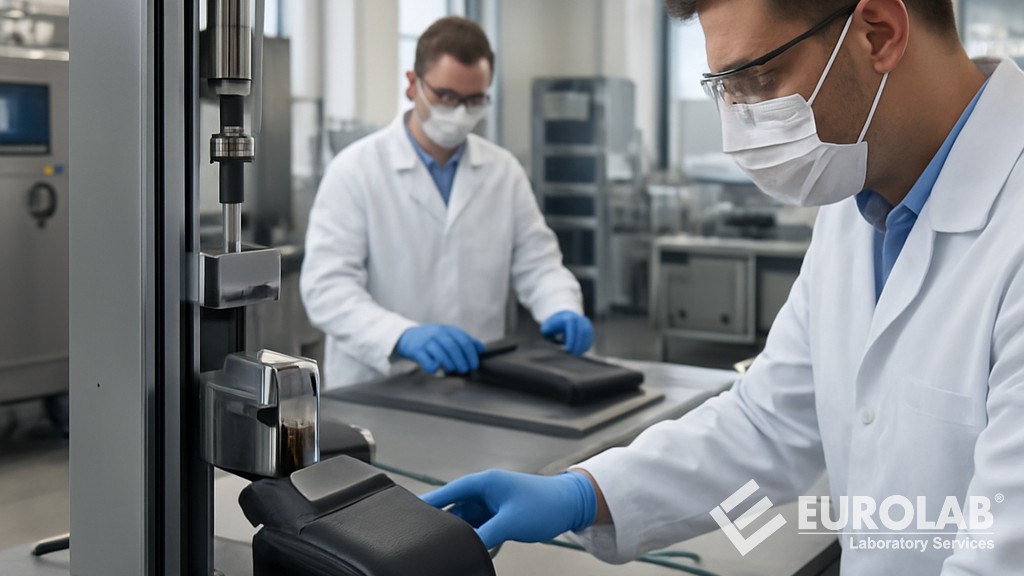
BMW is extremely meticulous about the quality of materials in interiors. Standards such as BMW GS 97052 help suppliers verify that their products meet BMW's expectations:
PVC-Slush (aqueous substrate) for leather lamination refers to a flexible, thin plastic sheet produced using PVC (polyvinyl chloride) through a vapor molding process. This substrate serves as the base to which genuine leather (or high-quality synthetic coatings such as premium vinyl) is bonded/laminated in high-end automotive interiors. Slush molding is a manufacturing technique used to create soft, seamless, flexible coatings for automotive interiors. A metal mold (usually with a leather texture applied to it) is heated to approximately 200-250 degrees Celsius. Dry PVC powder (slush) is poured into the hot mold. The powder melts and fuses only on the mold surface, forming a thin, smooth layer (1-1,5 mm thick). Excess powder is sloughed off, the mold cools, and the flexible PVC coating is peeled off. This produces lightweight, soft-touch parts with a seamless, realistic leather texture.
The BMW GS 97052 standard is primarily deemed necessary to prevent peeling (separation) of premium interior trim materials and to ensure long-term durability, a luxurious appearance, and low warranty costs in BMW vehicles. The reasons for the existence and rigorous application of this standard are as follows:
Without strong and permanent adhesion, heat, humidity, UV exposure, aging, and mechanical stress (such as passengers resting their arms on the surface or cleaning) will cause the leather layer to lift, bulge, peel, or separate at the edges or in high-stress areas. This quickly degrades the premium feel and visual quality, which is unacceptable in vehicles.
These aren't just cosmetic flaws; they are visible defects that lead to dissatisfaction, negative reviews, and costly repairs/replacements if not detected early. These and similar stringent standards help suppliers qualify materials before parts reach production, identifying weak adhesives or incompatible material combinations.
Consequently, the BMW GS 97052 standard is not an optional procedure, but a direct response to past industry failures where poor bonding led to visible, unsightly, and costly interior defects.
For many years, our organization, with its competent and experienced team, has been understanding the needs of its clients, providing the advanced testing services they require, and assisting them in the establishment, implementation, and improvement of management systems. Within this framework, we also provide testing services in accordance with the BMW GS 97052 standard.
To get an appointment, to get more detailed information or to request an evaluation, you can ask us to fill in our form and reach you.

