

The American Society for Testing and Materials (ASTM) standard, "ASTM D7869 Standard Practice for Xenon Arc Exposure Testing with Enhanced Light and Water Exposure for Transportation Coatings," specifies the operating procedures for a controlled-irradiation xenon arc light and water device. This procedure uses one or more lamps and optical filters to produce sunlight-like radiation in the UV and visible regions. It also simulates the water absorption and stress cycles experienced by automotive exterior coatings under natural weathering conditions. This practice is also applicable to coatings for other transportation vehicles, such as aircraft, trucks, and railcars.
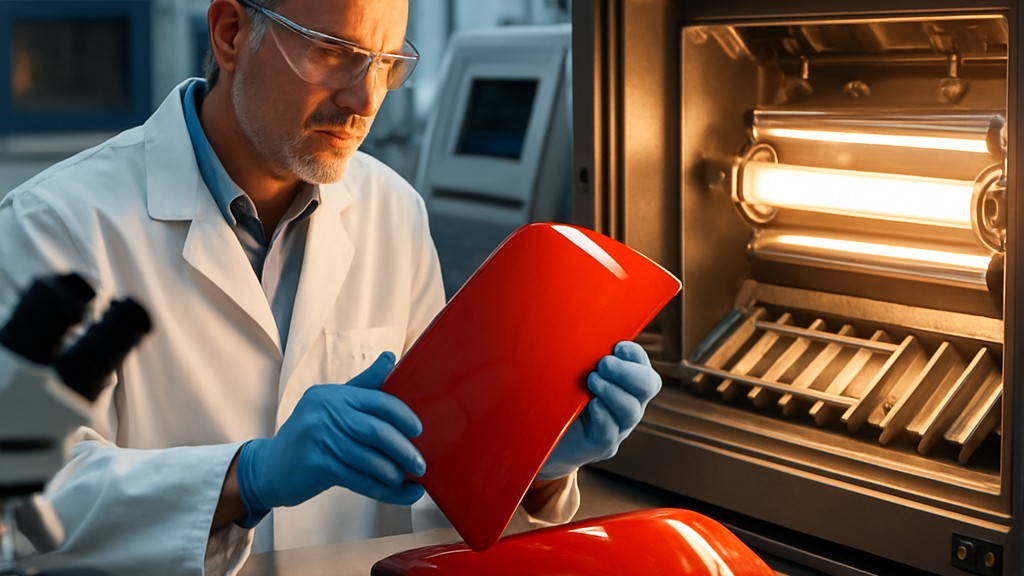
Automotive exterior materials are critical for several reasons, as they directly impact a vehicle's performance, safety, aesthetics, and longevity. Coatings are important for the following reasons:
In short, these materials are the first line of defense against weather conditions, a key factor in performance and efficiency, and a key driver of customer satisfaction and regulatory compliance.
The ASTM D7869 standard uses a xenon arc light source with specified optical filters. The spectral power distribution for the lamp and special daylight filters is described in the standard appendix (Appendix A1). The irradiation level used in this application ranges from 0,40 to 0,80 W/(m²·nm) at 340 nm . Water is sprayed onto the samples during sections of several dark steps. The water application is such that the coatings absorb and release significant amounts of water during testing. In addition, the wet/dry and cold/hot cycling causes mechanical stresses in the materials. These test conditions are designed to simulate physical and chemical stresses in subtropical climates such as Florida.
The advantages of this method are:
However, this standard is not a perfect aid, correlations with real-world data vary by geography.
The ASTM D7869 standard is preferred for testing automotive exterior materials due to its effectiveness, efficiency, and industry compliance. This standard uses fluorescent UV lamps and condensation cycles to closely mimic real-world UV radiation and humidity exposure. This exposure causes up to 90 percent of visible material degradation (e.g., fading, cracking). UVA-340 lamps provide realistic results by mimicking the harmful wavelengths of the solar spectrum.
Additionally, unlike broader standards, this standard is specifically designed for automotive exterior materials and addresses specific challenges such as color fastness and gloss retention under vehicle-related conditions.
This standard is chosen for its inherent balance between accuracy, speed, cost and automotive focus, making it the go-to choice for providing durable, high-quality exterior materials.
As a result, the ASTM D7869 standard is the cornerstone of automotive durability testing, bridging the gap between laboratory simulations and road realities. As vehicles become more material-intensive and environmentally sensitive—such as autonomous shuttles in deserts or electric vehicles in coastal areas—this standard becomes even more important. By speeding up exposure to UV rays and condensation, it enables engineers to create vehicles that not only look great on the surface but also withstand the rigors of road travel.
Our organization, with its competent and experienced team, has been understanding the needs of its customers for years, providing them with the advanced testing services they need, and assisting them in establishing, implementing, and improving management systems. In this context, we also provide testing services in accordance with ASTM D7869 Standard Practice for Enhanced Light and Water Exposure and Xenon Arc Exposure Testing for Transportation Coatings.
To get an appointment, to get more detailed information or to request an evaluation, you can ask us to fill in our form and reach you.

