

The “Ford FLTM BN 117-03 Evaluation of Upholstery Materials After Accelerated Xenon Arc Exposure” standard, developed by Ford Motor Company (Ford), describes a test method used to evaluate the durability and appearance of automotive interior upholstery materials after accelerated weathering in a controlled radiation, water-cooled xenon arc testing machine. This standard primarily applies to textiles, fabrics, coated materials, and other interior upholstery components that are exposed to sunlight during vehicle use.
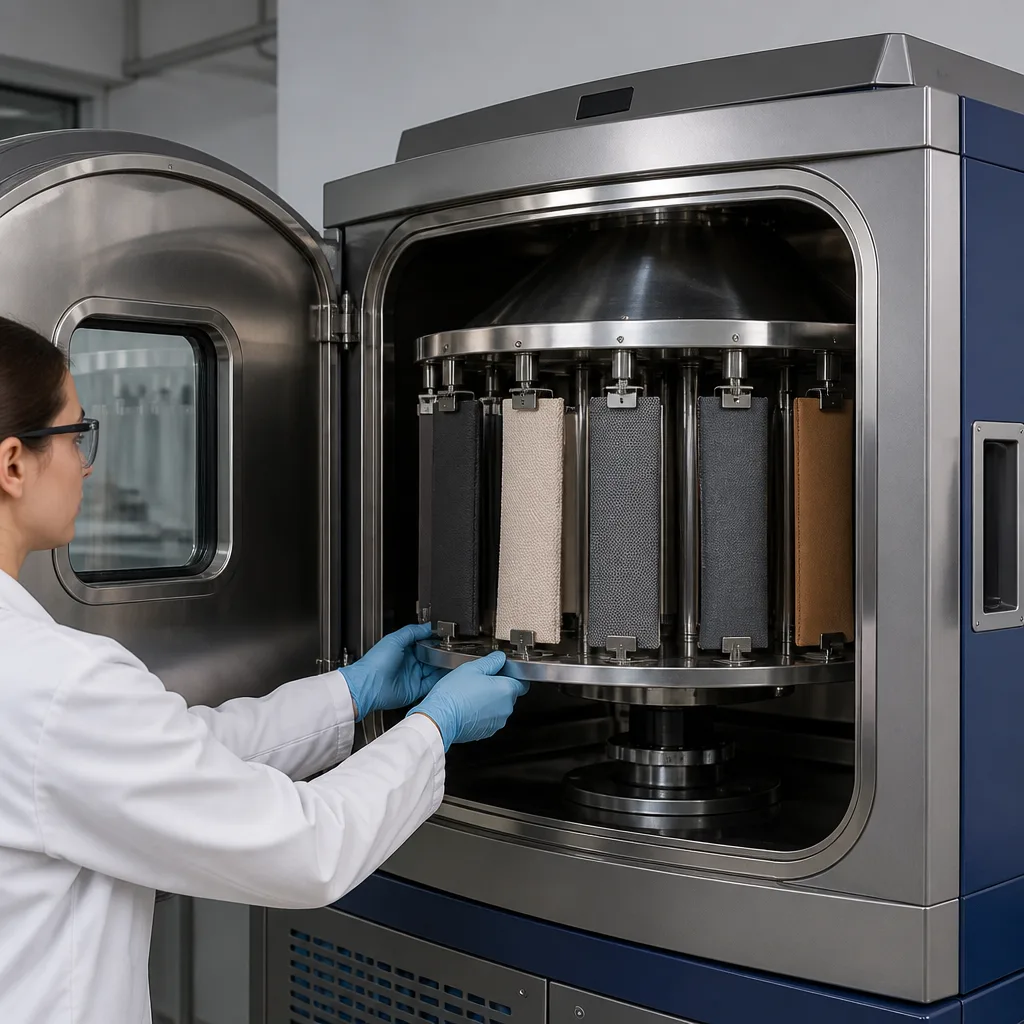
The purpose of this test is to simulate prolonged exposure to sunlight, heat, and environmental conditions within a compressed laboratory timeframe. By exposing materials to xenon arc radiation, engineers can assess whether a material will retain its mechanical properties and surface appearance throughout the expected lifespan of the vehicle.
The Ford FLTM BN 117-03 standard focuses on evaluating upholstery materials after accelerated aging caused by exposure to xenon arc light. This test measures the effect of exposure on:
The test methods described in this standard are:
This method focuses specifically on tensile strength after aging. Simply put, it determines whether the material still retains its strength after being exposed to simulated long-term sunlight.
This method typically evaluates the following:
If a material loses too much strength after being exposed to UV rays, it can lead to the following:
In short, Method A is a post-aging durability test that ensures automotive interior materials not only look good but also remain mechanically reliable after exposure to sunlight.
Typical observations include:
Method A focuses on strength, while Method B focuses on how the material looks and feels after aging. Essentially, this method determines whether the material still maintains acceptable surface quality after prolonged exposure to sunlight.
Method B typically looks for the following:
Depending on the specification, the assessment may include:
Method B ensures that interior materials look new even after years of UV exposure, which is critical for perceived vehicle quality.
Xenon arc welding closely reproduces the spectral characteristics of natural sunlight, making it one of the most realistic accelerated weather exposure methods used in the automotive industry.
The Ford FLTM BN 117-03 standard is commonly used in the following areas:
The Ford FLTM BN 117-03 standard is important because it protects one of the areas in vehicles most at risk of failure: interior materials exposed to prolonged sunlight and heat.
Inside a car, fabrics, upholstery, and synthetic surfaces are constantly exposed to sunlight streaming through the windows. Over time, this leads to fading, weakening, and surface damage. This standard exists to ensure these materials are tested in a controlled and accelerated manner before going into production.
The main reasons why this standard is considered important are as follows:
In short, this standard is a quality control and durability assurance that ensures interior materials can withstand real-world UV radiation without loss of performance or appearance.
In conclusion, the Ford FLTM BN 117-03 standard is a critical weather resistance and longevity standard for automotive interior materials. Through accelerated xenon arc exposure, the test evaluates both preserved tensile strength (Method A) and surface fiber degradation (Method B), helping Ford ensure that its interior trim materials remain durable, attractive, and functional throughout the vehicle's lifespan.
For many years, our organization, with its competent and experienced staff, has been understanding the needs of its customers, providing the advanced testing services they require, and assisting them in the establishment, implementation, and improvement of management systems. Within this framework, we also provide testing services to businesses in accordance with the Ford FLTM BN 117-03 standard.
To get an appointment, to get more detailed information or to request an evaluation, you can ask us to fill in our form and reach you.

