

The standard "Mercedes-Benz DBL 8585 General requirements - Environmental protection, hazardous substances, hazardous goods negative substance list for material selection" developed by the Mercedes-Benz Group lists substances and classes of substances that are not permitted in materials and components to protect people and the environment, or are permitted only if it has been proven that ecologically and economically equivalent, non-critical materials are not available.
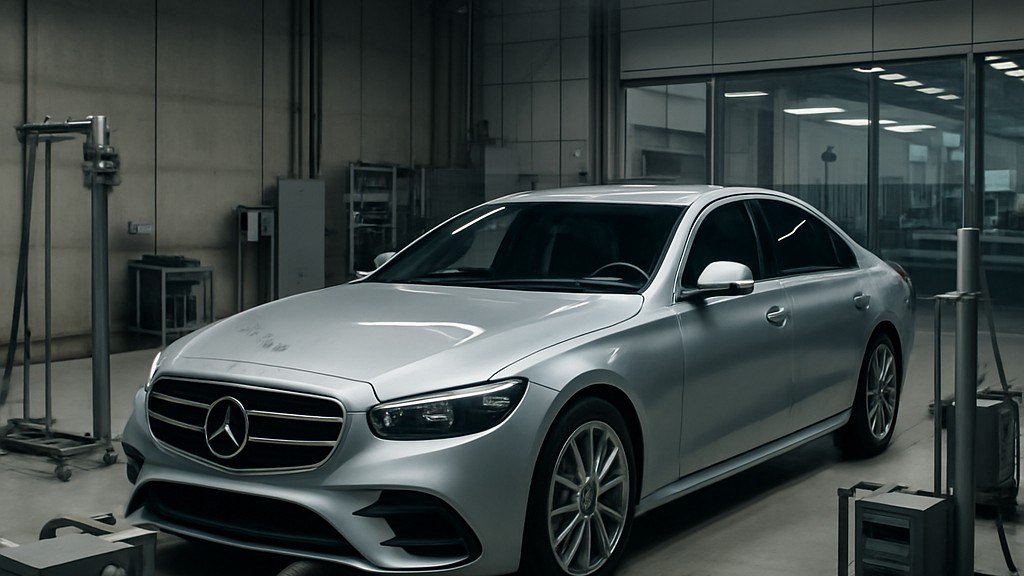
Decisions regarding their use are made after due diligence and assessment of potential risks for the specific application. This standard is intended to provide suppliers, component management developers, designers, and materials specialists with guidance for determining material selection and manufacturing processes from the preliminary development stage onward, and to provide certifying bodies with the information necessary for the evaluation of materials and workpieces.
To ensure product safety and quality and to meet certification requirements, all relevant legal regulations and laws must be complied with. The relevant requirements of the Mercedes-Benz Group also apply.
All materials, process engineering, component parts and systems must comply with all applicable legal requirements regarding components and recyclability. With regard to its deliveries or services, the supplier must always comply with the latest versions of applicable legal regulations regarding environmental protection, hazardous substances, dangerous goods, occupational safety, and transportation.
The supplier confirms that it has read Mercedes-Benz's environmental protection guidelines and will comply with them in all its activities. The supplier must conduct an analysis of the environmental impacts of its production processes, the substances or materials used, and the product. If a relevant environmental impact is identified, the supplier must define environmental objectives, the fulfillment of which must be documented, and a chief environmental officer/contact person must be appointed who reports to the company's general management. In the case of new or modified products and processes, an appropriate production process and product approval report will be prepared.
For samples for production process and product approval, a properly completed IMDS (International Material Data System) material data sheet must be submitted in advance for each product number, supplier, drawing geometry, and production location, both for purchased parts (as well as for all substructure parts and service products designated as spare parts) and in-house parts. Any deviations must be reported, and written approval must be obtained from Mercedes-Benz. These requirements apply to the condition of the materials/component parts at the time of delivery. Changes in material composition, for example, due to necessary component substitutions, trigger a new production process and product approval process. Further sampling procedures must be coordinated with the responsible quality engineer.
The requirements of standards DBL 6565 and DBL 6714 must be complied with regarding process materials, service products and other working materials.
With regard to substances, mixtures, materials, products, and component parts, substances and mixtures subject to legal restrictions or prohibitions must only be present in products supplied or used in accordance with these specifications. The supplier is also obligated to comply with the applicable internal standards and supply specifications of the Mercedes-Benz Group and all applicable legal regulations regarding prohibitions and restrictions on substances.
The supplier must ensure that hazardous materials are packaged, labeled, and identified in accordance with the hazardous material regulations applicable to the relevant transport vehicles. Specific requirements for component parts are taken from the component requirement specifications, where applicable, or agreed upon with the component manager or the Mercedes-Benz hazardous material safety advisor.
Component parts containing explosive substances (such as airbags, seat belt tensioners) must be supplied in accordance with the requirements of explosives legislation (e.g., CE approval, identification of each element and the smallest packaging unit in accordance with explosives legislation). The specifications of the hazardous goods regulations for the relevant mode of transport must be met in accordance with the transport approval issued by the German Federal Institute for Materials Research and Testing or another approval authority.
The supplier must comply with radiation protection laws and radiation protection regulations. Supplied materials, components, and systems must not contain any artificially produced radioactive material. Airborne noble gases should only be added if the isotope ratio in the gas is at most the same as that in air.
Legal requirements and regional standards regarding the emission behavior of vehicle interior materials must be complied with. Mercedes-Benz-specific specifications for emissions from vehicle interior materials and component parts must also be adhered to.
The global automotive declarable substance list forms the basis for the prohibition and declaration requirements of substances in Mercedes-Benz products. This list is a summary of substances and substance classes that represent potential risks to humans and the environment and must be adhered to.
Our organization, which has been supporting businesses across all sectors for years through a wide range of testing, measurement, analysis, and evaluation activities, boasts a strong team of employees who closely follow global developments in science and technology and are constantly improving themselves. In this context, we also provide testing services in accordance with the Mercedes-Benz DBL 8585 standard: "General requirements - Environmental protection, hazardous substances, hazardous goods, negative substance list for material selection."
To get an appointment, to get more detailed information or to request an evaluation, you can ask us to fill in our form and reach you.

