

The Renault Nissan engineering standard, “RNES-B-20116 Screening method for determining volatile organic compound emissions from vehicle interior components and materials - Micro-scale chamber method,” describes the specifications of the equipment, vapor sampling setup, and operating conditions used to determine volatile organic compound (VOC) and carbonyl compound emissions from vehicle interior materials.
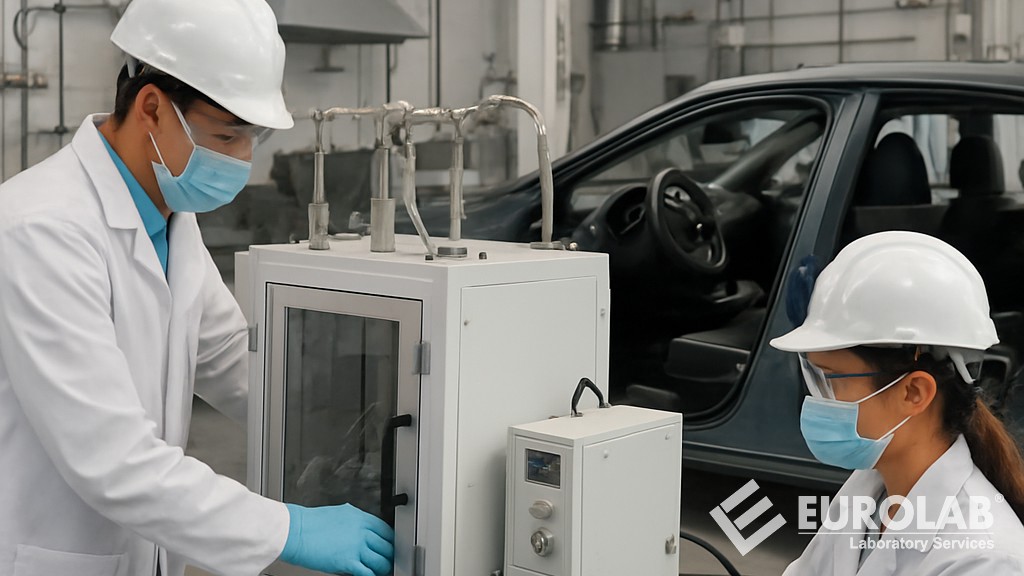
This test method is based on the standard “ISO 12219-3 Interior air of road vehicles - Part 3: Screening method for determining volatile organic compound emissions from vehicle interior parts and materials - Micro-scale chamber method”. However, some specific parameters and modifications have been added to this standard.
A micro-scale chamber is an instrument designed to characterize the area-specific emission rate of materials. The material under test is characterized under controlled and reproducible conditions. The material emission is then sampled in a trap environment. Subsequently, these trap environments are analyzed by gas or liquid chromatography, respectively.
The micro-scale chamber consists of several chambers (four or six for most devices) with volumes of a few milliliters each (recommended volumes in the 12219-3 standard are 44,5 or 114 ml). This device allows for simultaneous sampling from different samples.
Two measurement modes are available: Flec mode and Bulk mode. The Flec module (field and laboratory emission cell) is reserved for this test method as it enables the acquisition of a field-specific emission rate. The sample is attached to the chamber lid and placed in a spacer that allows only surface emission.
In an era dominated by electric vehicles and smart cabins in the automotive world, air quality inside a vehicle is no longer an afterthought, but a critical safety and comfort feature. The groundbreaking RNES-B-20116 standard transforms how manufacturers test and reduce volatile organic compound (VOC) and formaldehyde emissions from interior materials, ensuring passengers breathe cleaner, healthier air on every drive.
As global regulations on indoor air quality tightened due to concerns about health risks such as respiratory problems and long-term exposure to carcinogens, the need for a unified testing protocol was recognized. Previously, Renault D493018 and Nissan M0402 standards were used. These standards were later harmonized with the RNES-B-20116 standard for emission screening.
This standard addresses a fundamental challenge in modern vehicle design: the release of chemicals and gases from plastics, adhesives, foams, and textiles used in instrument panels, seats, carpets, and headliners. These durable and cost-effective materials can release volatile organic compounds such as benzene, toluene, and formaldehyde, which may contribute to the new car smell but come at a potential cost to passenger health.
The RNES-B-20116 standard essentially uses the micro-scale chamber method, a precise and effective technique for simulating real-world emission scenarios. The steps of the process are primarily as follows:
The efficiency of this method (requiring less material and time compared to full-scale chamber tests) makes it ideal for high-volume production lines. This method complies with international standards such as ISO 12219-3 and ISO 16000-25, but has been adapted for Renault Nissan vehicles.
Vehicle interior air quality isn't just about comfort; it's also a public health imperative. Studies show chronic VOC exposure is linked to headaches, eye irritation, and even an increased risk of cancer. With rising urban air pollution, cleaner cabins can reduce the overall exposure of the average passenger who spends more than 300 hours a year in a vehicle.
Meanwhile, the European Union's REACH framework and new standards demand low-emission materials. The RNES-B-20116 standard is directing suppliers worldwide to reformulate adhesives, coatings, and fabrics with bio-based or low-VOC alternatives.
This standard also encourages progress in sustainable materials, such as recycled PET fabrics, that pass emissions tests without compromising aesthetics.
For many years, our organization, with its competent and experienced staff, has been understanding the needs of its clients, providing the advanced testing services they require, and assisting in the establishment, implementation, and improvement of management systems. Within this framework, we also provide testing services to businesses in accordance with the "RNES-B-20116 Screening method for determining volatile organic compound emissions from vehicle interior components and materials - Micro-scale chamber method" standard.
To get an appointment, to get more detailed information or to request an evaluation, you can ask us to fill in our form and reach you.

