

The standard “Volvo STD 423-0015 Volvo STD 423-0015 Adhesion - High pressure water jetting - Paints and enamels” developed by the Volvo car company describes a test method used to evaluate the adhesion between paint films and between the paint film and the substrate. This method aims to simulate the stress and load to which paint films are subjected during high pressure cleaning.
According to the latest update of this standard, the scratch should be after exposure to moisture, not before. Calibration should be done on low density polyethylene plastic. Tolerances have been added for certain calibration parameters. It is stated that manual high pressure cleaning can only be done after agreement with Volvo.
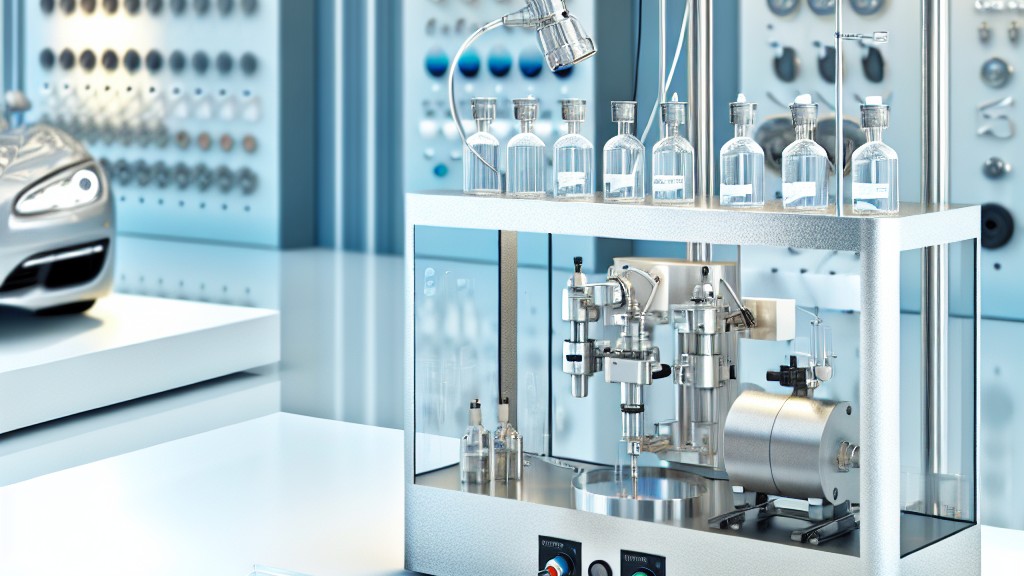
The type of high pressure, brand NIFAB, model HTT-1 test equipment or equivalent test equipment used in these tests includes:
The test objects used in these tests are spray nozzles that meet the requirements of this standard.
The substrate in question shall be a suitable test panel (1021,5211 x 100 mm) according to STD 200 standard, surface coated with the relevant paint system. At least two panels shall be tested. At least three crosses distributed between the two panels shall be tested.
The test piece of the relevant substrate should be the surface coated with the relevant paint system. To obtain significant results, test pieces should be taken from different areas in at least two test pieces. At least four cross-tests should be performed for each art.
The scraping tool used in the tests must have an edge width of 0,5 mm and its geometry must comply with the STD 1021,2 standard.
In preparation for the test, the test panels shall be conditioned in accordance with the STD 1021,1 standard. Before the adhesion test, the test object shall be first damaged by drawing two 0,5 mm lines using a drawing tool. The drawn lines shall be drawn at right angles to each other, down to the substrate, to form a cross. The drawn lines shall extend beyond the test area. Each drawn line shall be approximately 60 mm. The cross-section of a drawn line is shown in the figure given in the standard. The edges of the drawn lines shall be perpendicular to the substrate.
In case the adhesion test is to be performed after moisture exposure (wet adhesion), the test object shall first be exposed in a tropical cabinet complying with the STD 423-0018 standard for the time specified in the requirement specification.
For metal substrates, testing should be done immediately after exposure, before any cure occurs. In practice, the panels should be stored in a container filled with water at room temperature for a maximum of 60 minutes to keep them moist until testing.
In the case of plastic substrates, instead of storing in a container full of water, they should be stored in a constant temperature-controlled cabinet in a standard atmosphere (23 degrees plus/minus 2 degrees, 50 percent relative humidity) for 1 hour. This should be done to allow the material to recover. The test should then be done within approximately 15 minutes. Drawing should be done after exposure to moisture.
During testing, the test object is placed in the test piece holder. Then, the hole in the test piece holder ( ∅ 40 mm) is fixed precisely above the initial damage, centered. Correct positioning of the cross in front of the jet is important. The following parameters apply (nominal values are target values):
Manual spraying under high pressure is also possible within these parameters. This should only be used after agreement with Volvo.
After the test is completed, the object should be wiped dry and the extent of paint damage should be determined. The test result should be given as a percentage of the flaked paint surface. 100 percent is defined as the circular area (Ø 40 mm) at the center of the crossed out cross (1256 mm2). The requirement must be met for each crossed out cross. Average values for the entire piece/panel should not be calculated.
Among the numerous tests, measurements, analyses and evaluation studies that our organization has carried out for businesses in various sectors, it also provides testing services defined in the “Volvo STD 423-0015 Volvo STD 423-0015 Adhesion - High pressure water spraying - Paints and enamels” standard with its trained and expert staff and advanced technological equipment.
To get an appointment, to get more detailed information or to request an evaluation, you can ask us to fill in our form and reach you.

