

VW 80200-2 Vibration Test (Qualification of Body Fittings)

VW 80200-2 Vibration Test (Qualification of Body Fittings)

The “VW 80200-2 Vibration test (qualification of body linkage components)” standard, developed by the Volkswagen automotive company, describes a test method for determining the fatigue resistance of vehicle body linkage components to vibration stress. Body linkage components are subjected to broadband noisy vibrations to evaluate their resistance to mechanical stress in various environments. The test uses controlled vibrations with specific frequencies and amplitudes to simulate real-world conditions such as transport or operational vibrations.
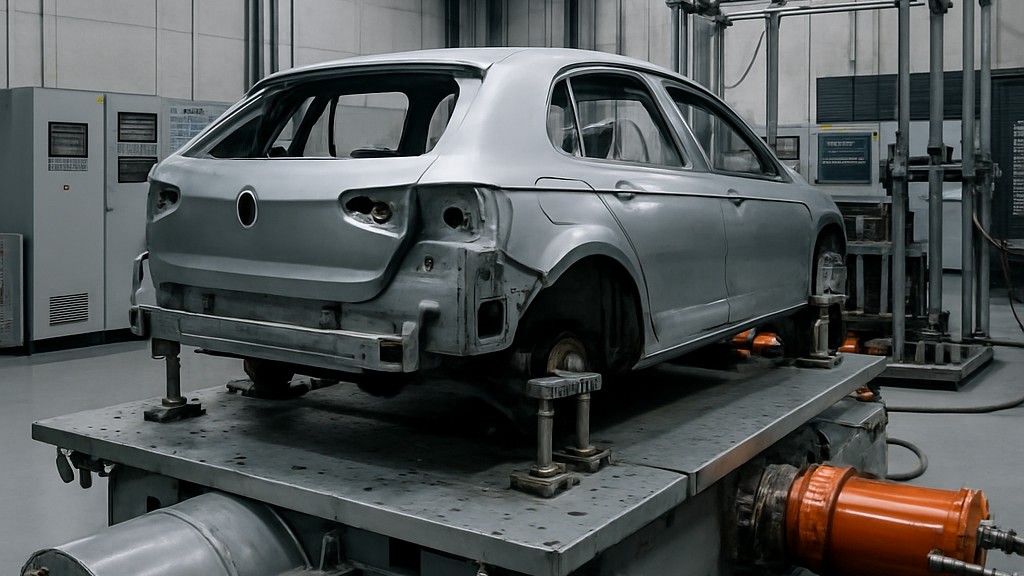
VW 80200-2 Vibration Test (Qualification of Body Fittings)

In the automotive industry, body component qualification ensures that vehicle parts meet specific standards for safety, durability, and performance. Body components, such as panels, frames, and structural elements, are critical to a vehicle's integrity, aesthetics, and functionality. The qualification process involves rigorous testing and certification to verify that these components can withstand operational stresses, environmental conditions, and regulatory requirements.

Qualification of bodywork components is important for several reasons:

  • Safety: Ensures components withstand collisions, vibrations and other stresses, protect occupants and meet regulatory standards.
  • Durability: Verifies that components resist corrosion, fatigue and wear throughout the vehicle's lifespan.
  • Performance: Verifies that components contribute to the vehicle's structural integrity, aerodynamics and fuel efficiency.
  • Compliance: Ensures compliance with industry standards and regulations, such as those set by the International Organization for Standardization (ISO) or regional automotive authorities.

The VW 80200 standard is a critical specification in the automotive industry, focusing on the testing and qualification of mechanical and electrotechnical components for vehicles. This standard ensures that components, such as those mounted on vehicle bodies, meet stringent requirements for durability, strength, and functionality under various operating and environmental conditions.

The VW 80200 standard applies primarily to mechanical and electrotechnical components and assemblies used in Volkswagen vehicles. These components include body-mounted attachments such as relays, switches, and other electromechanical systems that use electrical signals to generate mechanical movements, such as engine rotation. This standard outlines vibration testing, measurement, and analysis methods to evaluate the performance of these parts under real-world conditions and ensure their ability to withstand mechanical stresses, environmental factors, and operational demands.

The VW 80200 standard emphasizes vibration testing to simulate the stresses to which components are subjected during vehicle operation. The basic test methods are:

  • Vibration testing: This test is at the heart of the VW 80200 standard and evaluates the durability and functionality of components under mechanical stress. The tests include:
    • Broadband random vibration: Components are subjected to controlled vibrations at different frequencies and amplitudes to mimic real-world conditions such as road transport or engine operation.
    • X, Y, Z axis testing: Components are tested on different axes to ensure resistance to vibrations in all directions.
  • Environmental testing: Components must perform reliably under a variety of environmental conditions. Testing includes:
    • Thermal cycling: Subjects parts to extreme temperature changes to verify stability.
    • Corrosion testing: Evaluates resistance to rust and deterioration using methods such as salt spray tests and is generally compliant with standards such as ISO 9227.
    • Humidity testing: Ensures components are moisture resistant without compromising their functionality.
  • Mechanical and functional tests: This standard evaluates the mechanical integrity and operational performance of components:
    • Fatigue testing: Subjects components to repeated loading to evaluate their life.
    • Functional verification: Ensures that electrotechnical components such as relays and switches operate correctly under electrical and mechanical loads.
  • Compliance with relevant standards: This standard provides a holistic approach to component qualification, complementing other automotive standards such as ISO 20846 for fuel sulfur content or ISO 12156-1 for diesel fuel lubrication. It also aligns with broader Volkswagen standards such as VW 80000, which covers electrical and electronic components in vehicles up to 3,5 tons.

The VW 80200 standard plays a vital role in automotive manufacturing for several reasons:

  • Enhanced safety: By ensuring that components are resistant to vibrations and environmental influences, the standard contributes to vehicle safety and reliability.
  • Durability and longevity: Rigorous testing ensures components have a long service life, reducing maintenance costs and increasing customer satisfaction.
  • Regulatory compliance: Compliance with the VW 80200 standard facilitates market access by helping manufacturers meet industry and regulatory requirements.
  • Quality assurance: This standard supports the Volkswagen Group's commitment to high-quality components and protects brand reputation and customer trust.

However, the implementation of the VW 80200 standard presents some challenges:

  • Complexity of testing: Vibration and environmental testing requires sophisticated equipment and expertise, increasing costs.
  • Evolving requirements: As vehicle technologies evolve, the standard must be adapted to include new materials and electromechanical systems.
  • Global consistency: Ensuring consistent testing across global supply chains can be challenging due to differences in laboratory capacities.

With advances in automotive technology, the VW 80200 standard is likely to evolve:

  • Electric vehicles: With the rise of these vehicles, this standard may include more testing for high-voltage electromechanical components to align with standards such as VW 80300 or LV 123.
  • Lightweight materials: The increasing use of composites and lightweight alloys requires updated vibration and durability testing protocols.
  • Test automation: Automated systems can increase efficiency and accuracy by streamlining testing processes.

Consequently, the VW 80200 standard is a cornerstone of the Volkswagen Group's quality assurance process, ensuring that mechanical and electrical components meet stringent standards for safety, durability, and functionality. Through comprehensive vibration, environmental, and functionality testing, this standard supports the production of reliable automotive components. Ultimately, body component qualification is a critical step in ensuring vehicle safety, durability, and performance. Through material testing, structural analysis, environmental testing, and compliance with standards, manufacturers can produce reliable components that meet industry and regulatory requirements.

Our organization, which has been operating for many years and meticulously follows global developments in science and technology, employs a skilled team and extensive infrastructure to conduct testing, measurement, and analysis in a wide range of areas for businesses across all sectors. In this context, we also provide testing services in accordance with the "VW 80200-2 Vibration Test (Qualification of Body Parts)" standard.

WhatsApp

