

The “GMW 17084 Dual Molding and Top Molding Adhesion Requirements” standard, developed by General Motors Worldwide (GMW), describes the requirements and test methods for evaluating the adhesion between materials in plastic components manufactured using dual molding and top molding methods. This standard is particularly important for automotive components manufactured by molding one polymer onto another polymer or substrate, where sufficient bonding between the two materials is essential for component durability and functional performance.
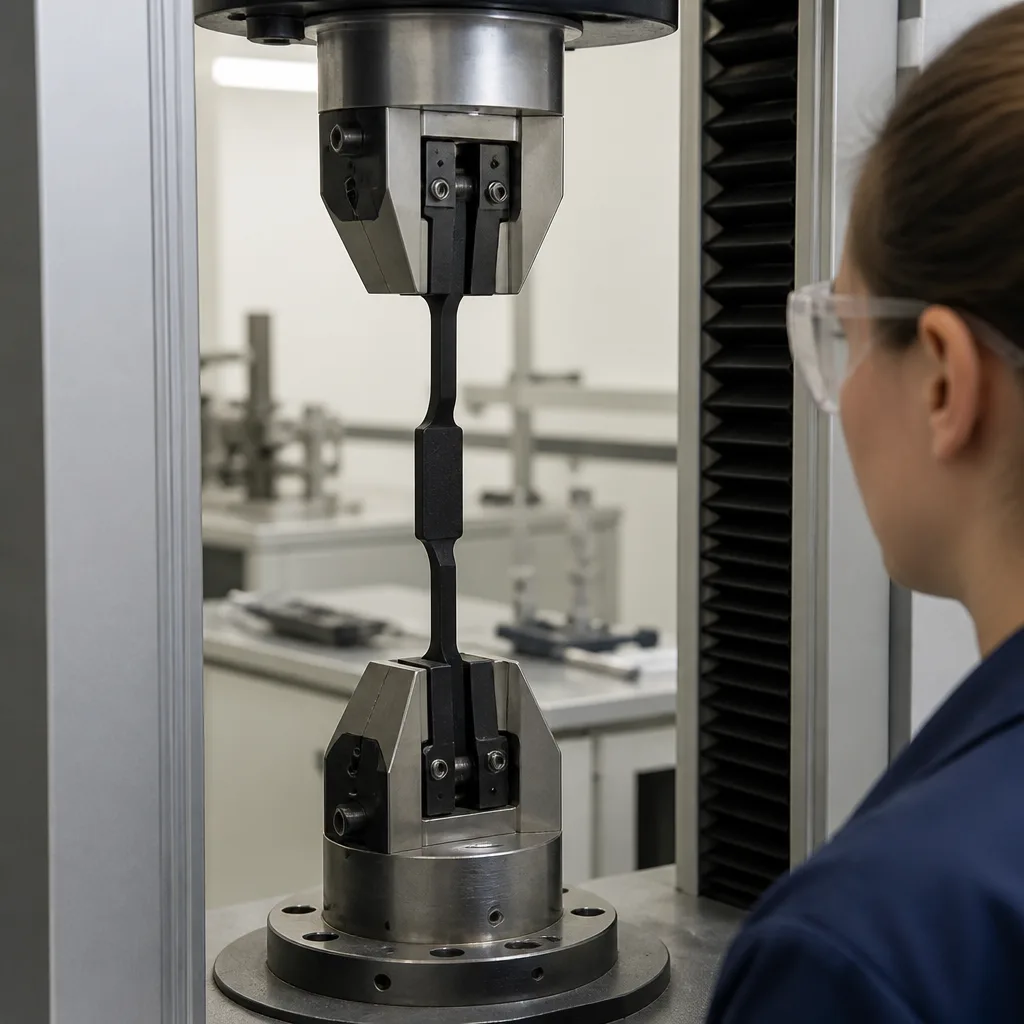
Dual molding and overmolding processes are widely used in automotive interiors and other vehicle components because they allow different materials to be combined in a single part. Examples include components requiring a rigid structural substrate bonded to a softer or more functional polymer layer. The GMW 17084 standard provides a way to determine whether the resulting interface can withstand mechanical loads without unacceptable separation.
Double molding (two-stage molding) is a manufacturing process in which two different materials or two different material grades are molded sequentially to produce a single integrated component. Top molding is a related process where one material is molded onto an already formed substrate. The second material needs to adhere sufficiently to the first material to maintain the integrity of the finished component. Therefore, the quality of the interface between the materials is critical. Poor adhesion can lead to:
The GMW 17084 standard aims to evaluate this interface adhesion, rather than simply assessing the collective properties of each material individually.
The primary objective of the GMW 17084 standard is to determine whether a two-stage or top-molded assembly has sufficient resistance to separation under specified mechanical loading. This standard is important because the interface between two polymers can behave very differently from the individual materials. For example, one polymer may have excellent tensile strength, but the bond between the two polymers may still rupture prematurely. Therefore, the described test methods provide objective measurements that can be used during material selection, process validation, supplier qualification, production approval, and quality control.
The GMW 17084 standard defines various adhesion evaluation methods. These include static load testing and 90-degree peel testing.
An important aspect of adhesion testing is not just the magnitude of the force measured, but how the sample fails. Possible failure modes may include:
Cohesion failure may indicate that the interface is stronger than one of the adjacent materials, while clear separation across the interface may indicate insufficient adhesion. Proper interpretation should be based on the GMW 17084 standard requirements and the specific component specification.
The GMW 17084 standard applies to automotive components manufactured using two-stage or top-molding processes. It is particularly important for components where a molded polymer is directly bonded to another polymer or substrate. Application areas may include:
Actual feasibility and acceptance criteria depend on the component drawing, material specification, engineering requirements, and relevant General Motors documentation.
The GMW 17084 standard can be referenced as part of the broader General Motors material and component requirements. For example, the GMW 14444 standard, a specification for interior trim materials, defines two-stage/top-molding adhesion as an adhesion requirement and refers to the GMW 17084 standard for relevant testing.
This highlights an important point: while the GMW 17084 standard primarily functions as a test method/adhesion requirement standard, another material or component specification may define overall performance requirements and acceptance criteria.
The GMW 17084 standard is important because modern automotive components combine an increasing number of polymers to achieve a balance between structural performance, appearance, tactile properties, weight, and manufacturing efficiency. A component may meet all individual material requirements but still fail due to inadequate interfaces between the materials. The GMW 17084 standard helps manufacturers and suppliers by:
Two-stage and on-mold adhesion can be affected by many factors, including:
In conclusion, a satisfactory laboratory result should be evaluated in conjunction with production process controls.
Depending on the applicable method, the test typically requires equipment that can apply and measure a controlled mechanical load or peeling force. Typical laboratory equipment includes:
The equipment must conform to the force range and sample geometry specified in the relevant version of the standard.
In conclusion, the GMW 17084 standard addresses the critical question of whether materials remain adequately bonded when subjected to mechanical loading or peeling forces. For automotive suppliers, this standard is valuable during material development, process validation, production approval, and quality assurance as it helps prevent interface-related failures such as delamination and delamination.
For many years, our organization, with its competent and experienced staff, has been understanding the needs of its clients, providing the advanced testing services they require, and assisting them in the establishment, implementation, and improvement of management systems. Within this framework, we also provide testing services in accordance with the GMW 17084 standard.
To get an appointment, to get more detailed information or to request an evaluation, you can ask us to fill in our form and reach you.

