

The “Honda HES D6501” standard, developed by Honda Motor Company, covers a wide range of evaluation procedures for coatings on metal surfaces, including general adhesion, durability, and corrosion resistance tests. Section 3.16 specifically focuses on this issue as a filiform corrosion test protocol.
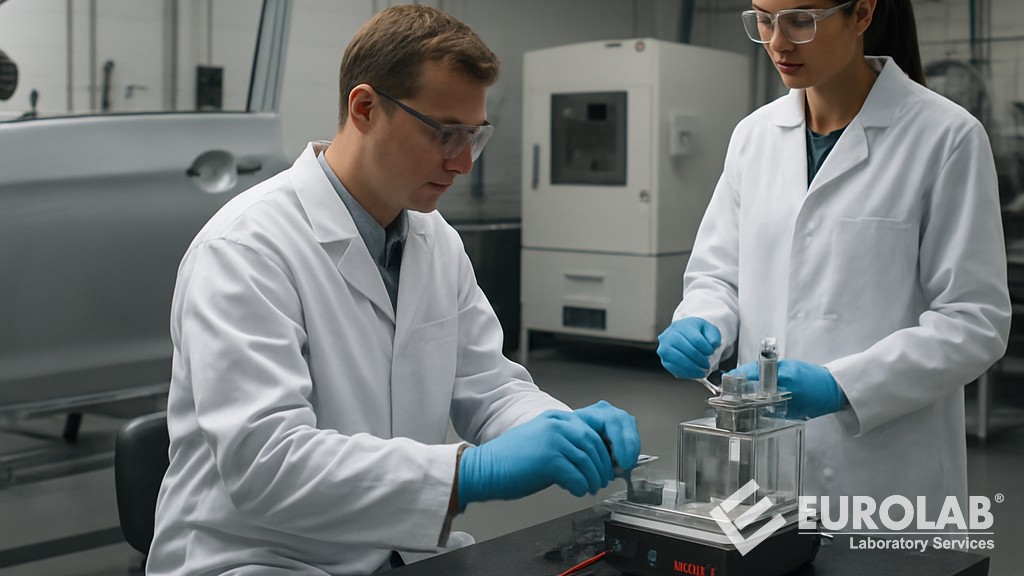
In the high-risk automotive manufacturing world, where vehicles must withstand all kinds of challenges from salty coastal roads to scorching desert heat, coatings play a vital role in protecting metal components from corrosion, wear, and environmental degradation. Honda, one of the world's leading automakers, has developed rigorous internal standards to ensure every part meets quality criteria. Among these is the “Honda HES D6501 Part 3.16 General test methods for coatings – Part 3.16 Filiform corrosion test method” standard, one of a series of test methods designed to evaluate the adhesion, appearance, and resistance properties of coatings applied to metal surfaces. This standard addresses filiform corrosion testing, a critical assessment of the ability to prevent the formation of thread-like corrosion filaments, particularly beneath thin films, which is central to many supplier quality assurance processes.
Specifically, Section 3.16 arose as a response to real-world failure modes observed in vehicles operating in humid and chloride-rich environments, such as coastal or snow belt regions. Filamentous corrosion, characterized by the spread of worm-like rust streaks beneath the coating, can compromise structural integrity if left unchecked. By making this test mandatory, Honda ensures that coatings on parts such as chassis components, exhaust systems, and body panels can withstand such degradation for the expected lifespan of the vehicle (typically 10-15 years or 241.000 km).
With the rise of hybrid and fully electric vehicles, this standard has been updated to include lightweight aluminum alloys and environmentally friendly paints, but the core principles of Section 3.16 remain unchanged.
Filiform corrosion is a form of localized attack where moisture and oxygen penetrate microscopic defects in the coating and react with underlying metals in the presence of aggressive ions such as chlorides from road salt. Unlike uniform rust, this type of corrosion spreads in filamentous patterns, potentially leading to delamination and accelerated deterioration. This phenomenon is particularly insidious because it often begins invisibly beneath the coating and only becomes apparent after significant damage.
The Honda HES D6501-3.16 standard standardizes the detection and quantification of this risk. It is also compliant with international standards such as ISO 4628-8 and SAE J2635. Testing under this section helps manufacturers identify weak formulations early, reduce warranty claims, and enhance brand credibility.
The described filiform corrosion test is a controlled laboratory simulation designed to mimic accelerated environmental exposure. Accredited laboratories follow these precise steps to ensure repeatability and accuracy:
Compliance with the HES D6501-3.16 standard creates ripple effects throughout the supply chain. Tier 1 suppliers must certify compliance for Honda contracts and encourage innovations in nanocoatings and self-healing polymers.
In conclusion, the Honda HES D6501 Part 3.16 standard is an example of the rigorous engineering that forms the basis of vehicle reliability. By simulating the invisible battles against corrosion, it ensures that Honda vehicles not only look well-maintained but also deliver flawless performance for miles. Compliance with this standard is not optional for manufacturers.
For many years, our organization, with its competent and experienced staff, has been understanding the needs of its customers, providing the advanced testing services they require, and assisting them in the establishment, implementation, and improvement of management systems. Within this framework, we also provide testing services to businesses in accordance with the "Honda HES D6501 Part 3.16 General test methods for coatings - Part 3.16 Filiform corrosion test method" standard.
To get an appointment, to get more detailed information or to request an evaluation, you can ask us to fill in our form and reach you.

