GMI 60275 Resistance of Automotive Interior Trim Parts to Synthetic Sweat Solution
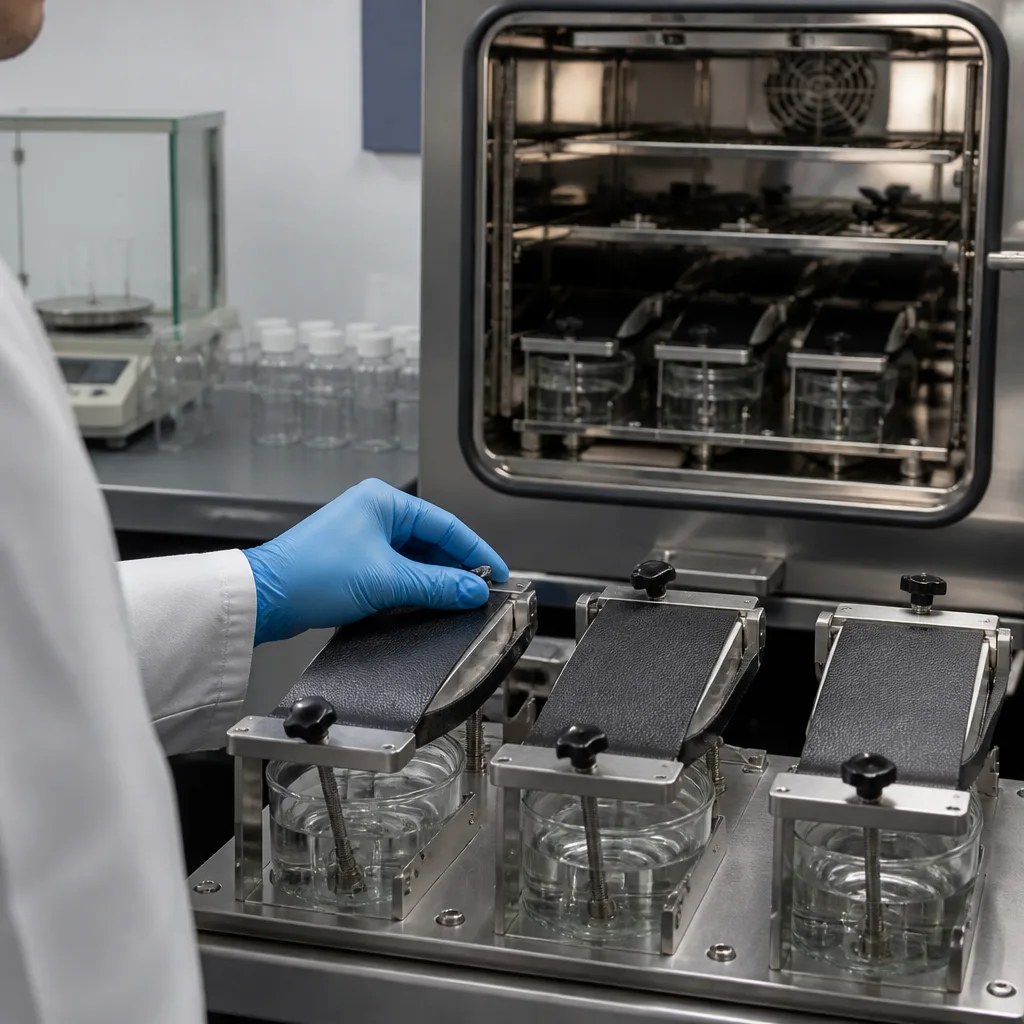
The “GMI 60275 Automotive Interior Trim Resistance to Synthetic Sweat Solution” standard, developed by General Motors International (GMI), is a test specification that defines a method for determining the resistance of automotive interior trim to synthetic sweat solutions. This standard was developed to evaluate whether vehicle interior materials can withstand repeated exposure to human skin sweat without unacceptable changes in appearance or performance.
During vehicle use, passengers constantly touch many interior components:
- steering wheel
- Gear lever
- Armrests
- Door handles
- Seat surfaces
- Instrument panel surfaces
- Center consoles
- Interior decorative coatings
Human sweat contains water, salts, acids, fats, and organic compounds. Over time, these substances can cause the following:
- color change
- Surface staining
- Loss of brightness
- Softening or deterioration of coatings
- Cracking of leather or synthetic materials
- Breakdown of adhesion
- Surface adhesion
The GMI 60275 standard ensures that interior materials maintain their quality during long-term vehicle use.
The described test method is primarily applicable to the following:
- Plastic inner parts
- Coated plastics
- Decorative films
- Leather and synthetic leather
- Textile-coated components
- Painted or varnished surfaces
- Soft-touch coatings
Typical automotive applications to which this standard applies include:
- Steering wheel: High contact point for the hand.
- Armrest: Direct skin contact
- Door handles: Frequent contact
- Upholstery: In contact with clothing and skin.
- Gear knob: Constant hand contact.
The general test concept is as follows:
- A synthetic sweat solution is prepared.
- The solution is applied to the test sample.
- The sample is exposed under controlled environmental conditions.
- Surface changes are examined after exposure.
The assessment typically includes the following:
- Visual appearance
- color change
- Surface condition
- Brightness change
- Adhesion problems
- Material degradation
Automotive sweat resistance tests typically use artificial sweat containing the following components:
- Sodium chloride
- Lactic acid
- Urea
- Su
- Other chemical components representing human sweat
This solution simulates both acidic and alkaline sweating, because the composition of human sweat varies depending on several factors.
- Diet
- Physical activity
- Temperature
- Individual physiology
In general, the testing process follows these steps:
- Step 1 Sample preparation: Test panels or finished components are conditioned. The initial impression is recorded.
- Step 2: Application of the sweat solution: The synthetic sweat solution is applied using the following methods:
- Wetting the pad or diaper
- Direct contact with the surface
- Implicit exposure
- Step 3 Heat and humidity exposure: The sample is exposed to controlled conditions to accelerate aging. Typical parameters in automotive sweat resistance tests may include:
- High temperature
- Specific exposure time
- Pressure/contact simulation
- Step 4 Evaluation: After cleaning and conditioning, the sample is checked for the following aspects:
- color change
- Staining
- blistering
- Cracking
- Surface changes
- Acceptance criteria: A valid submission must demonstrate the following:
- Appearance:
- No visible staining.
- No unacceptable color change.
- No surface defects.
- Functional performance:
- The coating must remain intact.
- There should be no loss of adhesion.
- There should be no sticky or softened surfaces.
- Durability:
- The material should retain its original appearance after repeated exposure to sweat.
The GMI 60275 standard is considered important for the following reasons:
- Ensures interior durability: Vehicle interiors are expected to remain attractive for many years. Sweat resistance testing prevents premature wear of frequently touched surfaces.
- It protects customer perception: Interior quality greatly influences customer satisfaction. Problems such as these create the impression of low vehicle quality:
- Faded steering wheel
- Adhesive armrests
- Discolored floor panels
- It validates material selection: The testing method helps manufacturers choose the following:
- Suitable polymers
- Durable coatings
- Suitable leather coverings
- Durable decorative films
- Original equipment manufacturers support quality requirements: Automotive manufacturers require suppliers to demonstrate that materials can withstand realistic customer usage conditions prior to production approval.
The GMI 60275 standard belongs to a family of automotive interior durability tests that include the following:
- GMI 60266 Determination of the resistance of automotive interior trim parts to cleaning agents.
- GMW 14334 Resistance to chemical liquids.
- Scratch resistance tests (surface durability)
- Friction tests (resistance to color transfer)
Some documentation sources indicate that the GMI 60275 standard has been discontinued or modified, and that newer specifications, such as GMW standards, are used for many applications. However, the test principle remains valid and is still widely applied in automotive interior material qualification.
In conclusion, the GMI 60275 standard is a critical automotive interior durability standard that evaluates the resistance of upholstery components to synthetic human sweat. It ensures that materials exposed to frequent human contact maintain their appearance, functionality, and durability throughout the vehicle's lifespan. For automotive interior suppliers, passing this test demonstrates that materials are suitable for demanding applications such as steering wheels, armrests, trim, and soft-touch surfaces.
For many years, our organization, with its competent and experienced team, has been understanding the needs of its clients, providing the advanced testing services they require, and assisting them in the establishment, implementation, and improvement of management systems. Within this framework, we also provide testing services compliant with the GMI 60275 standard.



