Ford FLTM BQ 104-07 Environmental Test Cycles (Climate Cycle Test)
The “Ford FLTM BQ 104-07 Environmental Test Cycles (Climate Cycle Test)” standard, developed by Ford Motor Company (Ford), describes a test method used in the automotive industry to evaluate the durability of vehicle components under cyclical environmental conditions. This method is primarily applied to interior and exterior parts, ensuring their ability to withstand prolonged exposure to varying climatic conditions such as temperature extremes, humidity, and moisture.
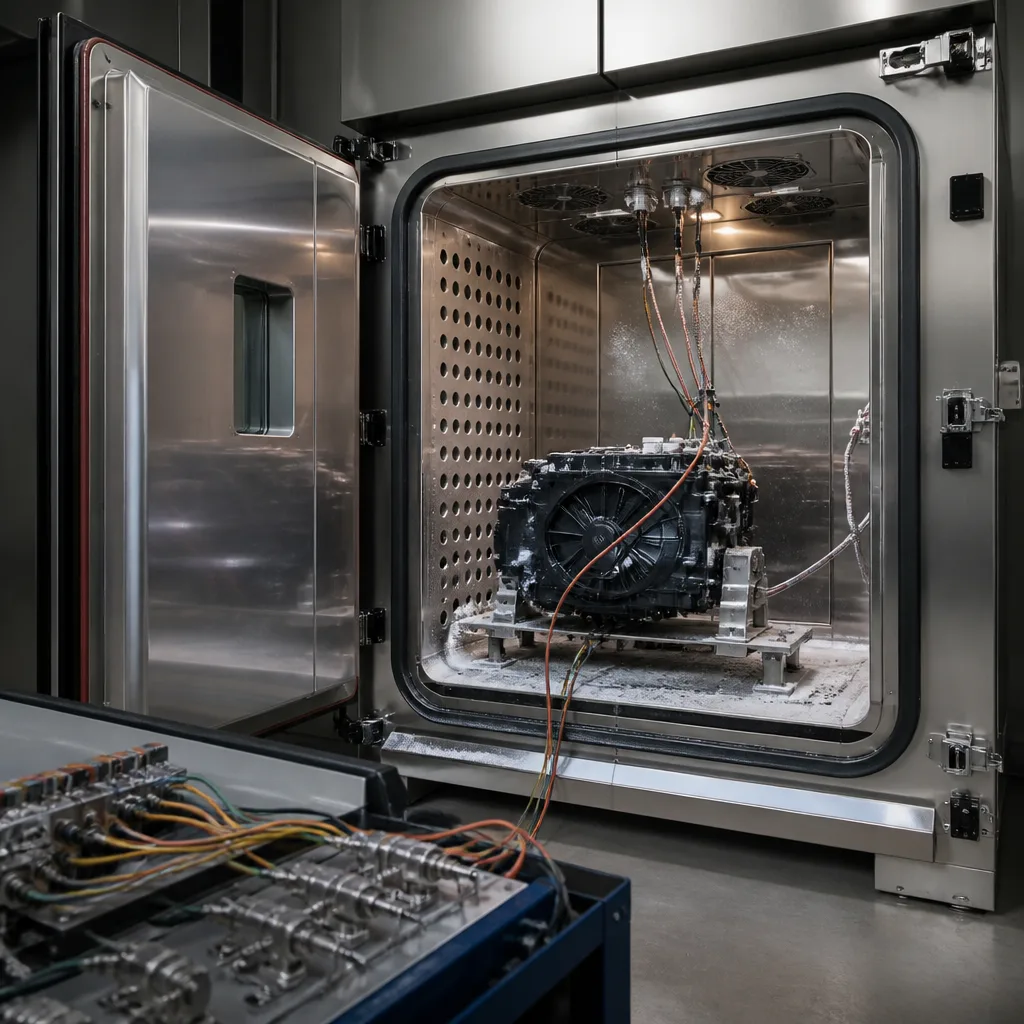
This standard is widely used by original equipment manufacturers and suppliers as part of their material verification, design verification, and quality assurance processes.
The primary purpose of the Ford FLTM BQ 104-07 standard is to simulate real-world environmental stress in a controlled laboratory environment. This test helps determine:
- Resistance to temperature cycling
- Resistant to exposure to moisture and humidity.
- Resistance to condensation and drying cycles.
- Long-term durability of materials and coatings.
- Risk of cracking, deformation, corrosion, or delamination.
This standard allows manufacturers to identify weaknesses in vehicles before they go into production or reach customers.
The described test method applies to a wide variety of automotive components, including:
- Interior trim parts (instrument panels, consoles, panels)
- Exterior plastic and painted parts
- Rubber seals and elastomer components
- Coated metal and composite components
Depending on the engineering specification, this method can be used for complete parts, sub-assemblies, or assembled systems.
The Ford FLTM BQ 104-07 standard subjects test specimens to repeated environmental cycles within a controlled climate chamber. A typical cycle includes:
- Exposure to high temperature
- Exposure to low temperatures
- Controlled humidity stages
- Condensation/moisture exposure times
After the tests, the components are evaluated in terms of the following aspects:
- Surface cracking or blistering
- Changes in color or brightness
- Corrosion formation (for metals)
- Loss of adhesion (for coatings or films)
- Impact or size changes
- Functional failure (for assemblies)
The results are typically compared against Ford's engineering acceptance criteria.
Environmental test cycles were defined as follows:
- Procedure 1: Designed to simulate basic climatic aging conditions, it focuses on the following:
- Daily temperature variation
- Moderate humidity exposure
- Material expansion and contraction stress
- Early durability of parts and coatings.
This procedure is generally considered a basic environmental cycling test. It is a standardized climatic aging cycle that combines heat, cold, humidity, and transition phases in a repeated sequence. It is used to simulate daily environmental stress and evaluate whether materials can maintain their performance over time.
- Procedure 2: This is a more severe climate cycle condition compared to Procedure 1. It is specifically designed to simulate higher-stress environmental exposure, including stronger moisture impacts, faster transitions, and more aggressive thermal aging conditions. This procedure is used to evaluate how automotive materials behave under the following conditions:
- Increased humidity stress
- More pronounced condensation effects
- Stronger thermal expansion/contraction cycles
- Increased risk of material degradation over time.
It is typically used for components exposed to real-world environments that are more challenging than baseline conditions.
- Procedure 3: This procedure is a more severe climate aging test designed to simulate harsh and prolonged environmental exposure, specifically involving strong temperature variations, high humidity stress, and moisture condensation effects. It is typically used for components that must withstand harsh real-world environments throughout the vehicle's lifespan. This procedure is designed to evaluate material and component performance under the following conditions:
- Severe thermal cycling (hot - cold)
- High humidity exposure and saturation
- Strong concentration and drying effects.
- Accelerated aging and fatigue of materials
This procedure represents a more aggressive durability verification step compared to Procedure 1 and Procedure 2.
- Procedure 4: This procedure represents a more severe climatic aging condition compared to the preceding procedures. It is specifically designed to reproduce more extreme and rapidly changing environmental stresses, including aggressive thermal shock effects and exposure to high humidity and condensation. This procedure focuses on accelerated failure mechanisms, meaning it is used to reveal weaknesses that only emerge in harsh or rapidly changing real-world climates. This procedure is used to evaluate:
- Resistance to rapid temperature changes (thermal shock)
- Performance under high humidity + condensation cycle.
- Resistance under severe expansion/contraction stress.
- Long-term stability of glued, painted, or plastic components.
This standard is applied when previous procedures are generally insufficient to simulate expected field conditions.
- Procedure 5: This procedure is one of the most demanding climatic aging procedures in the series. It is designed to simulate extremely aggressive real-world environments by combining extreme temperature variations, very high humidity, and strong moisture/condensation exposure, often with additional long waiting or stress periods. This procedure is typically used for components where maximum durability and long-term reliability are critical. This procedure is used to evaluate:
- Resistance to extreme thermal cycling stress.
- Behavior under near-saturation humidity conditions
- Durability under repeated condensation and drying.
- Long-term stability of adhesives, coatings, plastics, and gaskets.
- Failure resistance in challenging global climates.
This procedure represents a high level of validation in environmental durability testing.
- Procedure 6: This procedure is considered the most severe climatic cycling condition within the environmental testing series. It is designed to reproduce extreme real-world environmental stress and subject materials to the highest levels of combined thermal, moisture, and condensation fatigue. This procedure is used to evaluate the durability of automotive components under the following conditions:
- Extreme thermal cycling (hot - cold)
- Exposure near maximum humidity/saturation.
- Strong and repeated condensation (dew point cycle)
- Effects of long-term moisture ingress
- Severe material fatigue and deterioration mechanisms
They are generally reserved for high-risk or highly exposed components where previous procedures have been insufficient.
In conclusion, the Ford FLTM BQ 104-07 standard is a significant environmental durability testing standard used in automotive engineering. It ensures that materials and components can withstand harsh and varying environmental conditions throughout the vehicle's lifespan. Due to its ability to simulate real-world stress, it plays a critical role in quality assurance, product development, and supplier verification.
For many years, our organization, with its competent and experienced staff, has been understanding the needs of its customers, providing the advanced testing services they require, and assisting them in the establishment, implementation, and improvement of management systems. Within this framework, we also provide testing services to businesses in accordance with the Ford FLTM BQ 104-07 standard.



