

Daimler PV EP/AIS § 7.4.1 Solar Simulation - Long-Term Testing
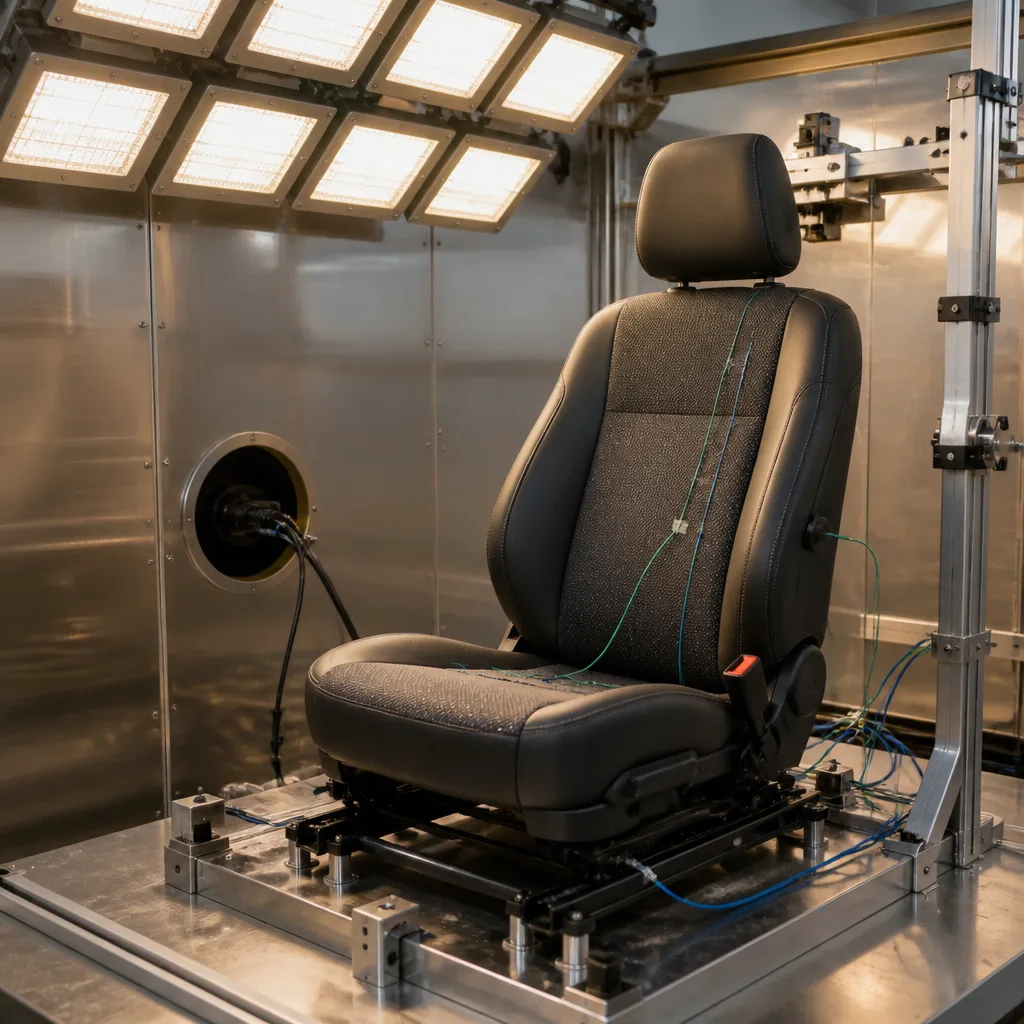
The “Daimler PV EP/AIS” standard, developed by the Daimler-Benz automotive company, defines an entry/exit durability test system for vehicle seats. This test system generally includes the following:
Section 7.4.1 of this standard covers the following:
The “Daimler PV EP/AIS § 7.4.1 Solar simulation - Long-term testing” standard describes a procedure aimed at verifying that a complete seat system can withstand prolonged exposure to sun and heat, corresponding to years of vehicle service.
Typical failure modes examined include:
This test is not just a cosmetic UV test, it's a combination of the following:
Daimler has historically structured its environmental seat testing around the following:
According to Daimler PV EP/AIS § 7.4.1 standard, the material undergoes the following processes before exposure:
Typical measurements taken include:
The following are commonly used during testing:
The target is approximately full solar equivalent radiation. Typical original equipment manufacturer (OEM) targets are 800-1200 W/ m² per seat surface.
Automotive solar panels typically operate at the following temperatures:
These conditions are consistent with industrial solar exposure methods (such as environmental profile, thermal cycling).
According to this standard, a typical cycle includes the following:
Thermal elevation is important because imbalances in the following create fatigue stresses:
UV exposure simulates the following:
Commonly observed effects include:
The critical materials are as follows:
When determining seat loading during exposure, original equipment manufacturers combine environmental exposure with mechanical preloading. This is because foam and upholstery behave differently under passenger load at high temperatures. Possible conditions include:
During this process, stretching, wrinkle formation, and permanent deformation are observed.
Daimler's critical acceptance philosophy is as follows: the chair must have the following characteristics:
Specific threshold values are specified in the standard, and the following are generally considered:
Solar simulation creates interconnected physical problems. Therefore, it has the following difficulties:
The PV EP/AIS § 7.4.1 standard is conceptually similar to a combination of the following standards:
However, Daimler generally emphasizes the following:
In automotive seat development studies, sunlight exposure tests often reveal the following:
In conclusion, the Daimler PV EP/AIS § 7.4.1 standard provides a combined accelerated solar-thermal environmental durability verification for complete automotive seat systems that aims to simulate prolonged vehicle sun exposure while maintaining appearance, comfort, dimensional stability, and functional integrity under superior original equipment manufacturer quality criteria.
For many years, our organization, with its competent and experienced staff, has been understanding the needs of its clients, providing the advanced testing services they require, and assisting them in the establishment, implementation, and improvement of management systems. Within this framework, we also provide testing services compliant with the Daimler PV EP/AIS § 7.4.1 standard.
To get an appointment, to get more detailed information or to request an evaluation, you can ask us to fill in our form and reach you.

