

In the automotive industry, volatile organic compounds (VOCs) released from interior materials can affect air quality inside the vehicle, potentially impacting passenger health, comfort, and overall experience. Strict regulations and manufacturer standards exist to limit these emissions. A prominent standard in this area is the Hyundai/Kia MS 300-55 standard, a test method developed by Hyundai Motor Group (including Kia) to determine volatile organic compound (VOC) emissions from vehicle interior components.
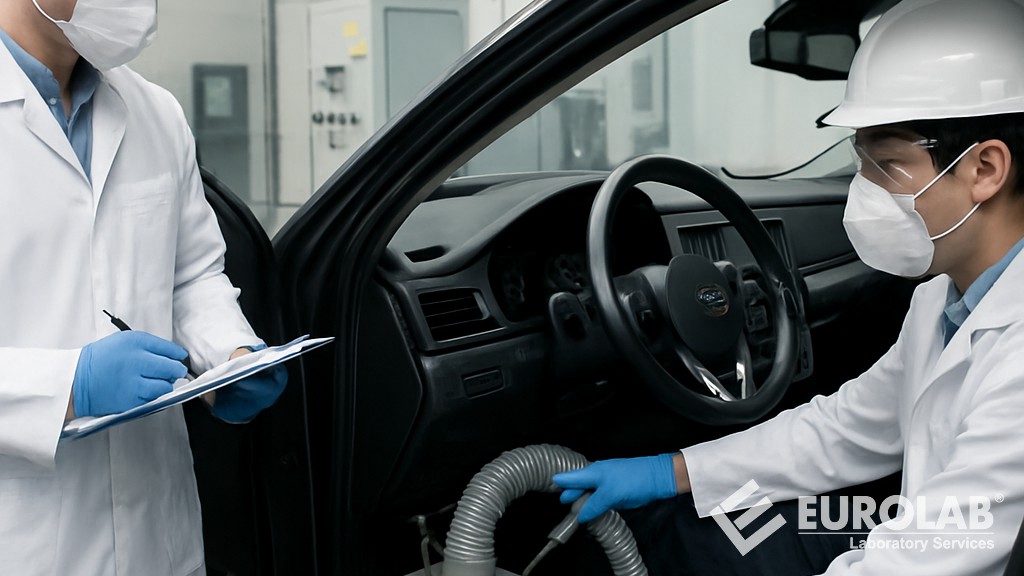
The MS 300-55 standard describes a standardized test method for determining the amount of volatile organic compounds (VOCs) emitted from molded or assembled vehicle interior components such as instrument panels, door panels, seats, headliners, carpets, and upholstery. The aim is to minimize health risks (e.g., irritation, headaches, or concerns about long-term exposure) and to ensure emissions remain below acceptable limits to meet expectations for indoor air quality in modern vehicles.
This standard applies primarily to:
In general, the tests follow these steps:
Commonly targeted compounds include benzene, toluene, xylenes, formaldehyde, acetaldehyde, and other hazardous or odorous substances. This standard includes limit values for each compound or group, varying according to the type of part (e.g., stricter limits for parts near passengers).
The importance of the Hyundai/Kia MS 300-55 standard in the automotive supply chain is as follows:
Testing according to the MS 300-55 standard requires sensitive equipment and expertise due to the low detection limits and the need to distinguish specific compounds. Suppliers often reformulate adhesives, foams, plastics, and coatings to ensure compliance without compromising performance or cost. As sustainability increases, bio-based materials with low volatile organic compounds and greener manufacturing processes are gaining momentum to meet evolving standards.
The Hyundai-Kia MS 300-55 standard is important in the automotive industry, especially for suppliers and manufacturers working with Hyundai and Kia vehicles. This standard is considered important for the following reasons:
In practice, testing according to this standard typically involves controlled heating of samples, collection of emitted volatile organic compounds, and analysis using gas chromatography-mass spectrometry (GC-MS).
In short, the Hyundai-Kia MS 300-55 standard is critically important because it directly addresses air quality inside vehicles.
In conclusion, the Hyundai/Kia MS 300-55 standard plays a critical role in ensuring cleaner cabin air in vehicles produced by one of the world's largest automakers. By setting rigorous limits and clear test protocols, it promotes safer, more comfortable interiors and supports innovation in materials science. For suppliers, passing this standard is a prerequisite for doing business with Hyundai/Kia and underlines its importance in the global automotive ecosystem.
For many years, our organization, with its competent and experienced staff, has been understanding the needs of its customers, providing the advanced testing services they require, and assisting them in the establishment, implementation, and improvement of management systems. Within this framework, we also provide testing services compliant with the Hyundai/Kia MS 300-55 standard.
To get an appointment, to get more detailed information or to request an evaluation, you can ask us to fill in our form and reach you.

