

GME 60292-2 Determination of Color Fastness and Resistance to Artificial Light (Coding 2: 100 Degrees)
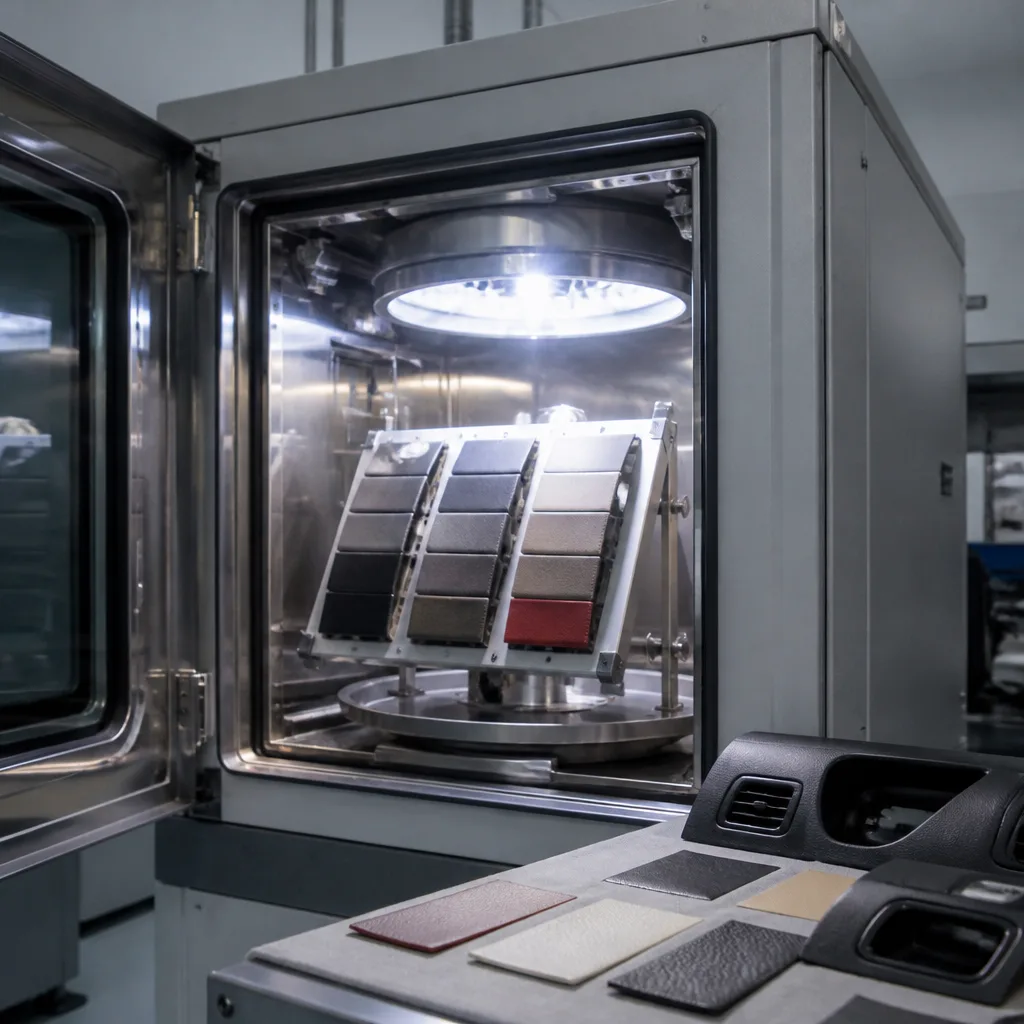
Developed by General Motors Europe (GME), the “GME 60292-2 Color Fastness and Resistance to Artificial Light (Coding 2:100 degrees)” standard is a materials testing standard used to evaluate the color fastness and resistance to artificial light and high temperatures of automotive interior materials. This standard is specifically designed to assess how paints, pigments, coatings, and printed surfaces retain their original appearance after prolonged exposure to simulated sunlight produced by a xenon arc lamp.
The designation “60292-2” refers to “Coding 2: 100 degrees,” one of the exposure conditions defined within the GME 60292 family of standards. It exposes test specimens to a maximum black standard temperature of 100 degrees, representing the severe thermal conditions that can occur inside vehicle interiors parked in direct sunlight.
Vehicle interiors are constantly exposed to sunlight, heat, and ultraviolet (UV) radiation. These environmental factors can cause the following:
The GME 60292-2 standard provides a standardized laboratory procedure for measuring these effects, allowing manufacturers to compare materials under the same conditions and verify long-term durability.
This standard applies to numerous automotive interior materials, including:
The described test method evaluates the following using xenon arc weather resistance testing equipment that simulates natural daylight:
This test recreates years of indoor sunlight exposure in a controlled laboratory setting.
The test generally follows these steps:
Unlike outdoor weather exposure, laboratory exposure offers excellent reproducibility and allows for direct comparison of different materials.
The GME 60292 standard includes different exposure conditions for various material applications. “Coding 2: 100 degrees” specifies the following:
A standard black temperature of 100 degrees represents one of the more demanding interior aging conditions, designed to simulate the high temperatures reached by instrument panels, luggage racks, and other dark-colored interior components exposed to intense sunlight.
Typical test equipment includes:
Xenon arc aging chamber
The general procedure includes these steps:
According to the GME 60292-2 standard, performance can be evaluated using the following methods:
Overall color difference is usually expressed as: ΔE*
Instrumental evaluation provides higher repeatability compared to visual inspection.
Vehicle interiors are expected to maintain their appearance for many years despite constant exposure to sunlight. If adequate lightfastness testing is not performed, manufacturers may encounter the following problems:
The GME 60292-2 standard helps to identify materials that can maintain the appearance of a vehicle throughout its lifespan.
Although this standard was developed for General Motors Europe, it can be widely applied in the following areas:
The GME 60292-2 standard follows the same general principles as many internationally accepted lightfastness standards, including:
These standards utilize similar xenon arc exposure principles, but may differ in irradiation levels, temperatures, exposure cycles, and acceptance criteria.
The GME 60292-2 standard provides the following benefits:
In conclusion, the GME 60292-2 standard is a crucial environmental durability standard for evaluating the color stability of automotive interior materials under artificial sunlight and high-temperature conditions. By exposing samples to xenon arc radiation at a standard black temperature of 100 degrees, this standard helps test engineers assess how textiles, plastics, leather, trim, and decorative materials will perform after years of exposure within a vehicle. This standard supports material selection, supplier approval, and quality assurance, helping to ensure that automotive interiors maintain their intended appearance throughout the vehicle's lifespan.
For many years, our organization, with its competent and experienced staff, has been understanding the needs of its clients, providing the advanced testing services they require, and assisting them in the establishment, implementation, and improvement of management systems. Within this framework, we also provide testing services compliant with the GME 60292-2 standard.
To get an appointment, to get more detailed information or to request an evaluation, you can ask us to fill in our form and reach you.

