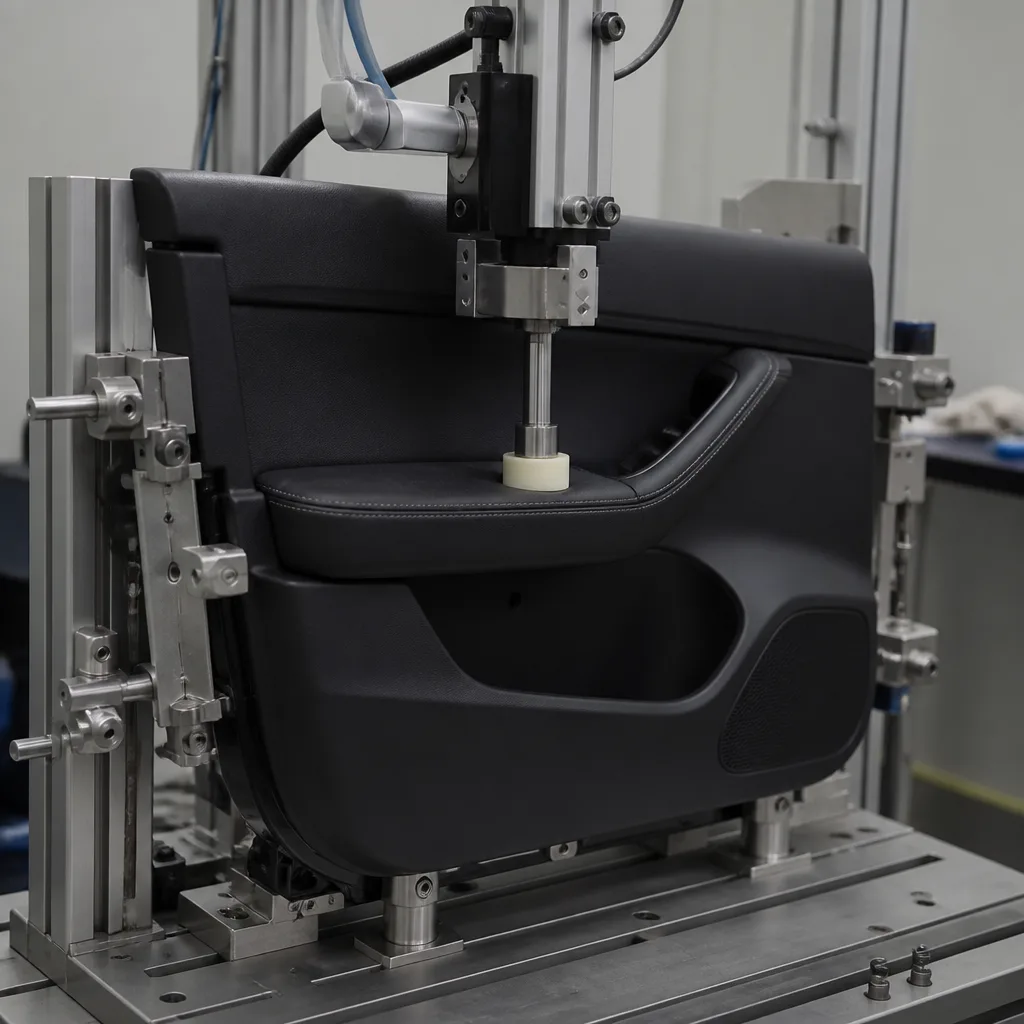
Daimler FuVo A 005 005 44 99 Door Panel Assembly, § 4.4.9 Armrest Softness Test
The “Daimler FuVo A 005 005 44 99 Daimler functional specification - Door panel assembly, § 4.4.9 Armrest softness test” standard, developed by the Daimler-Benz automotive company, is an original equipment manufacturer engineering and testing specification used for the following purposes:
- Automotive interior verification
- Environmental durability test
- Supplier quality compliance
- Mercedes-Benz / Daimler component approval workflows
This standard is an internal engineering and validation standard designed for automotive interior door panel assemblies. It defines the performance, durability, environmental, and tactile requirements that suppliers must meet before components are approved for vehicle production.
The Daimler FuVo A 005 005 44 99 standard is primarily used in the following areas:
- Supplier qualification
- Verification of interior trim systems.
- Climate and durability tests
- Quality assurance for Mercedes-Benz vehicles.
- Compliance documentation for original equipment manufacturers.
Modern vehicle door panels are complex assemblies that include the following:
- Soft-touch surfaces
- Armrests
- Decorative coating
- Clips and fastening systems
- Electronic key slots
- airbags
- speakers
- Vibration isolation materials
The FuVo A 005 005 44 99 standard specifies how these systems should behave under conditions such as heat, cold, humidity, UV exposure, repeated use, and mechanical loading. The aim is to ensure the following:
- Long-lasting durability
- Passenger comfort
- Consistent touch quality.
- Resistance to squeaking/rattling noises.
- Superior interior feel
The main test categories defined in this standard are as follows:
- Softness and tactile test: Section §4.4.9 addresses the softness test of the armrest. This test evaluates the following:
- Foam compression behavior
- Tactile comfort
- Deformation recovery
- Perceived superior quality
Automotive original equipment manufacturers use these metrics to ensure consistency across suppliers and vehicle platforms.
- Climate and thermal aging tests: These tests include the following:
- Cold storage test
- Thermal cycle
- Moisture exposure
- Climate chamber test
- The aim is for door panels to provide the following:
- Does not crack at low temperatures.
- Does not deform under heat.
- Maintaining its dimensional stability.
- Maintaining its appearance after environmental aging.
- Sunlight and UV simulation: This standard refers to solar simulation testing, which involves exposure to intense light and heat to mimic prolonged sunlight conditions. These tests evaluate the following:
- Fading
- color change
- Brightness changes
- Material degradation
- Functional durability test: Door assemblies are repeatedly stressed during vehicle use. Therefore, the specification includes requirements for the following:
- Bond strength
- Clip retention
- Vibration resistance
- Working cycle
- Acoustic behavior
These tests help prevent the following:
- Clicking sounds
- Loose trim
- Material fatigue
- Cosmetic flaws
In general, Daimler FuVo standards are related to the following:
- Daimler Material Standards (DBL)
- Component requirements specifications
- DIN / ISO environmental testing procedures
- Supplier PPAP-style approval documentation
The checklist document prepared for FuVo (functional specification) reporting shows how suppliers document the following:
- Climate tests
- Component revisions
- Material changes
- Verification results
The Daimler FuVo A 005 005 44 99 standard is critical because interior quality greatly influences a customer's perception of a premium vehicle. This includes minor issues such as:
- Armrest firmness
- Creaky panels
- Faded surfaces
- Loose flooring
These types of issues can significantly impact perceived vehicle quality. Therefore, original equipment manufacturer (OEM) standards are often stricter than the requirements of international standards.
This standard is generally used by:
- First-tier interior suppliers
- Plastic manufacturers
- Foam suppliers
- Automotive testing laboratories
- Verification engineers
Tests are generally performed using the following equipment and methods:
- Climate chambers
- UV irradiation systems
- Force measuring devices
- Vibration test benches
- Tactile assessment methods
The tests generally assess the following:
- Compression resistance
- Recovery behavior
- Hysteresis
- Tactile homogeneity
Armrest softness testing is crucial because the armrest is one of the most frequently touched and physically loaded surfaces in a vehicle. In premium automotive interiors, tactile quality is considered not just a comfort feature, but part of the brand experience. This standard is deemed necessary for the following reasons:
- Passenger comfort: Drivers and passengers rest their elbows and forearms on the armrests for extended periods. The softness test ensures the surface provides the intended balance between these elements:
- Support
- cushioning
- ergonomic comfort
- Perceived vehicle quality: A properly adjusted armrest should be smooth, slightly flexible, structurally sound, and have homogeneous characteristics across vehicles. Even small differences in foam density or surface hardness can create a low-quality impression.
- Durability over time: Armrests are subjected to repeated compression during daily use: getting in/out of the vehicle, leaning while driving, pressure from the elbows, or expansion and contraction due to temperature. Softness testing helps verify that the armrest regains its shape, maintains its cushioning properties, and resists fatigue after repeated loading cycles.
- Consistency among suppliers: Two armrests from different suppliers may look identical but feel completely different due to factors such as foam formulation, coating thickness, adhesive systems, substrate hardness, or manufacturing tolerances. Testing establishes measurable limits for each supplier to produce nearly identical tactile behavior.
- Safety and structural integrity: Door armrests are not just comfort surfaces but also areas of structural interaction. Passengers can see this. Tests guarantee that the component will: not hit the bottom excessively, not crack under force, and maintain its connection integrity.
For many years, our organization, with its competent and experienced staff, has been understanding the needs of its customers, providing the advanced testing services they require, and assisting in the establishment, implementation, and improvement of management systems. Within this framework, we also provide testing services in accordance with the Daimler FuVo A 005 005 44 99 standard.



