

The “GMW 3326 Tear Strength of Textile Materials by Trapezoidal Method” standard, developed by General Motors Worldwide (GMW), is a test standard used to determine the tear strength of textile materials using the trapezoidal method. This standard is particularly important for textile and yarn-based materials used in automotive interiors. Test laboratories specifically identify this standard as the General Motors interior material testing method.
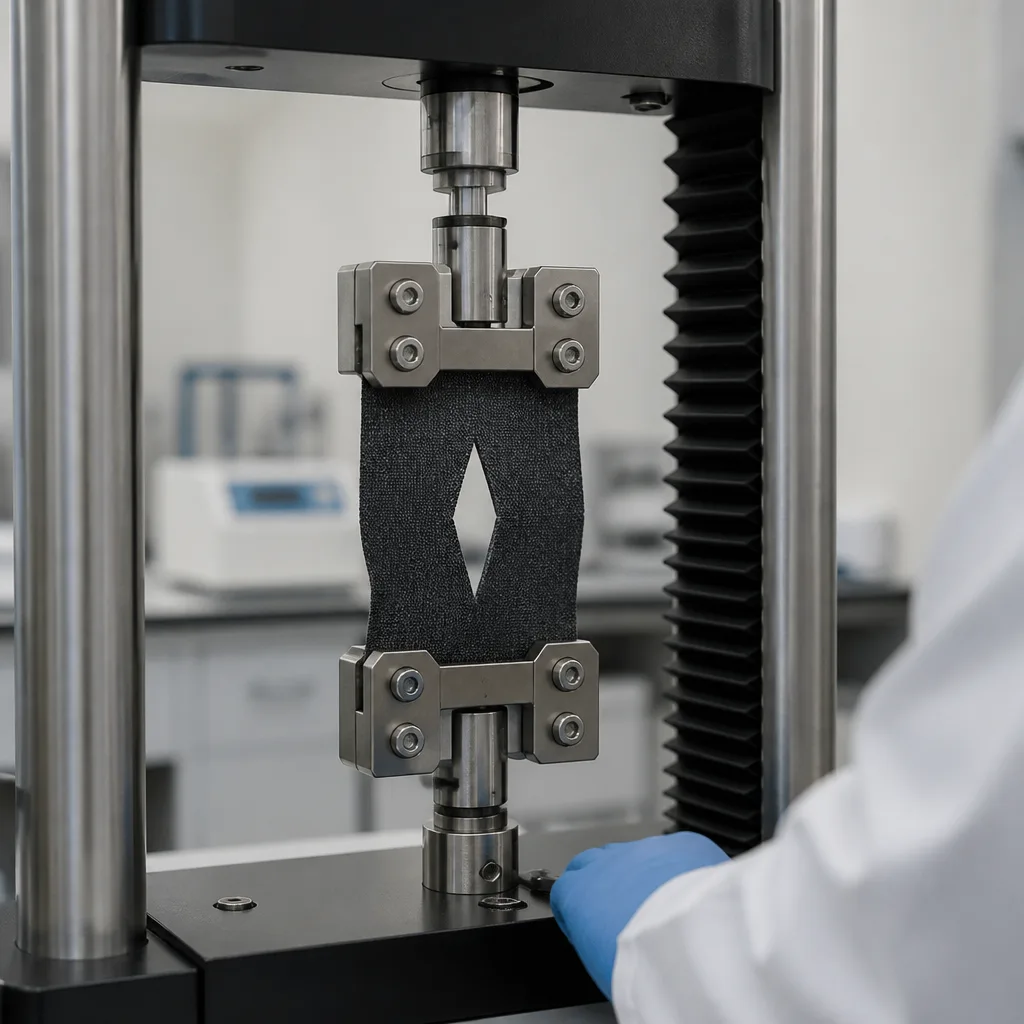
The primary purpose of the GMW 3326 standard is to assess how well a textile material resists tear propagation once tearing has begun. This differs from ordinary tensile strength testing. A textile material may possess relatively high tensile strength but still be vulnerable to tearing when a cut, nick, seam defect, or other localized damage occurs. Therefore, the test provides information about the material's ability to withstand sustained tearing under an applied load.
The GMW 3326 standard is primarily associated with textile and yarn materials, particularly automotive interior applications. Potential applications include:
The described method is also accepted by accredited laboratories along with other tear strength methods such as ASTM D2261, ASTM D5587 and ISO 9073-4 standards.
The basic principle of the trapezoid tear test is to prepare a trapezoidal test specimen with a predetermined cut or slit. The specimen is then fixed in a tensile testing machine. The machine separates the two sides of the specimen, causing the existing cut to propagate through the textile. During the test, the force required to sustain the tear is measured. The resulting force represents the material's resistance to tear propagation.
The trapezoidal method is an accepted category of tear testing, and the GMW 3326 standard is specifically listed under this method by independent testing laboratories.
The exact dimensions of the sample, conditioning requirements, equipment settings, and acceptance criteria are specified in the GMW 3326 standard. Generally, the testing process follows these steps:
A typical laboratory setup for testing includes the following:
Testing laboratories list the GMW 3326 standard among the methods performed with universal tensile testing equipment for textile strength testing.
The key result is tear strength, usually expressed as force. The test answers a crucial engineering question: how much force is needed for a tear to persist in textiles?
A higher tear strength generally provides better resistance to tear propagation, but acceptable values depend on the material, construction, application, and applicable General Motors specification.
Factors that could influence the outcome include:
Automotive interior textiles can suffer localized damage during manufacturing, assembly, vehicle use, cleaning, loading, or contact with sharp objects. When a small tear occurs, the key question is whether it will remain localized or spread rapidly. The GMW 3326 standard helps suppliers evaluate this behavior before materials are used in production. Therefore, the standard is useful for: material selection, supplier competence, product development, quality control, and failure investigation.
The GMW 3326 standard is evaluated in conjunction with the following tear tests:
Therefore, the GMW 3326 standard is one of several internationally used approaches to characterize tear resistance.
Tear resistance is particularly important for automotive textiles because the material must withstand not only normal use but also handling, assembly, installation, repeated use, and accidental localized damage. A material with insufficient tear resistance may exhibit the following symptoms:
The GMW 3326 standard provides an objective laboratory measurement that can be integrated into material qualification and supplier quality programs.
This standard should be viewed as part of a broader automotive textile characterization program. Other General Motors methods address properties such as abrasion, mass per area, stretch and durability, laminate bond strength, lint retention, and seam break resistance.
This combination is important because a single mechanical test cannot fully characterize an automotive textile. A material might have good tensile strength but poor tear resistance, or good tear resistance but poor abrasion resistance.
In summary, the GMW 3326 standard is a General Motors automotive interior testing method used to evaluate the tear propagation resistance of textile materials. This test initially uses a trapezoidal specimen containing a cut and measures the force required for the tear to persist.
The key value of this standard is that it provides a standardized way to assess whether textile materials possess sufficient tear resistance for their intended automotive applications.
The exact dimensions of the sample, conditioning, test speed, calculation method, and acceptance limits are specified in the GMW 3326 standard.
For many years, our organization, with its competent and experienced staff, has been understanding the needs of its clients, providing the advanced testing services they require, and assisting them in the establishment, implementation, and improvement of management systems. Within this framework, we also provide testing services in accordance with the GMW 3326 standard.
To get an appointment, to get more detailed information or to request an evaluation, you can ask us to fill in our form and reach you.

