

The SAE J2721 Recommended Corrosion Test Methods for Commercial Vehicle Components standard, developed by the American Society of Automotive Engineers (SAE), describes recommended practices for verifying acceptable corrosion performance of metallic components and assemblies used in medium-weight trucks, heavy trucks, buses, and trailers. The focus of this standard is on accelerated testing methods and the evaluation of results.
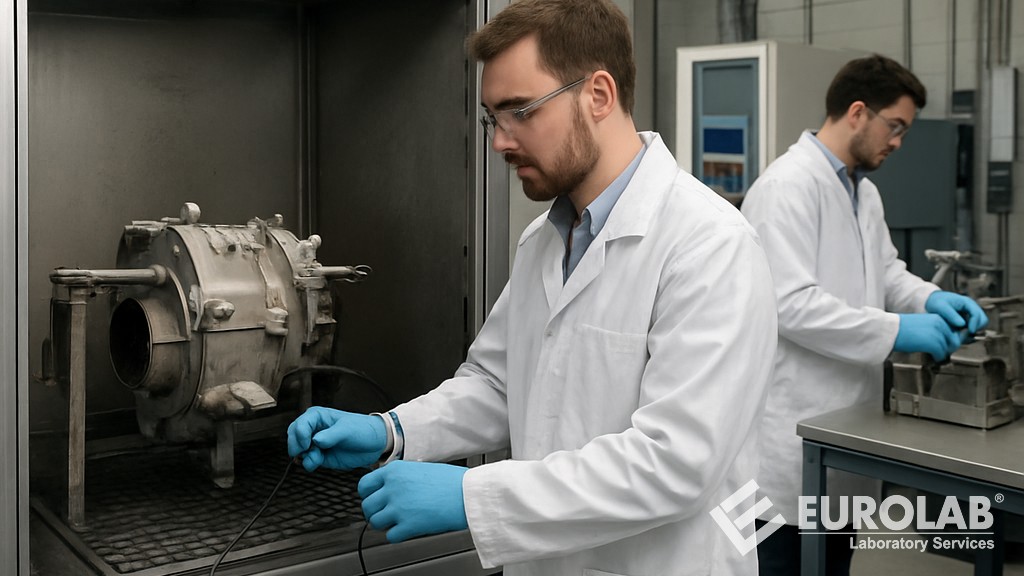
Various test procedures are offered for testing components at different locations on the vehicle. These procedures incorporate cyclical conditions such as corrosive chemicals, drying, humidity, and corrosive exposure. These procedures are intended to be effective in evaluating the various corrosion mechanisms listed in the table provided within the standard. The test duration can be adjusted to achieve the desired exposure level. Aggravating conditions such as link rotation, mechanical stress, and extreme temperatures are also considered.
This standard does not address corrosion chemistry or corrosion prevention methods. For information in these areas, the SAE J447 standard or similar standards apply.
In the demanding world of commercial trucking, where heavy-duty vehicles are constantly exposed to harsh environmental conditions, corrosion remains one of the most insidious threats to longevity and reliability. Factors such as salted roads in winter, coastal humidity, and industrial pollutants can transform robust metal components into brittle failures over time. The SAE J2721 standard provides manufacturers, engineers, and fleet operators with a toolkit to verify corrosion performance before components hit the road. This standard is not just a technical document; it also serves as a proactive shield against costly downtime and safety risks, addressing a problem that has plagued the industry for years.
The SAE J2721 standard essentially aims to create repeatable and accelerated laboratory tests that mimic field corrosion without the need for years of waiting. These tests target metallic components and assemblies in commercial applications: such as brake lines, suspension parts, chassis rails, and trailer hitches. The standard verifies acceptable corrosion performance by defining performance thresholds, evaluation criteria, and correlation methods to real-world exposure.
The SAE J2721 standard does not delve deeply into corrosion chemistry or prevention techniques, as complementary standards such as SAE J447 apply to those areas. Instead, the standard focuses on three key areas: test methods, aggravating conditions (e.g., mechanical stress, temperature fluctuations), and interpretation of results. By standardizing these, it enables consistent comparisons between suppliers and designs and encourages innovation in coatings, materials, and assembly processes.
The SAE J2721 standard outlines a series of lab-based accelerated tests that offer specific fine-tuning for commercial vehicles by leveraging established protocols. Some of the core test methods include:
These tests highlight aggravating factors such as vibration and thermal cycling to simulate the demanding life of a long-haul truck. For example, cyclic corrosion testing might expose a sample to a saltwater spray, followed by drying at low humidity and holding at high temperature to accelerate pitting, crevice, and galvanic corrosion. Evaluation includes visual grading, mass loss measurements, and adhesion tests, and passes/fails based on predetermined thresholds (e.g., maximum 5 percent surface rust). Tools such as corrosion coupons (precise 25 x 51 x 3 mm steel panels) act as independent monitors in chambers compliant with SAE J2721, SAE J2334, and ISO 9227 standards, increasing repeatability.
The SAE J2721 standard has fundamentally changed the way corrosion is combated in the commercial vehicle world since its inception. Fleets benefit from more durable parts, reducing warranty claims and extending service intervals. Manufacturers streamline their procurement processes by obtaining a benchmark for supplier qualification.
The flexibility of this standard is an advantage: it is not mandatory, so users can adopt subgroups for specific needs, for example, just the wheel end for trailer manufacturers.
As the commercial vehicle sector moves towards sustainability and electrification, the SAE J2721 standard will continue to be a cornerstone.
For many years, our organization, with its competent and experienced staff, has been understanding the needs of its clients, providing the advanced testing services they require, and assisting in the establishment, implementation, and improvement of management systems. Within this framework, we also provide testing services to businesses in accordance with the "SAE J2721 Recommended corrosion testing methods for commercial vehicle components" standard.
To get an appointment, to get more detailed information or to request an evaluation, you can ask us to fill in our form and reach you.

