

The “Mercedes-Benz DBL 5474 Polyamide 6 (PA6) - Heat-resistant, glass fiber reinforced” standard, developed by the Mercedes-Benz Group, describes the requirements for glass fiber reinforced, heat-resistant polyamide 6 (PA6-GF) used in Daimler automotive parts. This standard includes mechanical, thermal, and environmental properties to guarantee material consistency and performance.
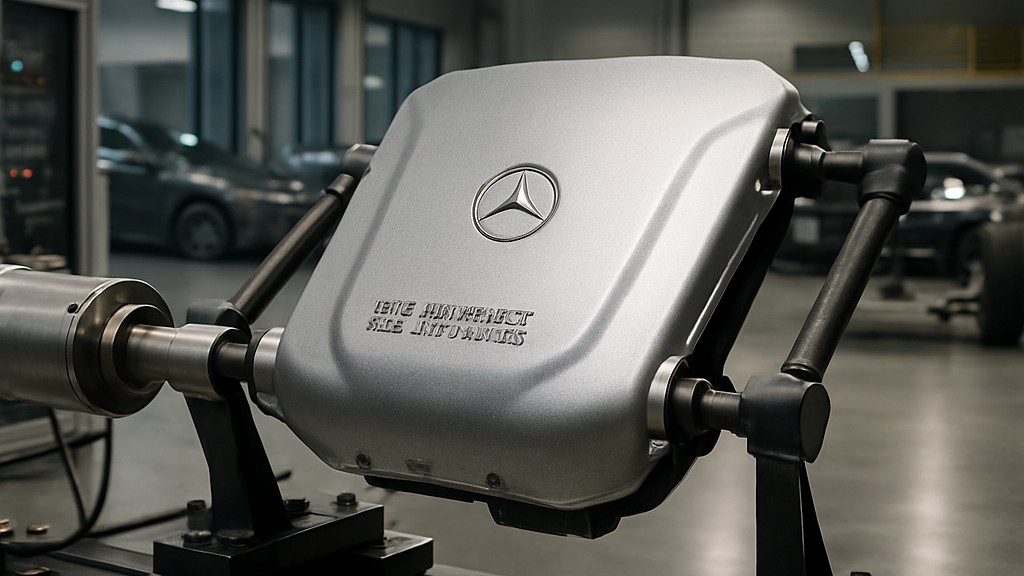
Heat-resistant, glass-fiber-reinforced refers to specific modifications made to a plastic material, often used in engineering plastics such as Polyamide 6 (PA6), to improve its performance in demanding applications such as automotive components. Here's what each term means:
Heat-stabilized (heat-resistant) means the plastic has been chemically modified to resist degradation at high temperatures over time. This is typically achieved through additives such as antioxidants or thermal stabilizers. Without stabilization, polymers like PA6 can degrade when exposed to heat, such as in engine compartments, leading to discoloration, loss of strength, brittleness, or failure. For heat-stabilized PA6, long-term use at temperatures between 120°C and 150°C is common, depending on the formulation.
Glass fiber reinforcement means that short glass fibers are mixed into the plastic during production to increase its mechanical strength and stiffness. This process increases tensile strength, hardness, and dimensional stability. It also improves resistance to friction (deformation that occurs over time under load). It also reduces thermal expansion, making the material more stable under temperature changes. Common glass content typically ranges from 15 to 50 percent by weight, with higher content offering greater reinforcement.
As for the combined effect of being heat-stabilized and glass fiber reinforced: when a plastic is both heat-stabilized and glass fiber reinforced, it becomes suitable for use in high-performance applications such as:
This combination allows the material to maintain its shape, strength and performance even under high temperatures and mechanical stress.
Polyamide 6, commonly known as PA6 or nylon 6, is a semi-crystalline thermoplastic polymer. It is part of the polyamide family and is widely used in engineering applications due to its excellent mechanical, thermal, and chemical properties.
The main properties of Polyamide 6 (PA6) are as follows:
Common applications of polyamide 6 include:
The Mercedes-Benz DBL 5474 standard defines technical requirements to guarantee quality, safety, and compatibility for materials and components used in its vehicles. This standard typically includes the following:
For years, our organization has been supporting businesses from all sectors with a wide range of testing, measurement, analysis, and evaluation services. We have a strong team of employees who closely follow global developments in science and technology and continuously improve themselves. Within this framework, we also provide testing services in accordance with the "Mercedes-Benz DBL 5474 Polyamide 6 (PA6) - Heat resistant, glass fiber reinforced" standard.
To get an appointment, to get more detailed information or to request an evaluation, you can ask us to fill in our form and reach you.

