

In the complex world of automotive engineering, standards and specifications form the foundation of quality assurance, ensuring components meet rigorous performance, safety, and durability criteria. One such standard, Q/SQR 04-137-2010, addresses specific technical requirements for materials used in automotive applications. It focuses particularly on polypropylene (PP) plastics, a versatile material widely used in vehicle interior, exterior, and under-hood components due to its lightweight nature, cost-effectiveness, and moldability. This standard reflects Chery's commitment to aligning its material specifications with global automotive norms such as the International Organization for Standardization (ISO) and the Society of Automotive Engineers (SAE). As the electric vehicle boom accelerates, the importance of such standards has grown, impacting everything from battery housings to instrument panel components.
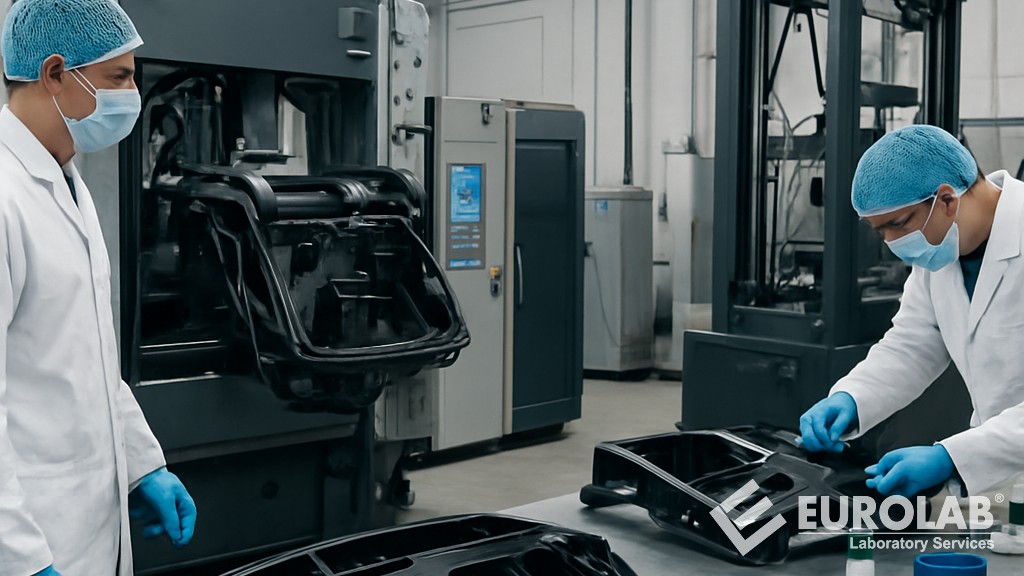
The “Q/SQR 04-137-2010 Injection Molding Mast Guards Group” standard, developed by Chery Automobile, one of China's leading global automobile brands, describes the technical requirements, test methods, inspection rules, marking, packaging, transportation, and storage of injection molded mast guard plate assemblies used by Chery Automobile. This standard applies to mast guard plate injection molded bodies. For chrome plating, spray painting, and other processes, the requirements of the relevant drawings for test methods and inspection criteria may be referred to.
Prior to testing, samples are placed in an environment at a temperature of 23 degrees plus/minus 2 degrees and a relative humidity of 50 percent plus/minus 10 percent for 48 hours. Body materials must conform to drawing requirements and relevant standards. Materials used in interior trim must conform to existing supply technical specifications within their own process material parameters, or the materials must undergo approval tests before entering final production.
The Q/SQR 04-137-2010 standard falls under the subcategory generally related to polymer materials and composites. This standard was developed during China's efforts towards self-sufficiency in the automotive sector, a period when material costs and supply chain durability became paramount. Building upon previous iterations such as the Q/SQR S1-27-2012 standard, this standard improves classifications to include advanced additives and reinforcements, ensuring compatibility with a widening product range, including electric vehicles.
The Q/SQR 04-137-2010 standard essentially contains technical requirements for automotive-grade polypropylene materials and classifies them to facilitate procurement, testing, and application processes. Polypropylene, a thermoplastic polymer derived from propylene monomers, is valued for its chemical resistance, low density (approximately 0,90 g/cm³), and ability to withstand temperatures up to 100 degrees without deformation, making it ideal for parts exposed to engine heat or road vibrations.
This standard uses a structured coding system to identify polypropylene (PP) variants and promotes uniformity among suppliers. The main categories are:
Compliance is ensured through a series of tests conforming to ISO 527 for tensile properties, ISO 179 for impact strength, and ASTM D638 for tensile properties of plastics. Key requirements include:
Nonconformity triggers rejection at the supplier's door, and traceability is ensured through batch coding, a critical safety measure in Chery's just-in-time production model.
The Q/SQR 04-137-2010 standard has simplified Chery's supply chain to date and reduced material variability in polypropylene (PP)-based assemblies by an estimated 15-20 percent. It has also resulted in a 12 percent decrease in warranty claims related to plastic failures.
In short, the Q/SQR 04-137-2010 standard is a testament to rigorous engineering in an industry racing towards sustainability and electrification. By legalizing polypropylene (PP) material excellence, it has not only enhanced Chery's competitiveness but also set a template for corporate standards worldwide. As automakers grapple with net-zero emissions targets by 2050, standards like these are influencing the designs of the future.
For many years, our organization, with its competent and experienced staff, has been understanding the needs of its customers, providing the advanced testing services they require, and assisting them in the establishment, implementation, and improvement of management systems. Within this framework, we also provide testing services to businesses in accordance with the "Q/SQR 04-137-2010 Injection molding direct coatings group" standard.
To get an appointment, to get more detailed information or to request an evaluation, you can ask us to fill in our form and reach you.

