

ES91500-02 Electrical Terminals and Surface Treatments

ES91500-02 Electrical Terminals and Surface Treatments

The “ES91500-02 Electrical Terminals and Surface Treatments” standard, developed by Hyundai Motor Company and Kia Corporation, is a specialized engineering standard for automotive electrical terminals, busbar systems, and conductive metal components. This standard specifies the technical requirements for surface treatment, coating quality, corrosion resistance, and reliability of electrical contact parts used in Hyundai and Kia vehicles.
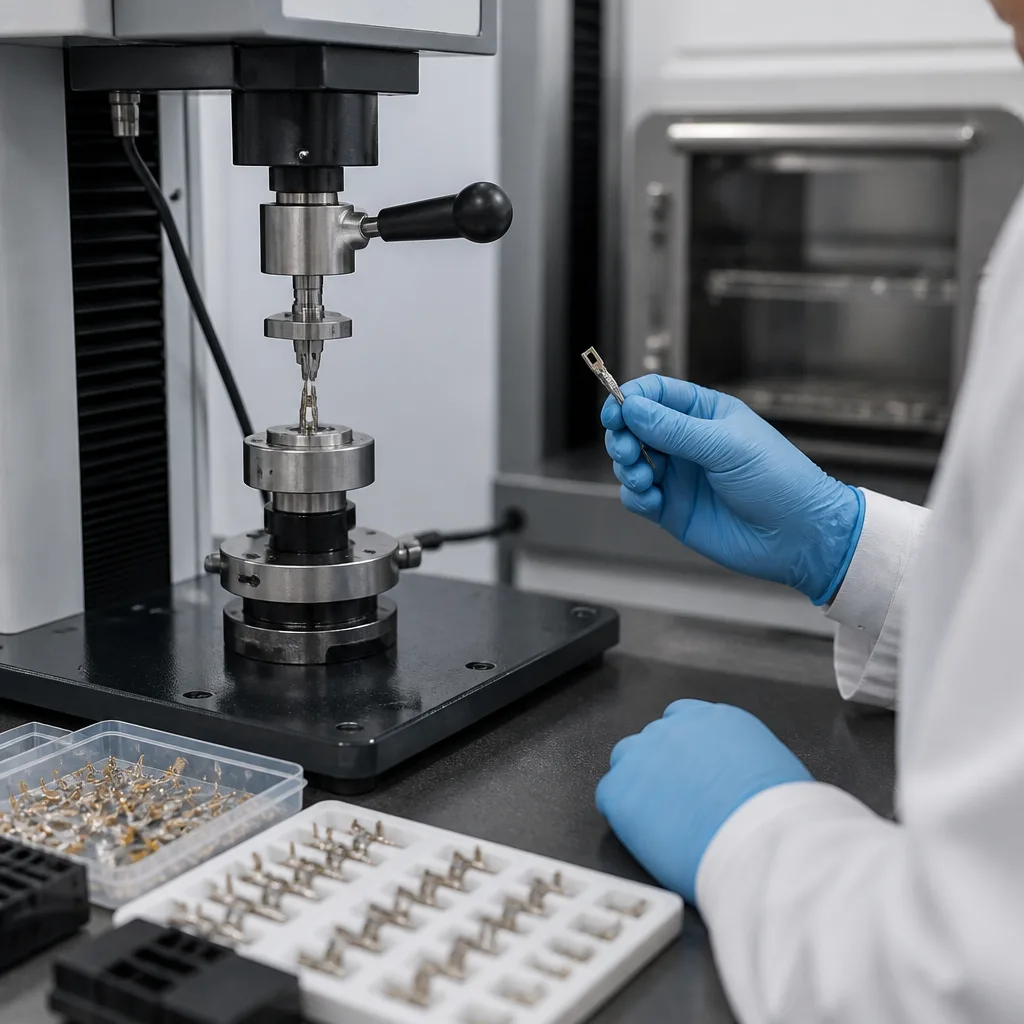
ES91500-02 Electrical Terminals and Surface Treatments

Numerous Hyundai/Kia engineering drawings, supplier documents, and connector specifications refer to the ES91500-02 standard as the applicable standard for electrical terminal surface treatments and coating performance.

Modern devices contain hundreds of electrical connectors. The performance of these connectors largely depends on the quality of the terminal coating. The ES91500-02 standard guarantees that electrical terminals provide the following:

  • To maintain low contact resistance.
  • To provide corrosion resistance throughout the vehicle's lifespan.
  • To withstand vibration and repeated connection cycles.
  • To ensure reliable current transmission.
  • Remaining solderable or compressible when needed.
  • Surviving in harsh automotive environments.

This standard helps ensure long-term electrical reliability under demanding operating conditions.

The ES91500-02 standard generally applies to the following:

  • Electrical terminals
  • Connector contacts
  • Fuse box terminals
  • Relay terminals
  • Busbar systems
  • Stamped conductive parts
  • Coated copper alloy components
  • Electrical distribution modules

Mechanical fasteners such as bolts and nuts are generally covered by a different Hyundai specification (MS611-15 standard). The ES91500-02 standard, on the other hand, specifically regulates terminals and busbar systems. This distinction is clearly shown in Hyundai engineering drawings.

The ES91500-02 standard includes typical requirements in the following areas:

  • Surface coating: This standard defines acceptable metallic coatings, including:
    • Tin plating
    • Nickel undercoating
    • Silver plating (selected applications)
    • Gold plated (signal contacts)
    • Special corrosion-resistant coatings

The choice depends on the following:

    • Current capacity
    • Connector type
    • Operating temperature
    • Connection loops
    • Environmental exposure
  • Coating thickness: Minimum coating thicknesses are specified to ensure the following:
      • Corrosion protection
      • Wear resistance
      • Electrical conductivity
      • Long service life

    Thickness is typically verified using the following:

      • X-ray fluorescence (XRF)
      • Microscopic section measurements
      • Chemical analysis
  • Contact resistance: Electrical terminals must be protected against the following:
      • Low initial contact resistance.
      • Stable resistance after aging
      • Stable resistance after vibration.
      • Stable resistance after thermal cycling

    Excessive resistance can cause the following:

      • Overheating
      • voltage drop
      • Connection failure
      • Intermittent power outages
  • Corrosion resistance: Components are evaluated for corrosion resistance using environmental tests such as the following:
      • Salt spray exposure
      • Moisture exposure
      • Condensation test
      • Mixed gas corrosion
      • Cyclic corrosion testing

    These tests simulate years of vehicle service.

    • Mechanical durability: This standard assesses durability through tests including:
      • Attachment force
      • Extractive force
      • Terminal holding
      • Vibration resistance
      • Connection/disconnection cycles
      • Abrasion of coating surfaces
    • Environmental performance: Electrical terminals are exposed to the following:
      • High temperature exposure
      • Low temperature exposure
      • Thermal shock
      • Thermal cycle
      • High humidity
      • Engine bay environments
      • Road salt exposure

    Typical materials covered by the ES91500-02 standard include:

    • Copper alloys
    • Rice
    • Phosphor bronze
    • Copper with high conductivity.
    • Stamped terminal materials
    • Bar supplies

    This standard specifies compatible coating systems for these base metals.

    The test methods defined under the ES91500-02 standard are as follows:

    • Contact resistance: Electrical performance.
    • Salt spray: Corrosion resistance.
    • Moisture exposure: Moisture tolerance.
    • Thermal cycling: Resistance to expansion and contraction.
    • Vibration: Mechanical reliability.
    • Current carrying capacity: Electrical heating evaluation.
    • Coating thickness measurement: Coating verification.
    • Adhesion test: Coating quality.
    • Abrasion test: Match durability.

    The ES91500-02 standard is commonly used for components including the following:

    • Cable harness connectors
    • Engine control unit (ECU) connectors
    • Fuse Boxes
    • Relay modules
    • Battery terminals
    • Charging system connectors
    • Sensor connectors
    • Lighting connectors
    • Body control modules
    • Electric vehicle power distribution units

    The ES91500-02 standard works in conjunction with various Hyundai Motor engineering standards:

    • ES91500-00 General connector requirements
    • ES91500-02 Electrical terminal coating and performance
    • ES91500-03 Additional link reliability requirements
    • MS611-15 Surface treatment requirements for bolts and nuts.
    • MS201-02 Heavy metal restrictions

    Engineering drawings generally require terminals to conform to the ES91500-02 standard and connectors to the MS611-15 standard.

    Although the ES91500-02 standard is specific to Hyundai/Kia, its objectives are comparable to internationally accepted standards, including:

    • SAE/USCAR connector performance specifications
    • IEC electrical connector standards
    • ISO automotive electrical components standards
    • Original equipment manufacturer (OEM) connector specifications from Ford, General Motors, Toyota, and Volkswagen.

    Connector manufacturers typically design their products to comply with the ES91500-02 standard, as well as SAE/USCAR and other automotive requirements.

    Consequently, vehicle electrical systems are increasingly reliant on reliable, low-resistance connections. Even a minor degradation of the terminal coating can lead to voltage loss, overheating, intermittent failures, or complete connector failure. The ES91500-02 standard defines expectations for coating quality, corrosion resistance, durability, and electrical reliability, providing standardized requirements that help suppliers deliver consistent electrical performance in Hyundai and Kia vehicles. In short, this standard supports long-term vehicle safety, durability, and warranty performance.

    The main sections of this standard are as follows:

    • Coating thickness
    • Coating size
    • Peel test
    • Bending test
    • Heat resistance test
    • Salt spray test

    For many years, our organization, with its competent and experienced staff, has been understanding the needs of its clients, providing the advanced testing services they require, and assisting them in the establishment, implementation, and improvement of management systems. Within this framework, we also provide testing services compliant with the ES91500-02 standard.

    WhatsApp

